

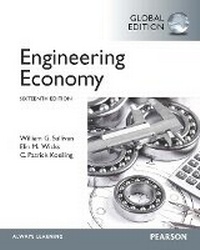
Engineering Economy with MyEngineeringLab, Global Edition
16th Edition
Published on 22. September 2014
Book
Mixed media product
978-1-292-06784-1 (ISBN)
Description
Engineering Economy is intended for use in undergraduate introductory courses in Engineering Economics Used by engineering students worldwide, this best-selling text provides a sound understanding of the principles, basic concepts, and methodology of engineering economy. Built upon the rich and time-tested teaching materials of earlier editions, it is extensively revised and updated to reflect current trends and issues, with an emphasis on the economics of engineering design throughout. It provides one of the most complete and up-to-date studies of this vitally important field. Teaching and Learning Experience This program will provide a better teaching and learning experience-for you and your students. It will help: * Provide a Solid Foundation in the Principles, Concepts, and Methodology of Engineering Economy: Students will learn to understand and apply economic principles to engineering. * Prepare Students for Professional Practice: Students will develop proficiency with the process for making rational decisions that they are likely to encounter in professional practice.
* Support Learning: The TestGen testbank allows instructors to regenerate algorithmically-generated variables within each problem to offer students a virtually unlimited number of paper or online assessments. * Personalize Learning: MyEngineeringLab provides students with a personalized interactive learning environment, where they can learn at their own pace and measure their progress. This package includes MyEngineeringLab, an online homework, tutorial, and assessment product designed to work with Engineering Economy to personalize learning and improve results. With a wide range of interactive, engaging, and assignable activities, students are encouraged to actively learn and retain tough course concepts. Students, this title is available with or without MyEngineeringLab. Contact your instructor for the correct ISBNs. Instructors, contact your Pearson representative for more information.
* Support Learning: The TestGen testbank allows instructors to regenerate algorithmically-generated variables within each problem to offer students a virtually unlimited number of paper or online assessments. * Personalize Learning: MyEngineeringLab provides students with a personalized interactive learning environment, where they can learn at their own pace and measure their progress. This package includes MyEngineeringLab, an online homework, tutorial, and assessment product designed to work with Engineering Economy to personalize learning and improve results. With a wide range of interactive, engaging, and assignable activities, students are encouraged to actively learn and retain tough course concepts. Students, this title is available with or without MyEngineeringLab. Contact your instructor for the correct ISBNs. Instructors, contact your Pearson representative for more information.
More details
Edition
16th edition
Language
English
Place of publication
Harlow
United Kingdom
Target group
College/higher education
Professional and scholarly
Dimensions
Height: 230 mm
Width: 190 mm
Thickness: 30 mm
Weight
1110 gr
ISBN-13
978-1-292-06784-1 (9781292067841)
Copyright in bibliographic data and cover images is held by Nielsen Book Services Limited or by the publishers or by their respective licensors: all rights reserved.
Schweitzer Classification
Other editions
Previous edition
Software
09/2014
16th Edition
Pearson Education Limited
€91.57
Only available as a set (single article not available)
Content
Preface xi
Green Content xviii
CHAPTER 1
Introduction to Engineering Economy 1
1.1 Introduction 2
1.2 The Principles of Engineering Economy 3
1.3 Engineering Economy and the Design Process 7
1.4 Using Spreadsheets in Engineering Economic Analysis 15
1.5 Try Your Skills 15
1.6 Summary 16
CHAPTER 2
Cost Concepts and Design Economics 20
2.1 Cost Terminology 21
2.2 The General Economic Environment 27
2.3 Cost-Driven Design Optimization 38
2.4 Present Economy Studies 43
2.5 Case Study-The Economics of Daytime Running Lights 49
2.6 Try Your Skills 51
2.7 Summary 52
Appendix 2-A Accounting Fundamentals 60
CHAPTER 3
Cost-Estimation Techniques 67
3.1 Introduction 68
3.2 An Integrated Approach 70
3.3 Selected Estimating Techniques (Models) 78
3.4 Parametric Cost Estimating 83
3.5 Case Study-Demanufacturing of Computers 94
3.6 Electronic Spreadsheet Modeling: Learning Curve 96
3.7 Try Your Skills 98
3.8 Summary 100
CHAPTER 4
The Time Value of Money 107
4.1 Introduction 108
4.2 Simple Interest 109
4.3 Compound Interest 110
4.4 The Concept of Equivalence 110
4.5 Notation and Cash-Flow Diagrams and Tables 113
4.6 Relating Present and Future Equivalent Values 123
4.7 Relating a Uniform Series (Annuity) to Its Present and Future Equivalent
4.8 Summary of Interest Formulas and Relationships for Discrete Compounding 133
4.9 Deferred Annuities (Uniform Series) 135
4.10 Equivalence Calculations Involving Multiple Interest Formulas 137
4.11 Uniform (Arithmetic) Gradient of Cash Flows 143
4.12 Geometric Sequences of Cash Flows 148
4.13 Interest Rates that Vary with Time 153
4.14 Nominal and Effective Interest Rates 155
4.15 Compounding More Often than Once per Year 157
4.16 Interest Formulas for Continuous Compounding and Discrete Cash Flows 160
4.17 Case Study-Understanding Economic "Equivalence" 163
4.18 Try Your Skills 166
4.19 Summary 169
CHAPTER 5
Evaluating a Single Project 186
5.1 Introduction 187
5.2 Determining the Minimum Attractive Rate of Return (MARR) 188
5.3 The PresentWorth Method 189
5.4 The Future Worth Method 196
5.5 The Annual Worth Method 197
5.6 The Internal Rate of Return Method 202
5.7 The External Rate of Return Method 213
5.8 The Payback (Payout) Period Method 215
5.9 Case Study-A Proposed Capital Investment to Improve Process Yield 218
5.10 Electronic Spreadsheet Modeling: Payback Period Method 220
5.11 Try Your Skills 222
5.12 Summary 224
Appendix 5-A The Multiple Rate of Return Problem with the IRR Method 236
CHAPTER 6
Comparison and Selection among Alternatives 240
6.1 Introduction 241
6.2 Basic Concepts for Comparing Alternatives 241
6.3 The Study (Analysis) Period 245
6.4 Useful Lives Are Equal to the Study Period 247
6.5 Useful Lives Are Unequal among the Alternatives 264
6.6 Personal Finances 277
6.7 Case Study-Ned and Larry's Ice Cream Company 281
6.8 Postevaluation of Results 284
6.9 Project Postevaluation Spreadsheet Approach 284
6.10 Try Your Skills 287
6.11 Summary 291
CHAPTER 7
Depreciation and Income Taxes 308
7.1 Introduction 309
7.2 Depreciation Concepts and Terminology 309
7.3 The Classical (Historical) Depreciation Methods 312
7.4 The Modified Accelerated Cost Recovery System 317
7.5 A Comprehensive Depreciation Example 326
7.6 Introduction to Income Taxes 330
7.7 The Effective (Marginal) Corporate Income Tax Rate 333
7.8 Gain (Loss) on the Disposal of an Asset 336
7.9 General Procedure for Making After-Tax Economic Analyses 337
Green Content xviii
CHAPTER 1
Introduction to Engineering Economy 1
1.1 Introduction 2
1.2 The Principles of Engineering Economy 3
1.3 Engineering Economy and the Design Process 7
1.4 Using Spreadsheets in Engineering Economic Analysis 15
1.5 Try Your Skills 15
1.6 Summary 16
CHAPTER 2
Cost Concepts and Design Economics 20
2.1 Cost Terminology 21
2.2 The General Economic Environment 27
2.3 Cost-Driven Design Optimization 38
2.4 Present Economy Studies 43
2.5 Case Study-The Economics of Daytime Running Lights 49
2.6 Try Your Skills 51
2.7 Summary 52
Appendix 2-A Accounting Fundamentals 60
CHAPTER 3
Cost-Estimation Techniques 67
3.1 Introduction 68
3.2 An Integrated Approach 70
3.3 Selected Estimating Techniques (Models) 78
3.4 Parametric Cost Estimating 83
3.5 Case Study-Demanufacturing of Computers 94
3.6 Electronic Spreadsheet Modeling: Learning Curve 96
3.7 Try Your Skills 98
3.8 Summary 100
CHAPTER 4
The Time Value of Money 107
4.1 Introduction 108
4.2 Simple Interest 109
4.3 Compound Interest 110
4.4 The Concept of Equivalence 110
4.5 Notation and Cash-Flow Diagrams and Tables 113
4.6 Relating Present and Future Equivalent Values 123
4.7 Relating a Uniform Series (Annuity) to Its Present and Future Equivalent
4.8 Summary of Interest Formulas and Relationships for Discrete Compounding 133
4.9 Deferred Annuities (Uniform Series) 135
4.10 Equivalence Calculations Involving Multiple Interest Formulas 137
4.11 Uniform (Arithmetic) Gradient of Cash Flows 143
4.12 Geometric Sequences of Cash Flows 148
4.13 Interest Rates that Vary with Time 153
4.14 Nominal and Effective Interest Rates 155
4.15 Compounding More Often than Once per Year 157
4.16 Interest Formulas for Continuous Compounding and Discrete Cash Flows 160
4.17 Case Study-Understanding Economic "Equivalence" 163
4.18 Try Your Skills 166
4.19 Summary 169
CHAPTER 5
Evaluating a Single Project 186
5.1 Introduction 187
5.2 Determining the Minimum Attractive Rate of Return (MARR) 188
5.3 The PresentWorth Method 189
5.4 The Future Worth Method 196
5.5 The Annual Worth Method 197
5.6 The Internal Rate of Return Method 202
5.7 The External Rate of Return Method 213
5.8 The Payback (Payout) Period Method 215
5.9 Case Study-A Proposed Capital Investment to Improve Process Yield 218
5.10 Electronic Spreadsheet Modeling: Payback Period Method 220
5.11 Try Your Skills 222
5.12 Summary 224
Appendix 5-A The Multiple Rate of Return Problem with the IRR Method 236
CHAPTER 6
Comparison and Selection among Alternatives 240
6.1 Introduction 241
6.2 Basic Concepts for Comparing Alternatives 241
6.3 The Study (Analysis) Period 245
6.4 Useful Lives Are Equal to the Study Period 247
6.5 Useful Lives Are Unequal among the Alternatives 264
6.6 Personal Finances 277
6.7 Case Study-Ned and Larry's Ice Cream Company 281
6.8 Postevaluation of Results 284
6.9 Project Postevaluation Spreadsheet Approach 284
6.10 Try Your Skills 287
6.11 Summary 291
CHAPTER 7
Depreciation and Income Taxes 308
7.1 Introduction 309
7.2 Depreciation Concepts and Terminology 309
7.3 The Classical (Historical) Depreciation Methods 312
7.4 The Modified Accelerated Cost Recovery System 317
7.5 A Comprehensive Depreciation Example 326
7.6 Introduction to Income Taxes 330
7.7 The Effective (Marginal) Corporate Income Tax Rate 333
7.8 Gain (Loss) on the Disposal of an Asset 336
7.9 General Procedure for Making After-Tax Economic Analyses 337