

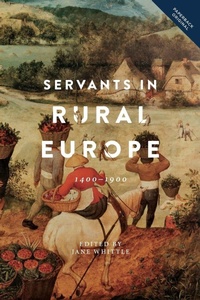
Servants in Rural Europe
1400-1900
Published on 17. November 2017
Book
Paperback/Softback
286 pages
978-1-78327-239-6 (ISBN)
Description
This is the first book to survey the experience of servants in rural Europe from the fifteenth to the nineteenth century.
This is the first book to survey the experience of servants in rural Europe from the fifteenth to the nineteenth century. Live-in servants were a distinctive element of early modern society. They were typically young adults aged between 16 and 24 who lived and worked in other people's households before marriage. Servants tended to be employed for long periods, several months to years at a time, and were paid with food and lodging as well as cash wages. Both women and men worked as servants in large numbers. Unlike domestic servants in towns and wealthy households, rural servants typically worked on farms and were an important element of the agricultural workforce. Historians have viewed service as a distinct life-cycle stage between childhood and marriage. It brought both freedom and servility for young people. It allowed them to leave home and earn a living before marriage, whilst learning a range of agricultural and craft skills which reduced their dependence on their parents and increased their choice in marriage partners. Still, servants had limited rights: they were under the authority of their employer, with a similar legal status to children. In many countries the employment of servants was tightly controlled by law. Servants could demand their wages, and leave when the contract ended, but had to work long hours and had little say in their work tasksduring employment. While some servants effectively became family members, trusted and cared for, others were abused physically and sexually by their employers. This collection features a range of methodologies, reflecting the variety of source materials and approaches available to historians of this topic in a range of European countries and time periods. Nonetheless, it demonstrates the strong common themes that emerge from studying servants and will be of particular interest to historians of work, gender, the family, agriculture, economic development, youth and social structure.
JANE WHITTLE is Professor of Rural History at the University of Exeter.
Contributors: CHRISTINE FERTIG, JEREMY HAYHOE, SARAH HOLLAND, THIJS LAMBRECHT, CHARMIAN MANSELL, HANNE OSTHUS, RICHARD PAPING, CRISTINA PRYTZ, RAFFAELLA SARTI, CAROLINA UPPENBERG, LIES VERVAET, JANE WHITTLE
This is the first book to survey the experience of servants in rural Europe from the fifteenth to the nineteenth century. Live-in servants were a distinctive element of early modern society. They were typically young adults aged between 16 and 24 who lived and worked in other people's households before marriage. Servants tended to be employed for long periods, several months to years at a time, and were paid with food and lodging as well as cash wages. Both women and men worked as servants in large numbers. Unlike domestic servants in towns and wealthy households, rural servants typically worked on farms and were an important element of the agricultural workforce. Historians have viewed service as a distinct life-cycle stage between childhood and marriage. It brought both freedom and servility for young people. It allowed them to leave home and earn a living before marriage, whilst learning a range of agricultural and craft skills which reduced their dependence on their parents and increased their choice in marriage partners. Still, servants had limited rights: they were under the authority of their employer, with a similar legal status to children. In many countries the employment of servants was tightly controlled by law. Servants could demand their wages, and leave when the contract ended, but had to work long hours and had little say in their work tasksduring employment. While some servants effectively became family members, trusted and cared for, others were abused physically and sexually by their employers. This collection features a range of methodologies, reflecting the variety of source materials and approaches available to historians of this topic in a range of European countries and time periods. Nonetheless, it demonstrates the strong common themes that emerge from studying servants and will be of particular interest to historians of work, gender, the family, agriculture, economic development, youth and social structure.
JANE WHITTLE is Professor of Rural History at the University of Exeter.
Contributors: CHRISTINE FERTIG, JEREMY HAYHOE, SARAH HOLLAND, THIJS LAMBRECHT, CHARMIAN MANSELL, HANNE OSTHUS, RICHARD PAPING, CRISTINA PRYTZ, RAFFAELLA SARTI, CAROLINA UPPENBERG, LIES VERVAET, JANE WHITTLE
Reviews / Votes
Linked by common themes and rigorous methodologies, the chapters of Servants in Rural Europe: 1400-1900 also constitute independent studies, each amply documented and illustrated by graphs, tables, and microhistories that will constitute an indispensable mine of data and ideas for specialists. * HISTOIRE SOCIALE/SOCIAL HISTORY * This book is a welcome contribution to the existing literature on the history of servanthood. * JOURNAL OF INTERDISCIPLINARY HISTORY * Taken together, the chapters provide an innovative analysis of the nature of live-in service within the agrarian economy and make a valuable contribution to early modern economic history. Scholars of women's history, economic history, and social history will find the articles particularly useful and insightful. * CHOICE *More details
Series
Language
English
Place of publication
Woodbridge
United Kingdom
Publishing group
Boydell & Brewer Ltd
Target group
Professional and scholarly
Product notice
Paperback (trade)
Illustrations
19 s/w Zeichnungen
19 line illus.
Dimensions
Height: 234 mm
Width: 156 mm
Thickness: 16 mm
Weight
442 gr
ISBN-13
978-1-78327-239-6 (9781783272396)
Copyright in bibliographic data and cover images is held by Nielsen Book Services Limited or by the publishers or by their respective licensors: all rights reserved.
Schweitzer Classification
Other editions
Additional editions

E-Book
11/2017
1st Edition
Boydell & Brewer
€14.99
Available for download

E-Book
11/2017
1st Edition
De Gruyter
€14.99
Available for download
Persons
JANE WHITTLE is Professor of Economic and Social History at the University of Exeter. Christine Fertig is Assistant Professor at the University of Muenster, Germany. She has published on rural history, history of the family, credit markets, global trade and exotic substances in early modern Europe. JANE WHITTLE is Professor of Economic and Social History at the University of Exeter. Richard Paping is Associate Professor in Economic and Social History at the University of Groningen. His research spans historical demography, family history, social mobility, labour history, and economic development, with a particular focus on the norther part of the Netherlands during the eighteenth- and nineteenth-century. THIJS LAMBRECHT is Lecturer in Rural History at the University of Ghent.
Content
Introduction: Servants in the Economy and Society of Rural Europe - Jane Whittle
The Employment of Servants in Fifteenth- and Sixteenth-Century Coastal Flanders: A Case-Study of Scueringhe Farm near Bruges - Lies Vervaet
The Institution of Service in Rural Flanders in the Sixteenth Century: A Regional Perspective - Thijs Lambrecht
A Different Pattern of Employment: Servants in Rural England c.1500-1660 - Jane Whittle
Female Service and the Village Community in South-West England 1550-1650: The Labour Laws Reconsidered - Charmian Mansell
Life-cycle Servant and Servant for Life: Work and Prospects in Rural Sweden c. 1670-1730 - Christina Prytz
Servants in Rural Norway, c.1650-1800 - Hanne Osthus
Rural Servants in Eighteenth-Century Muensterland, Northwestern Germany: Households, Families and Servants in the Countryside - Christine Fertig
Rural Servants in Eastern France 1700-1872: Change and Continuity over Two Centuries - Jeremy Hayhoe
The Servant Institution during the Swedish Agrarian Revolution: The Political Economy of Subservience - Carolina Uppenberg
Farm service and hiring practices in mid nineteenth-century England: The Doncaster Region in the West Riding of Yorkshire - Sarah Holland
Dutch Live-In Farm Servants in the Long Nineteenth Century: The Decline of the Life-Cycle Service System for the Rural Lower Class - Richard Paping
Rural Life-Cycle Service: Established Interpretations and New (Surprising) Data: The Italian Case in Comparative Perspective (Sixteenth to Twentieth Centuries) - Raffaella Sarti
Select Bibliography
The Employment of Servants in Fifteenth- and Sixteenth-Century Coastal Flanders: A Case-Study of Scueringhe Farm near Bruges - Lies Vervaet
The Institution of Service in Rural Flanders in the Sixteenth Century: A Regional Perspective - Thijs Lambrecht
A Different Pattern of Employment: Servants in Rural England c.1500-1660 - Jane Whittle
Female Service and the Village Community in South-West England 1550-1650: The Labour Laws Reconsidered - Charmian Mansell
Life-cycle Servant and Servant for Life: Work and Prospects in Rural Sweden c. 1670-1730 - Christina Prytz
Servants in Rural Norway, c.1650-1800 - Hanne Osthus
Rural Servants in Eighteenth-Century Muensterland, Northwestern Germany: Households, Families and Servants in the Countryside - Christine Fertig
Rural Servants in Eastern France 1700-1872: Change and Continuity over Two Centuries - Jeremy Hayhoe
The Servant Institution during the Swedish Agrarian Revolution: The Political Economy of Subservience - Carolina Uppenberg
Farm service and hiring practices in mid nineteenth-century England: The Doncaster Region in the West Riding of Yorkshire - Sarah Holland
Dutch Live-In Farm Servants in the Long Nineteenth Century: The Decline of the Life-Cycle Service System for the Rural Lower Class - Richard Paping
Rural Life-Cycle Service: Established Interpretations and New (Surprising) Data: The Italian Case in Comparative Perspective (Sixteenth to Twentieth Centuries) - Raffaella Sarti
Select Bibliography