

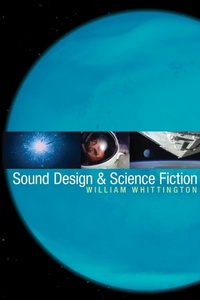
Sound Design and Science Fiction
Published on 1. February 2007
Book
Paperback/Softback
288 pages
978-0-292-71431-1 (ISBN)
Description
Sound is half the picture, and since the 1960s, film sound not only has rivaled the innovative imagery of contemporary Hollywood cinema, but in some ways has surpassed it in status and privilege because of the emergence of sound design.
This in-depth study by William Whittington considers the evolution of sound design not only through cultural and technological developments during the last four decades, but also through the attitudes and expectations of filmgoers. Fans of recent blockbuster films, in particular science fiction films, have come to expect a more advanced and refined degree of film sound use, which has changed the way they experience and understand spectacle and storytelling in contemporary cinema.
The book covers recent science fiction cinema in rich and compelling detail, providing a new sounding of familiar films, while offering insights into the constructed nature of cinematic sound design. This is accomplished by examining the formal elements and historical context of sound production in movies to better appreciate how a film sound track is conceived and presented.Whittington focuses on seminal science fiction films that have made specific advances in film sound, including 2001: A Space Odyssey, THX 1138, Star Wars, Alien, Blade Runner (original version and director's cut), Terminator 2: Judgment Day and The Matrix trilogy and games-milestones of the entertainment industry's technological and aesthetic advancements with sound.
Setting itself apart from other works, the book illustrates through accessible detail and compelling examples how swiftly such advancements in film sound aesthetics and technology have influenced recent science fiction cinema, and examines how these changes correlate to the history, theory, and practice of contemporary Hollywood filmmaking.
This in-depth study by William Whittington considers the evolution of sound design not only through cultural and technological developments during the last four decades, but also through the attitudes and expectations of filmgoers. Fans of recent blockbuster films, in particular science fiction films, have come to expect a more advanced and refined degree of film sound use, which has changed the way they experience and understand spectacle and storytelling in contemporary cinema.
The book covers recent science fiction cinema in rich and compelling detail, providing a new sounding of familiar films, while offering insights into the constructed nature of cinematic sound design. This is accomplished by examining the formal elements and historical context of sound production in movies to better appreciate how a film sound track is conceived and presented.Whittington focuses on seminal science fiction films that have made specific advances in film sound, including 2001: A Space Odyssey, THX 1138, Star Wars, Alien, Blade Runner (original version and director's cut), Terminator 2: Judgment Day and The Matrix trilogy and games-milestones of the entertainment industry's technological and aesthetic advancements with sound.
Setting itself apart from other works, the book illustrates through accessible detail and compelling examples how swiftly such advancements in film sound aesthetics and technology have influenced recent science fiction cinema, and examines how these changes correlate to the history, theory, and practice of contemporary Hollywood filmmaking.
Reviews / Votes
"Sound Design is a major achievement in film studies that should be widely read as a general introduction to the underappreciated art and practice of sound. Whittington makes a compelling case for the centrality of sound to the modern Hollywood aesthetic. While surveying the evolution of sound technology, post-production practices and design in seminal science-fiction films of the last forty years, he concurrently provides a comprehensive introduction to the various components of the soundtrack and how they create meaning. He carefully defines terms such as Foley and source music not just in a glossary but as they arise, in such a way that the book can serve as a textbook on sound design in general, not just on the one genre...given the brilliant research that has been devoted to the transition to sound, I am particularly excited that Whittington has chosen to focus on more recent developments." Elisabeth Weis, Screen 2008, issue 49More details
Language
English
Place of publication
Austin, TX
United States
Target group
Professional and scholarly
Product notice
Paperback (trade)
Dimensions
Height: 229 mm
Width: 152 mm
Thickness: 17 mm
Weight
474 gr
ISBN-13
978-0-292-71431-1 (9780292714311)
Copyright in bibliographic data and cover images is held by Nielsen Book Services Limited or by the publishers or by their respective licensors: all rights reserved.
Schweitzer Classification
Other editions
Previous edition

William Whittington
Sound Design and Science Fiction
Book
02/2007
University of Texas Press
€75.80
Article exhausted; check for reprint
Person
William Whittington is Assistant Chair of Critical Studies at the University of Southern California in Los Angeles.
Content
Acknowledgments
Introduction
Part I. The Dawn of Sound Design
Chapter 1. Sound Design: Origins and Influences
Chapter 2. Music and Speculation in 2001: A Space Odyssey
Part II. Sound Montage
Chapter 3. The Convergence of Hollywood and New Wave Science Fiction
Chapter 4. Suggestive Fragments in THX 1138
Part III. Sound Designing
Chapter 5. From Sound Capture to Construction: Building the Lexicon of Sound Designs for Star Wars
Chapter 6. Surround Sound and Science Fiction
Part IV. Sound Effects
Chapter 7. Genre Splicing: Horror and Science Fiction
Chapter 8. Alien: Audio-biomechanics
Part V. Voice Design
Chapter 9. Blade Runners: A Crisis in Voicing Authority, Identity, and Spectacle
Part VI. Final Design
Chapter 10. Sound Mixing and Sound Design in Science Fiction Cinema: A Mixed Paradox
Chapter 11. Mixing Man and Machine in Terminator 2: Judgment Day
Part VII. Conclusion: A Sounding of the Future
Chapter 12. What is The Matrix? Sound Design in a Digital World
Appendix: Overview of the General Processes of Sound Design
Notes
Glossary
Bibliography
Filmography
Index
Introduction
Part I. The Dawn of Sound Design
Chapter 1. Sound Design: Origins and Influences
Chapter 2. Music and Speculation in 2001: A Space Odyssey
Part II. Sound Montage
Chapter 3. The Convergence of Hollywood and New Wave Science Fiction
Chapter 4. Suggestive Fragments in THX 1138
Part III. Sound Designing
Chapter 5. From Sound Capture to Construction: Building the Lexicon of Sound Designs for Star Wars
Chapter 6. Surround Sound and Science Fiction
Part IV. Sound Effects
Chapter 7. Genre Splicing: Horror and Science Fiction
Chapter 8. Alien: Audio-biomechanics
Part V. Voice Design
Chapter 9. Blade Runners: A Crisis in Voicing Authority, Identity, and Spectacle
Part VI. Final Design
Chapter 10. Sound Mixing and Sound Design in Science Fiction Cinema: A Mixed Paradox
Chapter 11. Mixing Man and Machine in Terminator 2: Judgment Day
Part VII. Conclusion: A Sounding of the Future
Chapter 12. What is The Matrix? Sound Design in a Digital World
Appendix: Overview of the General Processes of Sound Design
Notes
Glossary
Bibliography
Filmography
Index