

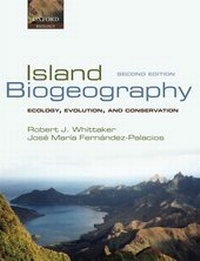
Island Biogeography
Ecology, Evolution, and Conservation
2nd Edition
Published on 30. November 2006
Book
Hardback
416 pages
978-0-19-856611-3 (ISBN)
Description
Island biogeography is the study of the distribution and dynamics of species in island environments. Due to their isolation from more widespread continental species, islands are ideal places for unique species to evolve, but they are also places of concentrated extinction. Not surprisingly, they are widely studied by ecologists, conservationists and evolutionary biologists alike.
There is no other recent textbook devoted solely to island biogeography, and a synthesis of the many recent advances is now overdue. This second edition builds on the success and reputation of the first, documenting the recent advances in this exciting field and explaining how islands have been used as natural laboratories in developing and testing ecological and evolutionary theories. In addition, the book describes the main processes of island formation, development and eventual demise, and
explains the relevance of island environmental history to island biogeography. The authors demonstrate the huge significance of islands as hotspots of biodiversity, and as places from which disproportionate numbers of species have been extinguished by human action in historical time. Many island
species are today threatened with extinction, and this work examines both the chief threats to their persistence and some of the mitigation measures that can be put in play with conservation strategies tailored to islands.
There is no other recent textbook devoted solely to island biogeography, and a synthesis of the many recent advances is now overdue. This second edition builds on the success and reputation of the first, documenting the recent advances in this exciting field and explaining how islands have been used as natural laboratories in developing and testing ecological and evolutionary theories. In addition, the book describes the main processes of island formation, development and eventual demise, and
explains the relevance of island environmental history to island biogeography. The authors demonstrate the huge significance of islands as hotspots of biodiversity, and as places from which disproportionate numbers of species have been extinguished by human action in historical time. Many island
species are today threatened with extinction, and this work examines both the chief threats to their persistence and some of the mitigation measures that can be put in play with conservation strategies tailored to islands.
More details
Edition
2nd Revised edition
Language
English
Place of publication
Oxford
United Kingdom
Target group
College/higher education
Edition type
Revised edition
Illustrations
104 halftones, tables and line drawings
Dimensions
Height: 250 mm
Width: 190 mm
Thickness: 20 mm
Weight
1004 gr
ISBN-13
978-0-19-856611-3 (9780198566113)
Copyright in bibliographic data and cover images is held by Nielsen Book Services Limited or by the publishers or by their respective licensors: all rights reserved.
Schweitzer Classification
Other editions
Additional editions
Robert J. Whittaker | Jose Maria Fernandez-Palacios
Island Biogeography
Ecology, Evolution, and Conservation
Book
11/2006
2nd Edition
Oxford University Press
€90.37
Article exhausted; check different version
Previous edition

Robert J. Whittaker
Island Biogeography
Book
09/1998
Oxford University Press
€66.24
Article exhausted; check for reprint
Persons
Robert J. Whittaker is Professor of Biogeography at the Oxford University Centre for the Environment
Jose Maria Fernandez-Palacios is Professor of Ecology at the La Laguna University, Tenerife
Jose Maria Fernandez-Palacios is Professor of Ecology at the La Laguna University, Tenerife
Content
PART 1 - ISLANDS AS NATURAL LABORATORIES; PART 2- ISLAND ECOLOGY; PART 3- ISLAND EVOLUTION; PART 4- ISLANDS AND CONSERVATION