

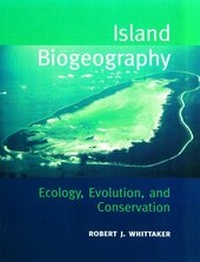
Island Biogeography
Ecology, Evolution and Conservation
Published on 1. September 1998
Book
Paperback/Softback
297 pages
978-0-19-850020-9 (ISBN)
Description
Islands, being discrete, internally quantifiable, numerous, and varied entities, provide us with natural laboratories for developing theories and models of how evolution works. Work on evolution on islands has a long-established biogeographical pedigree, stretching back to the work of Darwin and Wallace, and generating ideas, theories, and models that have played a central role in the development of mainstream ecology, evolutionary biology, and biogeography. Island Biogeography is a new textbook, aimed at advanced undergraduates and graduate students. The first comprehensive book to be written on the topic since 1981, it provides a much needed synthesis of recent developments across the discipline, linking current theoretical debates with applied island ecology.
The book covers the following diverse themes: the nature and formation of island environments, and their special contribution to global biodiversity; micro- and macro- evolutionary change on islands, and the frameworks by which these changes may be understood; island ecological theories concerning species numbers, species assembly, and composition; a critical assessment of the contribution of island theories to conservation biology; and finally, an assessment of the human impact on island biodiversity, setting out the tremendous scale of anthropogenic extinctions, and assessing the current threats and remedies. Written by an author who has been researching and teaching island biogeography for many years, Island Biogeography is wide-ranging, authoritative, and accessible to students from across geography and the life sciences. The first truly modern textbook on a fascinating and important subject in evolution and ecology.
The book covers the following diverse themes: the nature and formation of island environments, and their special contribution to global biodiversity; micro- and macro- evolutionary change on islands, and the frameworks by which these changes may be understood; island ecological theories concerning species numbers, species assembly, and composition; a critical assessment of the contribution of island theories to conservation biology; and finally, an assessment of the human impact on island biodiversity, setting out the tremendous scale of anthropogenic extinctions, and assessing the current threats and remedies. Written by an author who has been researching and teaching island biogeography for many years, Island Biogeography is wide-ranging, authoritative, and accessible to students from across geography and the life sciences. The first truly modern textbook on a fascinating and important subject in evolution and ecology.
Reviews / Votes
Island Biogeography will satisfy those looking for a comprehansive text on island ecology. Nature, Vol. 398, April 1999More details
Language
English
Place of publication
Oxford
United Kingdom
Target group
Professional and scholarly
Illustrations
num. fig., 16 Fotos bzw. Rasterbilder
16 halftones, numerous line figures
Dimensions
Height: 246 mm
Width: 189 mm
ISBN-13
978-0-19-850020-9 (9780198500209)
Copyright in bibliographic data and cover images is held by Nielsen Book Services Limited or by the publishers or by their respective licensors: all rights reserved.
Schweitzer Classification
Other editions
New editions
Robert J. Whittaker | Jose Maria Fernandez-Palacios
Island Biogeography
Ecology, Evolution, and Conservation
Book
11/2006
2nd Edition
Oxford University Press
€90.52
Article exhausted; check different version
Content
Preface and acknowledgements; 1. The natural laboratory paradigm; 2. Island Environments; 3. Biodiversity hot-spots; 4. Speciation and the island condition; 5. Arrival and change; 6. Emergent models of island evolution; 7. Species numbers games; 8. Community assembly and dynamics; 9. Island theory and conservation; 10. The human impact on island ecosystems; Further reading; Bibliography; Index