

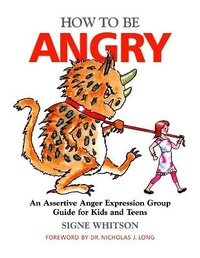
How to Be Angry
An Assertive Anger Expression Group Guide for Kids and Teens
Published on 15. June 2011
Book
Paperback/Softback
216 pages
978-1-84905-867-4 (ISBN)
Description
Children often struggle to cope with anger, and angry feelings can boil over into aggression and destructive behaviour. This resource takes a different approach to anger, teaching children how to be angry effectively, rather than telling them not to be angry at all.
This group program provides step-by-step guidelines for building anger management and assertive emotional expression skills through tailored lessons, group activities and thought-provoking discussions. Participants will learn specific skills such as:
? Using I-Statements
? Standing Up to Bullies
? Disagreeing without Arguing
? Making and Refusing Requests
? Responding to Anger
? Finding Win-Win Solutions
Suitable for use with children and teenagers aged 5 - 18, this engaging resource will help children to overcome self-destructive patterns of passive, aggressive, and passive aggressive behaviour. It will be of great use to educators, counselors, social workers, youth care professionals, psychologists and parents.
This group program provides step-by-step guidelines for building anger management and assertive emotional expression skills through tailored lessons, group activities and thought-provoking discussions. Participants will learn specific skills such as:
? Using I-Statements
? Standing Up to Bullies
? Disagreeing without Arguing
? Making and Refusing Requests
? Responding to Anger
? Finding Win-Win Solutions
Suitable for use with children and teenagers aged 5 - 18, this engaging resource will help children to overcome self-destructive patterns of passive, aggressive, and passive aggressive behaviour. It will be of great use to educators, counselors, social workers, youth care professionals, psychologists and parents.
Reviews / Votes
Each lesson in this very well-done guide book for teaching young people beter ways to express angry feelings is also vey user-friendly... How to Be Angry is a winning recipe and will be a valuable tool in homes, schools, community-base and residential programs. I recommend this book confidently. -- Reclaiming Youth International It is clear and well laid out... A useful tool for teachers. -- The SL (The School Librarian) How to Be Angry is theoretically sound, psychologically realistic and engagingly interactive. Anyone working or living with young people will be interested in How to Be Angry for the practical guidelines and engaging activities it uses to teach positive choices in anger expression and real-world skills for assertive communication. I can assure you that after teaching this curriculum and experiencing the rewarding comments of the students, this book, How to Be Angry, will never be returned to your book shelf. -- From the Foreword by Dr Nicholas J. Long, Professor Emeritus, American University, Washington D.C., USA and President, Life Space Crisis Intervention Institute, USA This book provides resources ideas and session plans for working on anger management and expression strategies with children and teenagers... The session plans are well laid out and easy to follow, with ideas for group activities and printable hand outs... Each session includes a weekly journal activity and a note for parents... I would recommend this book for direct, practical work on anger management with children and young people. The book is clear and practical, and would be a useful resource for anyone working in education or youth work. -- Laura Oxley, Behaviour Support Worker * Debate - British Psychological Society *More details
Language
English
Place of publication
London
United Kingdom
Target group
College/higher education
Product notice
Paperback (UK-trade)
Dimensions
Height: 278 mm
Width: 214 mm
Thickness: 14 mm
Weight
540 gr
ISBN-13
978-1-84905-867-4 (9781849058674)
Copyright in bibliographic data and cover images is held by Nielsen Book Services Limited or by the publishers or by their respective licensors: all rights reserved.
Schweitzer Classification
Other editions
New editions
Book
04/2022
Jessica Kingsley Publishers
€42.50
Shipment within 3-4 weeks
Person
Signe Whitson is an author and internationally-recognized speaker with over 20 years of experience working with children, teens, and families. She is a licensed social worker, Dean of Students at a K-8 school in northeastern Massachusetts, and the Chief Operating Officer of the Life Space Crisis Intervention Institute, an international training and certification program for helping young people turn problem situations into learning opportunities. Signe is the author of eight books, including How to Be Angry: Strategies to Help Kids Express Anger Constructively (Jessica Kingsley Publishers). For more information, please visit www.signewhitson.com
Content
Foreword by Nicholas J. Long. Introduction. About this book. Who is How to Be Angry for? Facilitator qualifications. Creating a positive group environment. Using the curriculum. Feedback. Part 1: Exploring Anger Behaviors. Session 1 That Makes Me So Mad!: Identifying Common Anger Triggers. Session 2 Decisions, Decisions! Four Choices in Anger Expression. Session 3 Sugarcoated Hostility: The Five Levels of Passive Aggressive Behavior. Session 4 Behind the Mask: Exploring Public Faces and Private Realities. Session 5 More than Words Can Express: How Body Language and Tone of Voice Can Say It All. Part 2: Developing Assertive Anger Expression Skills. Session 6 I Feel Angry: Using I-Messages to Express Anger Assertively. Session 7 Yes, No, or Maybe So: Assertive Skills for Disagreeing Without Arguing. Session 8 Keeping Bullies at Bay, Part 1: The Five Ws of Bullying. Session 9 Keeping Bullies at Bay, Part 2: Four Rules for Using Assertive Communication to Stand Up to Bullies. Session 10 "May I Please" and "No Can Do:" Guidelines for Assertively Making and Refusing Requests. Session 11 "That's So Nice of You to Say:" Assertive Strategies for Giving and Receiving Compliments. Session 12 On the Receiving End: Three Steps for Responding Assertively to Anger. Session 13 Four Square Problem-Solving: Finding Win-Win Solutions. Part 3: Committing to Assertive Anger Expression. Session 14 What's the Plan?: Replacing Self-Defeating Patterns and Committing to Assertive Behaviors. Session 15 Putting It All Together: Choosing to Use Assertive Behaviors to Express Anger. References.