

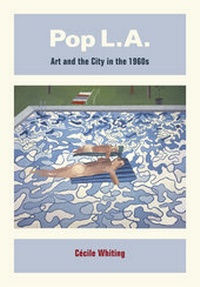
Pop L.A.
Art and the City in the 1960s
1st Edition
Published on 4. August 2008
Book
Paperback/Softback
268 pages
978-0-520-25634-7 (ISBN)
Description
Andy Warhol said about his road trip to Los Angeles in 1963: 'The farther West we drove, the more Pop everything looked on the highways'. In this original and engaging book, Cecile Whiting examines what Pop looked like when it left the highbrow cloisters of Manhattan's art galleries and ventured westward to the sprawling suburbs of Los Angeles. She finds that the artists who made California their home in the 1960s did not abandon their paint brushes for tennis rackets and surfboards, but rather created in their works a new and different sense of space, the urban experience, and popular culture. Whiting shows how artists such as Vija Celmins, Llyn Foulkes, David Hockney, Dennis Hopper, Allan Kaprow, Claes Oldenburg, Ed Ruscha, and Judy Chicago helped to shape the identity of Los Angeles as an emerging art center, while avoiding in their representation of the city the cliches of both its boosters and its detractors. Delving deep into the southern California aesthetic sensibility, "Pop L.A." recounts how the artists transformed the image of the city in works that focused on the ocean and landscape, suburban life, dilapidated houses in aging neighborhoods, streets and parking lots, and public buildings such as the Los Angeles County Museum of Art.
The common bond of place, for Whiting, gives coherence to the varied experiments in the visual and performance arts that altered the cultural terrain during this pivotal time. The Los Angeles art scene in the 1960s inspired a new generation of architectural writing about the metropolis and its debased sister city, Las Vegas. Over the course of the decade, the conception of the city pioneered by artists in Los Angeles spread beyond the city of angels to characterize cultural life in the United States.
The common bond of place, for Whiting, gives coherence to the varied experiments in the visual and performance arts that altered the cultural terrain during this pivotal time. The Los Angeles art scene in the 1960s inspired a new generation of architectural writing about the metropolis and its debased sister city, Las Vegas. Over the course of the decade, the conception of the city pioneered by artists in Los Angeles spread beyond the city of angels to characterize cultural life in the United States.
Reviews / Votes
"Pioneering... Whiting's project will be central to any further work on West Coast art in the postwar period." Art Journal (CAA)More details
Edition
First Edition
Language
English
Place of publication
Berkerley
United States
Target group
Professional and scholarly
Product notice
Paperback (trade)
Illustrations
20 color illustrations, 77 b-w photographs
Dimensions
Height: 254 mm
Width: 178 mm
Thickness: 20 mm
Weight
726 gr
ISBN-13
978-0-520-25634-7 (9780520256347)
Copyright in bibliographic data and cover images is held by Nielsen Book Services Limited or by the publishers or by their respective licensors: all rights reserved.
Schweitzer Classification
Person
Cecile Whiting is Professor of Art History at the University of California, Irvine, and author of A Taste for Pop: Pop Art, Gender, and Consumer Culture (1997) and Antifascism in American Art (1989).
Content
Acknowledgments Introduction Chapter One. For Purple Mountain Majesties Chapter Two. Cruising Los Angeles Chapter Three. The Erotics of the Built Environment Chapter Four. The Watts Towers as Urban Landmark Chapter Five. L.A. Happenings and Performance Art Conclusion Notes List of Illustrations Index