

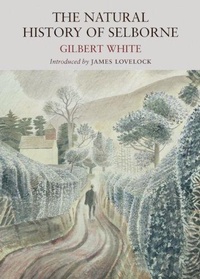
The Natural History of Selborne
Will be published approx. on 12. November 2014
Book
Paperback/Softback
263 pages
978-1-908213-25-9 (ISBN)
Description
A century before Charles Darwin, decades before the French Revolution, Gilbert White began his lifelong habit of measuring and observing the world around his Hampshire home. Daily rainfall levels and temperature shifts were recorded with home-made instruments. Bird song and seasonal migrations were noted. The feeding habits of frogs, bats and mice were jotted into his diaries and nature journals, as were the simple delights he felt hearing a cricket in the meadow or a blackbird in the hedgerows. The extraordinary detail of the natural history he described has given us, two hundred years later, a glimpse into ecosystems untouched by industry and an account of how changes in global climate can affect local weather patterns. Gilbert White is now considered England's first ecologist. The Natural History of Selborne is one the most published books in the English language. Yet the most enduring quality of his writing is the spirit of curiosity that bounds across every page, inspiring us to explore the abundance of life at our doorsteps and around our parishes.
More details
Series
Language
English
Place of publication
Wimborne Minster
United Kingdom
Dimensions
Height: 219 mm
Width: 159 mm
Thickness: 20 mm
Weight
428 gr
ISBN-13
978-1-908213-25-9 (9781908213259)
Copyright in bibliographic data and cover images is held by Nielsen Book Services Limited or by the publishers or by their respective licensors: all rights reserved.
Schweitzer Classification
Persons
Gilbert White was born in his grandfather's vicarage at Selborne, Hampshire, in 1720 and was educated by the Poet Laureate Thomas Wharton before studying at Oriel College, Oxford. He was awarded his deacon's orders in 1746, became fully ordained in 1749, and held several curacies in Hampshire and Wiltshire. After his father died in 1758 he returned to 'The Wakes', his family home in Selborne, where he lived as the curate and began his lifelong habit of recording the natural world, keeping journals, publishing articles for the Royal Society, and writing letters to leading botanists and commentators of his day. The Natural History and Antiquities of Selborne was first published in 1789 and has been in print ever since.