

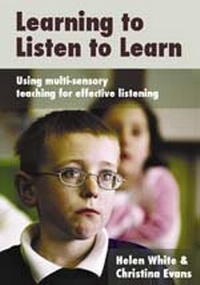
Learning to Listen to Learn
Using Multi-Sensory Teaching for Effective Listening
1st Edition
Published on 19. July 2005
Book
Hardback
76 pages
978-1-4129-2048-3 (ISBN)
Description
`What a gem. This book introduces a whole-school approach to an area that has previously been addressed by the speech and language specialists working with small groups.
This approach helps to develop language processing skills by improving the auditory and visual attention skills used
The resources on the CD-Rom will be invaluable for reminding pupils if the skills they should be using to learn to listen. This interactive and fun approach explains the difference between the skills of social listening and listening skills necessary for processing information in learning' - TES Extra, Special Needs
`This book is well designed. It utilizes many strategies speech-therapists use in their clinical work. It is a simple resource that is easy to follow and has had good rates of success when delivered by teachers' - Communication Matters
`The programme should lead to improvements in social skills, learning and classroom behaviour, and it is easy to implement with two teaching sessions and a follow-up booster session. There are comprehensive facilitator instructions and all the resources are provided for these fun and interactive sessions that will engage all pupils' - Learning to Learn Newsletter
This book provides a completely new approach to the teaching of listening. Whilst educators are familiar with assessing comprehension, little has been done to ensure that the input process is efficient. By improving auditory and visual attention during a listening activity the authors demonstrate how the process can be enhanced.
The programme should lead to improvements in social skills, learning and classroom behaviour, and it is easy to implement with two teaching sessions and a follow-up booster session.
There are comprehensive facilitator instructions and all the resources are provided for these fun and interactive sessions that will engage all pupils.
The difference between social listening for interaction and accurate listening in a classroom setting is explained. As well as the usual topics: eye contact, body language, acknowledgements etc there is a fascinating section on the neurological evidence for the importance of efficient sitting positions. We expect young people to acquire effective listening skills but it is a complex activity, which benefits direct teaching.
This approach helps to develop language processing skills by improving the auditory and visual attention skills used
The resources on the CD-Rom will be invaluable for reminding pupils if the skills they should be using to learn to listen. This interactive and fun approach explains the difference between the skills of social listening and listening skills necessary for processing information in learning' - TES Extra, Special Needs
`This book is well designed. It utilizes many strategies speech-therapists use in their clinical work. It is a simple resource that is easy to follow and has had good rates of success when delivered by teachers' - Communication Matters
`The programme should lead to improvements in social skills, learning and classroom behaviour, and it is easy to implement with two teaching sessions and a follow-up booster session. There are comprehensive facilitator instructions and all the resources are provided for these fun and interactive sessions that will engage all pupils' - Learning to Learn Newsletter
This book provides a completely new approach to the teaching of listening. Whilst educators are familiar with assessing comprehension, little has been done to ensure that the input process is efficient. By improving auditory and visual attention during a listening activity the authors demonstrate how the process can be enhanced.
The programme should lead to improvements in social skills, learning and classroom behaviour, and it is easy to implement with two teaching sessions and a follow-up booster session.
There are comprehensive facilitator instructions and all the resources are provided for these fun and interactive sessions that will engage all pupils.
The difference between social listening for interaction and accurate listening in a classroom setting is explained. As well as the usual topics: eye contact, body language, acknowledgements etc there is a fascinating section on the neurological evidence for the importance of efficient sitting positions. We expect young people to acquire effective listening skills but it is a complex activity, which benefits direct teaching.
More details
Series
Language
English
Place of publication
Thousand Oaks
United States
Target group
Professional and scholarly
Product notice
Cloth over boards
Dimensions
Height: 242 mm
Width: 170 mm
Weight
317 gr
ISBN-13
978-1-4129-2048-3 (9781412920483)
Copyright in bibliographic data and cover images is held by Nielsen Book Services Limited or by the publishers or by their respective licensors: all rights reserved.
Schweitzer Classification
Other editions
Additional editions
Helen White | Christina Evans
Learning to Listen to Learn
Using Multi-Sensory Teaching for Effective Listening
Book
07/2005
1st Edition
SAGE Publications Inc
€83.23
Shipment within 10-20 days
Helen White | Christina Evans
Learning to Listen to Learn
Using Multi-Sensory Teaching for Effective Listening
E-Book
07/2005
1st Edition
SAGE Publications Ltd
€85.49
Available for download
Content
Introduction and Rationale
The Importance of Listening and Language Development to Learning
Attention and Listening Can Be Taught
The Structure of the Programme
Who Should Use This Programme?
What Will This Programme Achieve?
How Was The Material Developed?
How to Use The Programme
The Programme
Session 1: Social Listening
Resources for Session 1
Session 2: Listening In the Classroom
Resources for Session 2
Follow-Up Work
Session 3: Booster Session
The Importance of Listening and Language Development to Learning
Attention and Listening Can Be Taught
The Structure of the Programme
Who Should Use This Programme?
What Will This Programme Achieve?
How Was The Material Developed?
How to Use The Programme
The Programme
Session 1: Social Listening
Resources for Session 1
Session 2: Listening In the Classroom
Resources for Session 2
Follow-Up Work
Session 3: Booster Session