

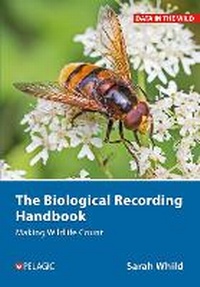
The Biological Recording Handbook
Making Wildlife Count
Will be published approx. on 12. February 2026
Book
Hardback
216 pages
978-1-78427-588-4 (ISBN)
Description
Biological recording is the discipline of writing down natural history observations of a correctly identified species, in a specific location, on a specific date, by a named individual. Simple enough, you may think. But these four pieces of data each have their own pitfalls for the unwary, whether making records or using them in analysis.
This is the first time that all of the principles and processes of biological recording have been brought together, with a detailed look at some fascinating historical examples. What is biological recording, why do we do it, how did it start, and why does it underpin just about every evidence-based decision that is made in conservation? The book covers:
- The art of recording - in-depth, practical information from site-specific work and different habitats to handling absence data, bias and error.
- Planning - including relevant legislation and monitoring.
- Context - databases, collections, rarities, refereeing/validation.
- Analysis - working with lists and indicator species.
- Reporting - how-to, the community, ownership and confidentiality.
Controversial topics such as species reintroductions are discussed, tips are offered on how to make the most effective use of data, and readers are invited to carry out thought experiments on aspects of their own recording activities as well as considering the future of this all-important discipline.
The Biological Recording Handbook provides comprehensive guidance for anyone making wildlife records, whether amateur recorder, ecological consultant or conservation biology academic.
This is the first time that all of the principles and processes of biological recording have been brought together, with a detailed look at some fascinating historical examples. What is biological recording, why do we do it, how did it start, and why does it underpin just about every evidence-based decision that is made in conservation? The book covers:
- The art of recording - in-depth, practical information from site-specific work and different habitats to handling absence data, bias and error.
- Planning - including relevant legislation and monitoring.
- Context - databases, collections, rarities, refereeing/validation.
- Analysis - working with lists and indicator species.
- Reporting - how-to, the community, ownership and confidentiality.
Controversial topics such as species reintroductions are discussed, tips are offered on how to make the most effective use of data, and readers are invited to carry out thought experiments on aspects of their own recording activities as well as considering the future of this all-important discipline.
The Biological Recording Handbook provides comprehensive guidance for anyone making wildlife records, whether amateur recorder, ecological consultant or conservation biology academic.
More details
Series
Language
English
Place of publication
Exeter
United Kingdom
Target group
Professional and scholarly
Dimensions
Height: 250 mm
Width: 175 mm
Thickness: 16 mm
Weight
564 gr
ISBN-13
978-1-78427-588-4 (9781784275884)
Copyright in bibliographic data and cover images is held by Nielsen Book Services Limited or by the publishers or by their respective licensors: all rights reserved.
Schweitzer Classification
Person
Sarah Whild's career has been spent teaching biological recording as a university lecturer, although by nature she is a botanist and has been an ecological consultant. Now retired, she works closely with the Botanical Society of Britain and Ireland on field skills and is a trustee of the National Forum for Biological Recording.