

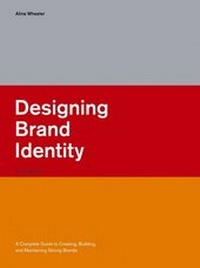
Designing Brand Identity
A Complete Guide to Creating, Building, and Maintaining Strong Brands
2nd Edition
Published on 1. February 2006
Book
Hardback
288 pages
978-0-471-74684-3 (ISBN)
Description
From translating the vision of a CEO and conducting research, through designing a sustainable identity program and building online branding tools, Designing Brand Identity helps companies create stronger brands. With an easy style, step-by-step considerations, and a proven, universal five-phase process and methodology for creating and implementing effective brand identity, it offers the tools that brand managers, marketers, and designers need when creating or managing a brand. The new edition now includes a wealth of full-color examples and updated case studies for world-class brands such as BP, Tazo Tea, and Mini Cooper.
Reviews / Votes
"...the new edition of this well-regarded book is a joy...an inspiring and powerful toolkit" (The Marketer, May 2006)More details
Edition
2., Auflage
Language
English
Place of publication
New York
United States
Publishing group
John Wiley and Sons Ltd
Target group
Professional and scholarly
Edition type
Revised edition
Illustrations
Illustrations (some col.)
Dimensions
Height: 24.2 cm
Width: 19.8 cm
Weight
1000 gr
ISBN-13
978-0-471-74684-3 (9780471746843)
Schweitzer Classification
Other editions
New editions
Book
10/2017
5th Edition
Wiley
€52.50
Article exhausted; check for reprint
Book
09/2009
3rd Edition
Wiley
€39.90
Article exhausted; check for reprint
Previous edition

Alina Wheeler
The Designing Brand Identity
A Complete Guide to Creating, Building, and Maintaining Strong Brands
Book
02/2003
Wiley
€33.47
Article exhausted; check for reprint
Person
Alina Wheeler applies a dynamic process to help enterprises express their brands. Her clients include entrepreneurial companies and foundations whose leaders embrace the future. Wheeler collaborates with strategists, designers, and managers, seizing every opportunity to build brands and provide compelling customer experiences.
Wheeler speaks frequently to management and creative teams in companies, as well as to business and design students at universities. She introduces branding fundamentals, identifies brand trends, and connects their relationship to innovation and business.
Wheeler speaks frequently to management and creative teams in companies, as well as to business and design students at universities. She introduces branding fundamentals, identifies brand trends, and connects their relationship to innovation and business.
Content
Perception.
Part 1: Illuminates the difference between brand and brand identity, and what it takes to be the best. It's easy to bypass the fundamentals in the speed of a new project, and critical to establish a shared vocabulary for the entire branding team.
Identity.
What is a brand?
What is brand identity?
Why does it work?
When is it needed?
Who creates it?
Why invest in brand identity?
Brand identity ideals.
Overview.
Vision.
Meaning.
Authenticity.
Differentiation.
Sustainability.
Coherence.
Flexibility.
Commitment.
Value.
Brand identity fundamentals.
Brand strategy.
Positioning.
Customer experience.
Brand architecture.
Cross cultures.
Staying on message.
Names.
Taglines.
Brandmarks overview.
Redesign.
Wordmarks.
Letterform marks.
Pictorial marks.
Abstract marks.
Emblems.
Characters.
Look and feel.
Process.
Part 2: Presents a universal identity process that underlies all successful brand identity initiatives, regardless of the project's scope and nature. This section answers the question "Why does it take so long?" and addresses collaboration and decision making.
A process for success.
Managing the process.
Collaboration.
Managing decisions.
Insight.
Phase 1: Conducting research.
Understanding the business.
Market research.
Marketing audit.
Competitive audit.
Stakeholder audit.
Language audit.
Audit readout.
Phase 2: Clarifying strategy.
Clarifying brand strategy.
Narrowing the focus.
The big idea.
Brand brief + creative brief.
Naming.
Phase 3: Designing identity.
Designing symbols.
Logotype + signature.
Color.
More color.
Typography.
Sound.
Motion.
Trial applications.
Presentation.
Phase 4: Creating touchpoints.
Overview.
Trademark process.
Letterhead.
Business card.
Brochure.
Packaging.
Website.
Signage.
Advertising.
Environments.
Vehicles.
Uniforms.
New media.
Ephemera.
Phase 5: Managing assets.
Overview.
Changing brand identity.
Launching brand identity.
Measuring success.
Building brand champions.
Internal design teams.
Brand books.
Standards content.
Standards + guidelines.
Online branding tools.
Reproduction files.
Global metrics.
Practice.
Part 3: Showcases best practices. Local and global, public and private, these highly successful projects, created by branding firms, design consultancies and in-house creative teams, inspire and exemplify original, flexible, lasting solutions.
Case studies.
Amazon.com.
ACLU.
American Girl Place.
Assurant.
Atlanta 1996 Centennial Olympic Games.
Aveda Japan.
Aveda Uruku.
Bahamas.
Bank of New York.
BP.
Center City District.
Cereality.
Chambers Group.
Chicago GSB.
Cingular Wireless.
Citi.
Columbus Salame.
Dosirak.
Dummies.
Eimer Stahl.
FedEx.
FedEx Kinko's.
Find Great People.
The Franklin Institute.
Kort & Godt.
Late July.
Martha Stewart.
Mini Cooper.
Monogram Biosciences.
Mutual of Omaha.
The New School.
Olympic Games.
Parkinson's Disease Foundation.
Presbyterian Church.
Princeton Athletics.
Radio Free Europe/Radio Liberty.
Superman.
Tate.
Tazo.
TiVo.
Unilever.
Vanguard.
Velfina.
The Wild Center.
Zoom.
Origins of brand identity.
Bibliography.
Index.
About the author.
Part 1: Illuminates the difference between brand and brand identity, and what it takes to be the best. It's easy to bypass the fundamentals in the speed of a new project, and critical to establish a shared vocabulary for the entire branding team.
Identity.
What is a brand?
What is brand identity?
Why does it work?
When is it needed?
Who creates it?
Why invest in brand identity?
Brand identity ideals.
Overview.
Vision.
Meaning.
Authenticity.
Differentiation.
Sustainability.
Coherence.
Flexibility.
Commitment.
Value.
Brand identity fundamentals.
Brand strategy.
Positioning.
Customer experience.
Brand architecture.
Cross cultures.
Staying on message.
Names.
Taglines.
Brandmarks overview.
Redesign.
Wordmarks.
Letterform marks.
Pictorial marks.
Abstract marks.
Emblems.
Characters.
Look and feel.
Process.
Part 2: Presents a universal identity process that underlies all successful brand identity initiatives, regardless of the project's scope and nature. This section answers the question "Why does it take so long?" and addresses collaboration and decision making.
A process for success.
Managing the process.
Collaboration.
Managing decisions.
Insight.
Phase 1: Conducting research.
Understanding the business.
Market research.
Marketing audit.
Competitive audit.
Stakeholder audit.
Language audit.
Audit readout.
Phase 2: Clarifying strategy.
Clarifying brand strategy.
Narrowing the focus.
The big idea.
Brand brief + creative brief.
Naming.
Phase 3: Designing identity.
Designing symbols.
Logotype + signature.
Color.
More color.
Typography.
Sound.
Motion.
Trial applications.
Presentation.
Phase 4: Creating touchpoints.
Overview.
Trademark process.
Letterhead.
Business card.
Brochure.
Packaging.
Website.
Signage.
Advertising.
Environments.
Vehicles.
Uniforms.
New media.
Ephemera.
Phase 5: Managing assets.
Overview.
Changing brand identity.
Launching brand identity.
Measuring success.
Building brand champions.
Internal design teams.
Brand books.
Standards content.
Standards + guidelines.
Online branding tools.
Reproduction files.
Global metrics.
Practice.
Part 3: Showcases best practices. Local and global, public and private, these highly successful projects, created by branding firms, design consultancies and in-house creative teams, inspire and exemplify original, flexible, lasting solutions.
Case studies.
Amazon.com.
ACLU.
American Girl Place.
Assurant.
Atlanta 1996 Centennial Olympic Games.
Aveda Japan.
Aveda Uruku.
Bahamas.
Bank of New York.
BP.
Center City District.
Cereality.
Chambers Group.
Chicago GSB.
Cingular Wireless.
Citi.
Columbus Salame.
Dosirak.
Dummies.
Eimer Stahl.
FedEx.
FedEx Kinko's.
Find Great People.
The Franklin Institute.
Kort & Godt.
Late July.
Martha Stewart.
Mini Cooper.
Monogram Biosciences.
Mutual of Omaha.
The New School.
Olympic Games.
Parkinson's Disease Foundation.
Presbyterian Church.
Princeton Athletics.
Radio Free Europe/Radio Liberty.
Superman.
Tate.
Tazo.
TiVo.
Unilever.
Vanguard.
Velfina.
The Wild Center.
Zoom.
Origins of brand identity.
Bibliography.
Index.
About the author.