

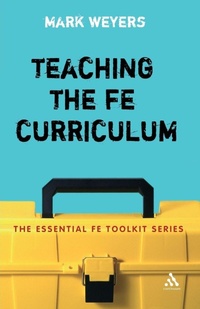
Teaching the FE Curriculum
Encouraging active learning in the classroom
Published on 5. October 2006
Book
Paperback/Softback
146 pages
978-0-8264-8804-6 (ISBN)
Description
This accessible and informative guide provides lecturers with a range of practical strategies to promote effective learning in the FE classroom. Mark Weyers introduces the learning theories that underlie these strategies, and considers how they can best be applied practically in the classroom and what place they have within a standardized National Curriculum. He offers invaluable advice on planning interesting lessons and learning tasks that also meet exam board specifications.
More details
Series
Language
English
Place of publication
London
United Kingdom
Publishing group
Bloomsbury Publishing PLC
Target group
College/higher education
Professional and scholarly
Teachers, Student Teachers
Product notice
Paperback (trade)
Dimensions
Height: 216 mm
Width: 140 mm
Thickness: 8 mm
Weight
179 gr
ISBN-13
978-0-8264-8804-6 (9780826488046)
Copyright in bibliographic data and cover images is held by Nielsen Book Services Limited or by the publishers or by their respective licensors: all rights reserved.
Schweitzer Classification
Person
Dr Mark Weyers is a Teaching Fellow at University College London, UK.
Content
Introduction; Important Factors in Curriculum Design; Chapter One: Teaching in the FE classroom; Chapter Two: Learning in the FE classroom; Chapter Three: Curriculum design - constructive alignment of course aims and objectives; Chapter Four: Curriculum Design - Integrating exam board topics and specifications Models of Lesson Design - Teaching and Learning in the FE Classroom; Chapter Five: Instructivism in the FE classroom; Chapter Six: Constructivism in the FE classroom; Chapter Seven: Problem-based learning in the FE classroom; Chapter Eight: Designing learning tasks to encourage deep task engagement in the FE Classroom; Chapter Nine: Integrating lesson design models; Chapter Ten: Conclusion; Appendices and Bibliography.