

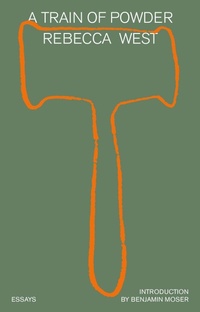
A Train of Powder
Essays
Will be published approx. on 9. February 2027
Book
Paperback/Softback
320 pages
978-0-385-55205-9 (ISBN)
Description
A masterwork of moral inquiry from one of the twentieth century’s greatest observers of power, guilt, and justice.
In A Train of Powder, Rebecca West—one of the great literary journalists of the twentieth century—brings her crystalline intelligence and unsparing moral vision to some of the most contentious trials of the postwar era. Part reportage, part meditation on justice and guilt, this extraordinary book traces the tangled threads of law, history, and human frailty that define how we judge both individuals and nations.
Across four powerful accounts written between 1946 and 1954, West examines the Nuremberg war crimes trials with an unflinching eye, capturing the atmosphere of a world still raw from conflict and the fragile promise of accountability. She turns the lens, too, on a lynching trial in the American South and a notorious torso murder in England and follows the twists of an espionage case that reveals how fear and suspicion shape verdicts and lives alike.
With prose that fuses rigorous observation and psychological insight, A Train of Powder doesn’t just recount court proceedings, it interrogates the very foundations of justice, asking how we assign blame, reckon with atrocity, and try to make sense of what guilt means in a fractured world. These narratives stand as compelling reminders of the preciousness—and precariousness—of our rights, and of the human stories hidden in every headline.
In A Train of Powder, Rebecca West—one of the great literary journalists of the twentieth century—brings her crystalline intelligence and unsparing moral vision to some of the most contentious trials of the postwar era. Part reportage, part meditation on justice and guilt, this extraordinary book traces the tangled threads of law, history, and human frailty that define how we judge both individuals and nations.
Across four powerful accounts written between 1946 and 1954, West examines the Nuremberg war crimes trials with an unflinching eye, capturing the atmosphere of a world still raw from conflict and the fragile promise of accountability. She turns the lens, too, on a lynching trial in the American South and a notorious torso murder in England and follows the twists of an espionage case that reveals how fear and suspicion shape verdicts and lives alike.
With prose that fuses rigorous observation and psychological insight, A Train of Powder doesn’t just recount court proceedings, it interrogates the very foundations of justice, asking how we assign blame, reckon with atrocity, and try to make sense of what guilt means in a fractured world. These narratives stand as compelling reminders of the preciousness—and precariousness—of our rights, and of the human stories hidden in every headline.
More details
Language
English
Place of publication
United States
Publishing group
Random House USA Inc
Product notice
Paperback (trade)
Dimensions
Height: 191 mm
Width: 127 mm
Thickness: 21 mm
Weight
308 gr
ISBN-13
978-0-385-55205-9 (9780385552059)
Copyright in bibliographic data and cover images is held by Nielsen Book Services Limited or by the publishers or by their respective licensors: all rights reserved.
Schweitzer Classification
Persons
Dame Cecily Isabel Fairfield DBE (1892–1983), known as Rebecca West, or Dame Rebecca West, was a British author, journalist, literary critic and travel writer. She wrote in many genres and reviewed books for The Times, the New York Herald Tribune, The Sunday Telegraph and The New Republic.
Benjamin Moser is the Pulitzer Prize–winning author of Sontag: Her Life and Work. His first book, Why This World: A Biography of Clarice Lispector, was a finalist for the National Book Critics’ Circle Award and a New York Times Notable Book of 2009.
Benjamin Moser is the Pulitzer Prize–winning author of Sontag: Her Life and Work. His first book, Why This World: A Biography of Clarice Lispector, was a finalist for the National Book Critics’ Circle Award and a New York Times Notable Book of 2009.