

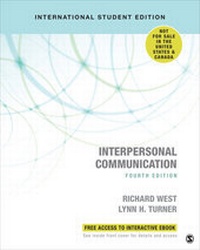
Interpersonal Communication - International Student Edition
4th Edition
Published on 14. February 2019
Book
Mixed media product
978-1-5443-7055-2 (ISBN)
Description
Now published by SAGE!
Interpersonal Communication, Fourth Edition empowers students to become more confident communicators by providing them with both the knowledge and the practical skills they need to make effective communication choices in today's rapidly changing and technologically advanced society. Rather than "telling" students how to communicate, authors Richard L. West and Lynn H. Turner offer a toolbox of key skills pertaining to each communication theory so students can actively choose and experiment with strategies appropriate for a given situation. Filled with realistic examples and scenarios that reflect the diversity and interactions of today's students, this practical text makes clear connections among theory, skills, and the life situations we all encounter on a daily basis.
A Complete Teaching & Learning Package
SAGE Premium Video
Included in the interactive eBook! SAGE Premium Video tools and resources boost comprehension and bolster analysis.
Interactive eBook
Includes access to SAGE Premium Video, multimedia tools, and much more! Save when you bundle the interactive eBook with the new edition. Order using bundle ISBN: 9781544365657. Learn more.
SAGE coursepacks
FREE! Easily import our quality instructor and student resource content into your school's learning management system (LMS) and save time. Learn more.
SAGE edge
FREE online resources for students that make learning easier. See how your students benefit.
Interpersonal Communication, Fourth Edition empowers students to become more confident communicators by providing them with both the knowledge and the practical skills they need to make effective communication choices in today's rapidly changing and technologically advanced society. Rather than "telling" students how to communicate, authors Richard L. West and Lynn H. Turner offer a toolbox of key skills pertaining to each communication theory so students can actively choose and experiment with strategies appropriate for a given situation. Filled with realistic examples and scenarios that reflect the diversity and interactions of today's students, this practical text makes clear connections among theory, skills, and the life situations we all encounter on a daily basis.
A Complete Teaching & Learning Package
SAGE Premium Video
Included in the interactive eBook! SAGE Premium Video tools and resources boost comprehension and bolster analysis.
Interactive eBook
Includes access to SAGE Premium Video, multimedia tools, and much more! Save when you bundle the interactive eBook with the new edition. Order using bundle ISBN: 9781544365657. Learn more.
SAGE coursepacks
FREE! Easily import our quality instructor and student resource content into your school's learning management system (LMS) and save time. Learn more.
SAGE edge
FREE online resources for students that make learning easier. See how your students benefit.
More details
Edition
4th Revised edition
Language
English
Place of publication
Thousand Oaks
United States
Target group
College/higher education
Edition type
Revised edition
Dimensions
Height: 254 mm
Width: 203 mm
Weight
797 gr
ISBN-13
978-1-5443-7055-2 (9781544370552)
Copyright in bibliographic data and cover images is held by Nielsen Book Services Limited or by the publishers or by their respective licensors: all rights reserved.
Schweitzer Classification
Persons
Richard West (Ph.D., Ohio University, 1991) is Professor of Communication Studies at Emerson College. He received his BA and MA in Communication at Illinois State University.
Rich is the co-author (with Lynn Turner) of several leading books in communication (Perspectives on Family Communication/4th ed; Interpersonal Communication/2nd ed; IPC/1st ed; Introducing Communication Theory/5th ed; Gender and Communication/3rd ed;) and served as co-editor of the Sage Sourcebook of Family Communication. He is the author/co-author of over 40 articles and essays and he has participated in over 100 NCA programs. Rich's work has appeared in Communication Quarterly, Communication Education, Qualitative Research Reports in Communication, Communication Reports, Journal of Family Communication, among others. He has served as Guest Co-Editor of the Journal of Family Communication twice and has been a member of nearly 10 journal editorial boards in communication.
Rich's work intersects family, identity, and culture. Yet, he admits to being somewhat of a 'scholarly nomad,' exploring a number of different topics, including gay parenting, holiday stress, student questions in the classroom, job burnout, among other areas.
Rich is the recipient of several recognitions, including Outstanding Alumni in Communication awards from both Illinois State University and Ohio University. ISU has also recognized him as a "Distinguished Alum" in Forensics and as an "Outstanding Alum in Teacher Education." He has also been recognized as an ECA Research Fellow and was the recipient of ECA's Past President's Award. In 2012, the Communication Institute for Online Scholarship named him a "Leading Scholar in Communication Education."
He has served as President of the Eastern Communication (2008) and the National Communication Association (2012).
Lynn H. Turner (Ph.D., Northwestern University) is Professor of Communication Studies in the College of Communication at Marquette University. Her research areas of interest include interpersonal, gendered, and family communication. She is the co-author or co-editor of over 10 books as well as several articles and book chapters (many with Rich West). Lynn has served in a number of different positions: Director of Graduate Studies for the College of Communication at Marquette University; President of the Organization for the Study of Communication, Language, and Gender (OSCLG), President of Central States Communication Association (CSCA), and Chair of the Family Communication Division for the National Communication Association. In her free time, Lynn delights in babysitting for her grandchildren.
Rich is the co-author (with Lynn Turner) of several leading books in communication (Perspectives on Family Communication/4th ed; Interpersonal Communication/2nd ed; IPC/1st ed; Introducing Communication Theory/5th ed; Gender and Communication/3rd ed;) and served as co-editor of the Sage Sourcebook of Family Communication. He is the author/co-author of over 40 articles and essays and he has participated in over 100 NCA programs. Rich's work has appeared in Communication Quarterly, Communication Education, Qualitative Research Reports in Communication, Communication Reports, Journal of Family Communication, among others. He has served as Guest Co-Editor of the Journal of Family Communication twice and has been a member of nearly 10 journal editorial boards in communication.
Rich's work intersects family, identity, and culture. Yet, he admits to being somewhat of a 'scholarly nomad,' exploring a number of different topics, including gay parenting, holiday stress, student questions in the classroom, job burnout, among other areas.
Rich is the recipient of several recognitions, including Outstanding Alumni in Communication awards from both Illinois State University and Ohio University. ISU has also recognized him as a "Distinguished Alum" in Forensics and as an "Outstanding Alum in Teacher Education." He has also been recognized as an ECA Research Fellow and was the recipient of ECA's Past President's Award. In 2012, the Communication Institute for Online Scholarship named him a "Leading Scholar in Communication Education."
He has served as President of the Eastern Communication (2008) and the National Communication Association (2012).
Lynn H. Turner (Ph.D., Northwestern University) is Professor of Communication Studies in the College of Communication at Marquette University. Her research areas of interest include interpersonal, gendered, and family communication. She is the co-author or co-editor of over 10 books as well as several articles and book chapters (many with Rich West). Lynn has served in a number of different positions: Director of Graduate Studies for the College of Communication at Marquette University; President of the Organization for the Study of Communication, Language, and Gender (OSCLG), President of Central States Communication Association (CSCA), and Chair of the Family Communication Division for the National Communication Association. In her free time, Lynn delights in babysitting for her grandchildren.
Content
1. Foundations of Interpersonal Communication
1.1 The Evolution and Foundation of the Communication Field
1.2 Defining Interpersonal Communication
1.3 Three Models of Human Communication
1-4 The Principles of Interpersonal Communication
1-5 Dispelling Myths about Interpersonal Communication
1-6 Interpersonal Communication Ethics
Chapter Wrap-Up
2. Communication, Culture, and Identity
2.1 Defining Culture
2.2 Diversity around the Globe and In the United States
2.3 Why Study Intercultural Communication?
2.4 Dimensions of Culture
2.5 Challenges of Intercultural Communication
2.6 Skill Set For Intercultural Understanding
Chapter Wrap-Up
3. Communication, Perception, Identity, and the Self
3.1 Understanding Interpersonal Perception
3.2 Influences on Perception
3.3 Dimensions of the Self
3.4 Identity Management
3.5 Online Identity Management
3.6 Skill Set: Improving Perception Checking and Self-Actualization
Chapter Wrap-Up
4. Communication Verbally
4.1 Understanding Verbal Symbols
4.2 Factors Affecting Verbal Symbols
4.3 The Destructive and Constructive Sides of Verbal Symbols
4.4 Skill Set For Improving Verbal Communication
Chapter Wrap-Up
5. Communicating Nonverbally
5.1 Assumptions of Nonverbal Communication
5.2 Nonverbal Communication Codes
5.3 The Influence of Culture on Nonverbal Communication
5.4 The Influence of Technology on Nonverbal Communication
5.5 Skill Set For Increasing Nonverbal Communication Effectiveness
Chapter Wrap-Up
6. Listening and Responding Effectively
6.1 Lend Me Your Ear: Differences between Hearing and Listening
6.2 The Components of the Listening Process
6.3 The Value and Importance of Listening
6.4 The Barriers: Why We Don't Listen
6.5 Poor Listening Habits
6.6 Styles of Preferred Listening
6.7 Culture and the Listening Process
6.8 Skill Set For Effective Listening
Chapter Wrap-Up
7. Communicating and Emotion
7.1 Defining Emotion
7.2 Explaining Emotion: Biology and Social Interaction
7.3 Emotion and Communication
7.4 Influences on Emotional Expression
7.5 Recognizing Blends in Emotional Communication
7.6 Skill Set For Emotional Communication
Chapter Wrap-Up
8. Sharing Personal Information
8.1 Definition of Self- Disclosure: Opening Up
8.2 Reasons for Revealing and Concealing Personal Information
8.3 Factors Affecting Self-Disclosure
8.4 Principles of Self-Disclosure
8.5 Explaining Self-Disclosure
8.6 Skill Set For Effective Disclosing
Chapter Wrap-Up
9. Communicating Conflict
9.1 Defining Conflict
9.2 Communication Patterns and Styles in Conflict
9.3 The Destructive and Constructive Sides of Interpersonal Conflict
9.4 Explaining Conflict
9.5 The Relationship of Conflict to Power
9.6 Skill Set For Effective Conflict Management
Chapter Wrap-Up
10. Communicating in Close Relationships
10.1 Understanding Close Relationships
10.2 Thinking and Talking About Close Relationships
10.3 Influences on Close Relationships
10.4 Developing Interpersonal Relationships through Stages
10.5 Explaining Communication in Close Relationships
10.6 Skill Set For Communicating In Close Relationships
Chapter Wrap-Up
11. Communicating with Families, Friends, and Romantic Partners
11.1 Family Relationships
11.2 Close Friendships
11.3 Romantic Relationships
11.4 Skill Set For Improving Your Interpersonal Communication with Family Members, Close Friends, and Romantic Partners
Chapter Wrap-Up
1.1 The Evolution and Foundation of the Communication Field
1.2 Defining Interpersonal Communication
1.3 Three Models of Human Communication
1-4 The Principles of Interpersonal Communication
1-5 Dispelling Myths about Interpersonal Communication
1-6 Interpersonal Communication Ethics
Chapter Wrap-Up
2. Communication, Culture, and Identity
2.1 Defining Culture
2.2 Diversity around the Globe and In the United States
2.3 Why Study Intercultural Communication?
2.4 Dimensions of Culture
2.5 Challenges of Intercultural Communication
2.6 Skill Set For Intercultural Understanding
Chapter Wrap-Up
3. Communication, Perception, Identity, and the Self
3.1 Understanding Interpersonal Perception
3.2 Influences on Perception
3.3 Dimensions of the Self
3.4 Identity Management
3.5 Online Identity Management
3.6 Skill Set: Improving Perception Checking and Self-Actualization
Chapter Wrap-Up
4. Communication Verbally
4.1 Understanding Verbal Symbols
4.2 Factors Affecting Verbal Symbols
4.3 The Destructive and Constructive Sides of Verbal Symbols
4.4 Skill Set For Improving Verbal Communication
Chapter Wrap-Up
5. Communicating Nonverbally
5.1 Assumptions of Nonverbal Communication
5.2 Nonverbal Communication Codes
5.3 The Influence of Culture on Nonverbal Communication
5.4 The Influence of Technology on Nonverbal Communication
5.5 Skill Set For Increasing Nonverbal Communication Effectiveness
Chapter Wrap-Up
6. Listening and Responding Effectively
6.1 Lend Me Your Ear: Differences between Hearing and Listening
6.2 The Components of the Listening Process
6.3 The Value and Importance of Listening
6.4 The Barriers: Why We Don't Listen
6.5 Poor Listening Habits
6.6 Styles of Preferred Listening
6.7 Culture and the Listening Process
6.8 Skill Set For Effective Listening
Chapter Wrap-Up
7. Communicating and Emotion
7.1 Defining Emotion
7.2 Explaining Emotion: Biology and Social Interaction
7.3 Emotion and Communication
7.4 Influences on Emotional Expression
7.5 Recognizing Blends in Emotional Communication
7.6 Skill Set For Emotional Communication
Chapter Wrap-Up
8. Sharing Personal Information
8.1 Definition of Self- Disclosure: Opening Up
8.2 Reasons for Revealing and Concealing Personal Information
8.3 Factors Affecting Self-Disclosure
8.4 Principles of Self-Disclosure
8.5 Explaining Self-Disclosure
8.6 Skill Set For Effective Disclosing
Chapter Wrap-Up
9. Communicating Conflict
9.1 Defining Conflict
9.2 Communication Patterns and Styles in Conflict
9.3 The Destructive and Constructive Sides of Interpersonal Conflict
9.4 Explaining Conflict
9.5 The Relationship of Conflict to Power
9.6 Skill Set For Effective Conflict Management
Chapter Wrap-Up
10. Communicating in Close Relationships
10.1 Understanding Close Relationships
10.2 Thinking and Talking About Close Relationships
10.3 Influences on Close Relationships
10.4 Developing Interpersonal Relationships through Stages
10.5 Explaining Communication in Close Relationships
10.6 Skill Set For Communicating In Close Relationships
Chapter Wrap-Up
11. Communicating with Families, Friends, and Romantic Partners
11.1 Family Relationships
11.2 Close Friendships
11.3 Romantic Relationships
11.4 Skill Set For Improving Your Interpersonal Communication with Family Members, Close Friends, and Romantic Partners
Chapter Wrap-Up