

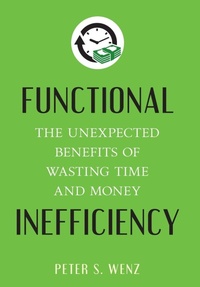
Functional Inefficiency
The Unexpected Benefits of Wasting Time and Money
Published on 9. August 2015
Book
Hardback
450 pages
978-1-63388-040-5 (ISBN)
Description
How can we reduce unemployment? As this insightful and counterintuitive book shows, the surprising answer is inefficiency. Some of the most labor-intensive sectors of the economy, the author notes, are also the most inefficient. But this inefficiency is functional--rather than impairing the economy, it bolsters employment and fosters economic growth.
Technological progress increases efficiency and reduces the need for workers in manufacturing, mining, agriculture, and many services. So how do we keep people working? By maintaining inefficiencies in other areas, such as in our systems of transportation and healthcare. The author documents the waste of time and money in hospital systems, the insurance and pharmaceutical industries, automotive travel, road construction, and road maintenance. These inefficiencies are tolerated because they provide a lot of jobs and promote economic growth, making them functional inefficiencies.
Most of these inefficiencies can be reduced without increasing unemployment or impairing economic growth, the author claims, through increased investment in physical and human infrastructure. However, continued inefficiencies inherent in consumerism can't be eradicated without economic decline, making some inefficiency essential as well as functional.
Functional Inefficiency offers a wealth of details and a unique analysis of our economic system, plus hope for our future prospects through reduced inefficiency.
Technological progress increases efficiency and reduces the need for workers in manufacturing, mining, agriculture, and many services. So how do we keep people working? By maintaining inefficiencies in other areas, such as in our systems of transportation and healthcare. The author documents the waste of time and money in hospital systems, the insurance and pharmaceutical industries, automotive travel, road construction, and road maintenance. These inefficiencies are tolerated because they provide a lot of jobs and promote economic growth, making them functional inefficiencies.
Most of these inefficiencies can be reduced without increasing unemployment or impairing economic growth, the author claims, through increased investment in physical and human infrastructure. However, continued inefficiencies inherent in consumerism can't be eradicated without economic decline, making some inefficiency essential as well as functional.
Functional Inefficiency offers a wealth of details and a unique analysis of our economic system, plus hope for our future prospects through reduced inefficiency.
More details
Language
English
Place of publication
United States
Product notice
sewn/stitched
Cloth over boards
With dust jacket
Dimensions
Height: 231 mm
Width: 155 mm
Thickness: 41 mm
Weight
680 gr
ISBN-13
978-1-63388-040-5 (9781633880405)
Copyright in bibliographic data and cover images is held by Nielsen Book Services Limited or by the publishers or by their respective licensors: all rights reserved.
Schweitzer Classification
Other editions
Additional editions
E-Book
06/2015
Prometheus Books
€16.80
Available for download
Person
Peter S. Wenz is emeritus professor of philosophy and University Scholar at the University of Illinois at Springfield and an adjunct faculty member at the University of Canterbury in New Zealand. He is the author of seven previous books, includingaTake Back the Center- Progressive Taxation for a New Progressive Agenda;aBeyond Red and Blue- How Twelve Political Philosophies Shape American Debates;aEnvironmental Ethics Today; and Political Philosophies in Moral Conflict.