


Transforming NATO in the Cold War
Challenges beyond Deterrence in the 1960s
1st Edition
Published on 22. March 2012
Book
Paperback/Softback
266 pages
978-0-415-51254-1 (ISBN)
Description
The first comprehensive history of NATO in the 1960s, based on the systematic use of multinational archival evidence.
This new book is the result of a gathering of leading Cold War historians from both sides of the Atlantic, including Jeremi Suri, Erin Mahan, and Leopoldo Nuti. It shows in great detail how the transformation of NATO since 1991 has opened up new perspectives on the alliance's evolution during the Cold War. Viewed in retrospect, the 1960s were instrumental to the strengthening of NATO's political clout, which proved to be decisive in winning the Cold War - even more so than NATO's defense and deterrence capabilities.
In addition, it shows that NATO increasingly served as a hub for state, institutional, transnational, and individual actors in that decade. Contributions to the book highlight the importance of NATO's ability to generate "soft power", the scope and limits of alliance consultation, the important role of common transatlantic values, and the growing influence of small allies. NATO's survival in the crucial 1960s provides valuable lessons for the current bargaining on the purpose and cohesion of the alliance.
This book will be of much interest to students of international history, Cold War studies and strategic studies.
This new book is the result of a gathering of leading Cold War historians from both sides of the Atlantic, including Jeremi Suri, Erin Mahan, and Leopoldo Nuti. It shows in great detail how the transformation of NATO since 1991 has opened up new perspectives on the alliance's evolution during the Cold War. Viewed in retrospect, the 1960s were instrumental to the strengthening of NATO's political clout, which proved to be decisive in winning the Cold War - even more so than NATO's defense and deterrence capabilities.
In addition, it shows that NATO increasingly served as a hub for state, institutional, transnational, and individual actors in that decade. Contributions to the book highlight the importance of NATO's ability to generate "soft power", the scope and limits of alliance consultation, the important role of common transatlantic values, and the growing influence of small allies. NATO's survival in the crucial 1960s provides valuable lessons for the current bargaining on the purpose and cohesion of the alliance.
This book will be of much interest to students of international history, Cold War studies and strategic studies.
More details
Series
Language
English
Place of publication
London
United Kingdom
Publishing group
Taylor & Francis Ltd
Target group
College/higher education
Dimensions
Height: 234 mm
Width: 156 mm
Thickness: 15 mm
Weight
418 gr
ISBN-13
978-0-415-51254-1 (9780415512541)
Copyright in bibliographic data and cover images is held by Nielsen Book Services Limited or by the publishers or by their respective licensors: all rights reserved.
Schweitzer Classification
Other editions
Additional editions

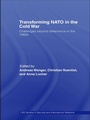
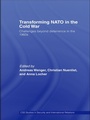
Andreas Wenger | Christian Nuenlist | Anna Locher
Transforming NATO in the Cold War
Challenges beyond Deterrence in the 1960s
Book
12/2012
Routledge
€53.41
The article will not be published
Andreas Wenger | Christian Nuenlist | Anna Locher
Transforming NATO in the Cold War
Challenges beyond Deterrence in the 1960s
E-Book
11/2006
Routledge
€76.49
Available for download
Andreas Wenger | Christian Nuenlist | Anna Locher
Transforming NATO in the Cold War
Challenges beyond Deterrence in the 1960s
E-Book
11/2006
Routledge
€76.49
Available for download

Andreas Wenger | Christian Nuenlist | Anna Locher
Transforming NATO in the Cold War
Challenges beyond Deterrence in the 1960s
Book
10/2006
Routledge
€195.70
Shipment within 15-20 days
Persons
Andreas Wenger, Christian Nuenlist, Anna Locher
Content
Introduction Part 1. The Atlantic Community: The Promise of Alliance 1. The Normative Resilience of NATO in the 1960s: A Community of Shared Values Amidst Public Discord 2. Beyond NATO: Transnational Elite Networks and the Atlantic Alliance 3. Not a NATO Responsibility? Psychological Warfare, the Berlin Crisis, and the Formation of Interdoc Part 2. NATO, de Gaulle, and Detente 4. Into the 1960s: The Role of NATO in East-West Relations, 1959-1963 5. Through the Looking Glass: The Berlin Crisis and Franco-American Perceptions of NATO, 1961-63 6. A Crisis Foretold: NATO and France, 1963-66 Part 3. Nuclear Dilemmas: NATO Consultation and Social Protest 7. Diverging Perceptions of Security: NATO, Nuclear Weapons, and Social Protest 8. From Hardware to Software: The End of the MLF/ANF Debate and the Rise of the NATO Nuclear Planning Group 9. NATO and the Non-Proliferation Treaty: Triangulations Between Bonn, Washington, and Moscow Part 4. Changing Domestic Perspectives on NATO 10. Striving for Detente: Denmark and NATO's Policy of Detente, 1966-67 11. A Decade of Delusions and Disappointments: Italy and NATO in the 1960s Conclusion: New Perspectives on NATO's Transformation in the 1960s