

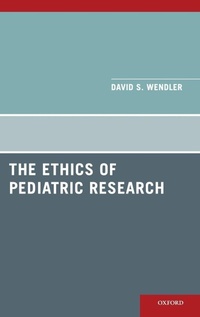
The Ethics of Pediatric Research
1st Edition
Published on 18. March 2010
Book
Hardback
352 pages
978-0-19-973008-7 (ISBN)
Description
Millions of children suffer from diseases and illnesses that do not have adequate treatment, and many other children are harmed by medicines intended to help them. In order to protect and help these children, society must conduct pediatric research to identify safer and more effective medical treatments. This research requires exposing some children to risks for the benefit of others. Yet, critics and courts have argued that it is unethical to expose children to research risks for the benefit of others, and this practice seems to violate our obligation to protect children from harm and exploitation. In this way, clinical research with children presents us with what appears to be an irresolvable dilemma: either we can protect pediatric subjects from exploitation, or we can protect pediatric patients from dangerous medicines, but not both.
The Ethics of Pediatric Research is the first work to systematically evaluate this dilemma, and David Wendler offers an original justification for pediatric research based on an in-depth analysis of when it is in our interests to help others. It will be of interest primarily to scholars in pediatric ethics and clinical research ethics.
The Ethics of Pediatric Research is the first work to systematically evaluate this dilemma, and David Wendler offers an original justification for pediatric research based on an in-depth analysis of when it is in our interests to help others. It will be of interest primarily to scholars in pediatric ethics and clinical research ethics.
Reviews / Votes
This is a book that should be read by anyone researching the child, or to review research projects on children. * The Journal of the Norwegian Medical Association, April 2013 *More details
Language
English
Place of publication
New York
United States
Target group
College/higher education
Professional and scholarly
Students and professionals in clinical research, students and professionals in bioethics, students and professionals in health law. Other audiences include those interested in the treatment of children and people interested in ethical theory and theories of how we should live our lives.
Dimensions
Height: 240 mm
Width: 161 mm
Thickness: 25 mm
Weight
751 gr
ISBN-13
978-0-19-973008-7 (9780199730087)
Copyright in bibliographic data and cover images is held by Nielsen Book Services Limited or by the publishers or by their respective licensors: all rights reserved.
Schweitzer Classification
Other editions
Additional editions
David Wendler
The Ethics of Pediatric Research
E-Book
03/2010
1st Edition
OUP eBook
€47.49
Available for download
Person
Head, Unit on Vulnerable Populations, Department of Bioethics, National Institutes of Health
Content
CHAPTER 1: PREFACE
A. A Vaccine for Rotavirus
B. The Prevalence of non-Beneficial Pediatric Research
C. Questioning the Acceptability of non-Beneficial Pediatric Research
D. Method of the Book
E. Lessons Learned
F. An Initial Example
G. Outline of the Argument
CHAPTER 2: BACKGROUND
A. Scope of the Debate
B. Terms of the Debate
C. History of Abuses, Early Guidelines
D. Current Regulations
E. Efforts to Increase Pediatric Research
F. The Legal Landscape
G. The (Few) Pediatric Research Cases
CHAPTER 3: EVALUATING THE WORRY
A. Ramsey's Argument
B. The Value of Consent
C. When is Consent Necessary?
D. Why is Consent Valuable?
E. Clarifying the Worry
F. McCormick's Response
G. The Negligible Risks Threshold
H. The Risks of Daily Life Threshold
I. The Routine Examinations Threshold
J. Appeal to Long Term Benefits
K. Helping Children as a Group
CHAPTER 4: PROPOSED JUSTIFICATIONS
A. The Argument thus Far
B. Utilitarianism as an Epithet
C. The Scope of Parental Authority
D. Teaching Children to Be Moral
E. Children's Moral Obligations
F. The View from Behind the Veil of Ignorance
CHAPTER 5: HUMAN INTERESTS AND HUMAN CAUSES
A. Brief Recapitulation
B. Three Conditions on an Acceptable Account
C. Brief (and Prospective) Summary
D. Three Questions on Our Interests
E. Five Categories of Interests
F. All Things Considered Interests
G. Interested in Versus in One's Interests
H. The Causal Nexus of Our Lives
I. The Personal Significance of Making a Contribution: 5 Factors
CHAPTER 6: OUR CONNECTION TO OUR CONTRIBUTIONS
A. The Present Chapter
B. Our (Tenuous?) Connection to Childhood
C. The Value of Youthful Contributions
D. Saying Something Positive
E. Are Contributions Necessarily Active?
F. Striving versus Contributing
G. The Influence and Importance of Causal Inputs
H. In the Valley of Kings
CHAPTER 7: THE VALUE OF PASSIVE CONTRIBUTIONS
A. The Virtuous KKK Member
B. Nazi Era Children
C. The Reluctant Propagandist
D. The Normative Asymmetry Thesis
E. Contributing without Trying
F. Children in Operas, Infants at Political Rallies
G. The Calamitous Discovery
H. The Ubiquity of Competing Considerations
I. Making Decisions for Children
J. The Value of Making a Contribution
CHAPTER 8: IMPLICATIONS FOR NON-BENEFICIAL PEDIATRIC RESEARCH
A. Limits on the Personal Value of Passive Contributions
B. Moral Claims on 3rd Parties
C. The Necessity of Value
D. Minimal Risks and Sliding Scales
E. Exceptional Cases
F. Adults and Older Children First
G. Children Helping Adults
CHAPTER 9: OBJECTIONS AND THE POTENTIAL FOR ABUSE
A. You Will Eat Your Spinach
B. The Unfairness of it All
C. What Happened to Autonomy?
D. Giving Comfort to Scoundrels?
E. The Potential for Abuse
F. Worries about Distribution
CHAPTER 10: CONCLUSION
Notes
Index
A. A Vaccine for Rotavirus
B. The Prevalence of non-Beneficial Pediatric Research
C. Questioning the Acceptability of non-Beneficial Pediatric Research
D. Method of the Book
E. Lessons Learned
F. An Initial Example
G. Outline of the Argument
CHAPTER 2: BACKGROUND
A. Scope of the Debate
B. Terms of the Debate
C. History of Abuses, Early Guidelines
D. Current Regulations
E. Efforts to Increase Pediatric Research
F. The Legal Landscape
G. The (Few) Pediatric Research Cases
CHAPTER 3: EVALUATING THE WORRY
A. Ramsey's Argument
B. The Value of Consent
C. When is Consent Necessary?
D. Why is Consent Valuable?
E. Clarifying the Worry
F. McCormick's Response
G. The Negligible Risks Threshold
H. The Risks of Daily Life Threshold
I. The Routine Examinations Threshold
J. Appeal to Long Term Benefits
K. Helping Children as a Group
CHAPTER 4: PROPOSED JUSTIFICATIONS
A. The Argument thus Far
B. Utilitarianism as an Epithet
C. The Scope of Parental Authority
D. Teaching Children to Be Moral
E. Children's Moral Obligations
F. The View from Behind the Veil of Ignorance
CHAPTER 5: HUMAN INTERESTS AND HUMAN CAUSES
A. Brief Recapitulation
B. Three Conditions on an Acceptable Account
C. Brief (and Prospective) Summary
D. Three Questions on Our Interests
E. Five Categories of Interests
F. All Things Considered Interests
G. Interested in Versus in One's Interests
H. The Causal Nexus of Our Lives
I. The Personal Significance of Making a Contribution: 5 Factors
CHAPTER 6: OUR CONNECTION TO OUR CONTRIBUTIONS
A. The Present Chapter
B. Our (Tenuous?) Connection to Childhood
C. The Value of Youthful Contributions
D. Saying Something Positive
E. Are Contributions Necessarily Active?
F. Striving versus Contributing
G. The Influence and Importance of Causal Inputs
H. In the Valley of Kings
CHAPTER 7: THE VALUE OF PASSIVE CONTRIBUTIONS
A. The Virtuous KKK Member
B. Nazi Era Children
C. The Reluctant Propagandist
D. The Normative Asymmetry Thesis
E. Contributing without Trying
F. Children in Operas, Infants at Political Rallies
G. The Calamitous Discovery
H. The Ubiquity of Competing Considerations
I. Making Decisions for Children
J. The Value of Making a Contribution
CHAPTER 8: IMPLICATIONS FOR NON-BENEFICIAL PEDIATRIC RESEARCH
A. Limits on the Personal Value of Passive Contributions
B. Moral Claims on 3rd Parties
C. The Necessity of Value
D. Minimal Risks and Sliding Scales
E. Exceptional Cases
F. Adults and Older Children First
G. Children Helping Adults
CHAPTER 9: OBJECTIONS AND THE POTENTIAL FOR ABUSE
A. You Will Eat Your Spinach
B. The Unfairness of it All
C. What Happened to Autonomy?
D. Giving Comfort to Scoundrels?
E. The Potential for Abuse
F. Worries about Distribution
CHAPTER 10: CONCLUSION
Notes
Index