

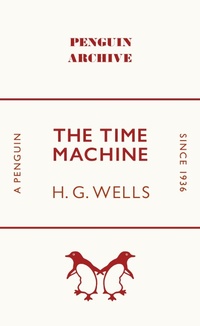
The Time Machine
Published on 17. April 2025
Book
Paperback/Softback
128 pages
978-0-241-74672-1 (ISBN)
Description
90 classic titles celebrating 90 years of Penguin Books
The Time Machine is the great, gleeful anarchist novel of the 1890s. It is both a thrilling adventure story and a satire on religion, evolution and human hopes. With this book, Wells invented an entirely new genre and did it better than any of his imitators.
An immediate bestseller, it has delighted and unnerved generations of readers, and will no doubt keep on doing so until some of the events predicted in the book make readers extinct.
The Time Machine is the great, gleeful anarchist novel of the 1890s. It is both a thrilling adventure story and a satire on religion, evolution and human hopes. With this book, Wells invented an entirely new genre and did it better than any of his imitators.
An immediate bestseller, it has delighted and unnerved generations of readers, and will no doubt keep on doing so until some of the events predicted in the book make readers extinct.
More details
Series
Language
English
Place of publication
London
United Kingdom
Publishing group
Penguin Books Ltd
Dimensions
Height: 178 mm
Width: 111 mm
Thickness: 10 mm
Weight
81 gr
ISBN-13
978-0-241-74672-1 (9780241746721)
Copyright in bibliographic data and cover images is held by Nielsen Book Services Limited or by the publishers or by their respective licensors: all rights reserved.
Schweitzer Classification
Other editions
Additional editions
Person
H.G. Wells was a professional writer and journalist who published more than a hundred books, including pioneering science fiction novels, histories, essays and programmes for world regeneration. He was a founding member of numerous movements including Liberty and PEN International - the world's oldest human rights organization - and his Rights of Man laid the groundwork for the 1948 Universal Declaration of Human Rights. Wells' controversial and progressive views on equality and the shape of a truly developed nation remain directly relevant to our world today. He was, in Bertrand Russell's words, 'an important liberator of thought and action'.