

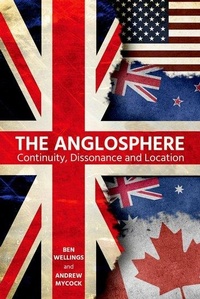
The Anglosphere
Continuity, Dissonance and Location
Published on 19. December 2019
Book
Hardback
248 pages
978-0-19-726661-8 (ISBN)
Description
The Anglosphere - a transnational imagined community consisting of the USA, Canada, Australia, New Zealand and the UK - came to international prominence in the wake of Brexit. The Anglosphere's origins lie in the British Empire and the conflicts of the 20th century. It encompasses an extensive but ill-defined community bonded by language, culture, media, and 'civilisational' heritage founded on the shared beliefs and practices of free-market economics and liberal democracy. Supporters of the Anglosphere argue that it provides a better 'fit' for English-speaking countries at a time when global politics is in a state of flux and under strain from economic crises, conflict and terrorism, and humanitarian disasters.
This edited volume provides the first detailed analyses of the Anglosphere, bringing together leading international academic experts to examine its historical origins and contemporary political, social, economic, military, and cultural manifestations. They reveal that the Anglosphere is underpinned by a range of continuities and discontinuities which are shaped by the location of its five core states. The volume reveals that although the Anglosphere is founded on a common view of the past and the present, it continually seeks to realise a shared future which is never fully attained. The volume thus makes an important contribution to debates about the future of the UK outside of the EU, and the potential for the English-speaking peoples to shape the 21st century.
This edited volume provides the first detailed analyses of the Anglosphere, bringing together leading international academic experts to examine its historical origins and contemporary political, social, economic, military, and cultural manifestations. They reveal that the Anglosphere is underpinned by a range of continuities and discontinuities which are shaped by the location of its five core states. The volume reveals that although the Anglosphere is founded on a common view of the past and the present, it continually seeks to realise a shared future which is never fully attained. The volume thus makes an important contribution to debates about the future of the UK outside of the EU, and the potential for the English-speaking peoples to shape the 21st century.
Reviews / Votes
The book...is a very welcome avenue for understanding a highly significant international phenomenon, one that should form the basis for further theorizing the synthesized influence of transnationalized ideas, experiences, and practices of class, race, culture, language, economy, and military power in world politics...The concept, history, and current practices, networks, and politics of the Anglosphere are admirably documented in this collection. * Inderjeet Pamar, University of London, Perspectives on Politics *More details
Series
Language
English
Place of publication
Oxford
United Kingdom
Target group
Professional and scholarly
Illustrations
4 figures, 9 tables
Dimensions
Height: 163 mm
Width: 242 mm
Thickness: 19 mm
Weight
568 gr
ISBN-13
978-0-19-726661-8 (9780197266618)
Copyright in bibliographic data and cover images is held by Nielsen Book Services Limited or by the publishers or by their respective licensors: all rights reserved.
Schweitzer Classification
Persons
Ben Wellings is Senior Lecturer in Politics and International Relations at Monash University in Melbourne, Australia. His current research interests focus on the relationship between nationalism, Euroscepticism and the Anglosphere as well as the politics of war memory and commemoration. He is the author of English Nationalism, Brexit and the Anglosphere: wider still and wider (Manchester: Manchester University Press, 2019).
Dr Andrew Mycock is a Reader in Politics at the University of Huddersfield. His key research and teaching interests focus on post-imperial identity politics in the UK. He has published widely on the 'Politics of Britishness', English identity politics and devolution, and Brexit. He is co-convenor of the Political Studies Association Britishness Specialist Group. His other research interests include democratic youth engagement, participation, and education. He is currently co-leading a Leverhulme Trust funded project on Lowering the Voting Age in the UK.
Dr Andrew Mycock is a Reader in Politics at the University of Huddersfield. His key research and teaching interests focus on post-imperial identity politics in the UK. He has published widely on the 'Politics of Britishness', English identity politics and devolution, and Brexit. He is co-convenor of the Political Studies Association Britishness Specialist Group. His other research interests include democratic youth engagement, participation, and education. He is currently co-leading a Leverhulme Trust funded project on Lowering the Voting Age in the UK.
Content
List of Figures and Tables
Notes on Contributors
Acknowledgements
1: Ben Wellings and Andrew Mycock: Continuity, Dissonance and Location: an Anglosphere research agenda
Continuity
2: Michael Gardiner: The Anglosphere as a Principle of Progress
3: Duncan Bell: Anglospheres: empire redivivus?
4: Tim Legrand: The Past, Present and Future of Anglosphere Security Networks: Constitutive Reduction of a Shared Identity
5: Srdjan Vucetic: The Anglosphere beyond Security
Dissonance
6: John Ravenhill and Geoff Heubner: The Political Economy of the Anglosphere: Geography Trumps History
7: Carl Bridge and Bart Zielinski: The Anglosphere and the American Embrace: The End of the British Empire and after
8: Andrew Mycock: 'CANZUK, the Anglosphere(s) and Transnational War Commemoration: The Centenary of First World War'
9: Katherine Smits: The Anglosphere and Indigenous Politics
Location
10: Andrew Gamble: The Anglo-American Worldview and the Question of World Order
11: Nick Pearce and Michael Kenny: Churchill, Powell and the Conservative 'Brexiteers': The Political Legacies of the Anglosphere
12: Helen Baxendale and Ben Wellings: Underwriting Brexit: The European Union in the Anglosphere Imagination
13: Eva Namusoke: The Anglosphere, Race and Brexit
Index
Notes on Contributors
Acknowledgements
1: Ben Wellings and Andrew Mycock: Continuity, Dissonance and Location: an Anglosphere research agenda
Continuity
2: Michael Gardiner: The Anglosphere as a Principle of Progress
3: Duncan Bell: Anglospheres: empire redivivus?
4: Tim Legrand: The Past, Present and Future of Anglosphere Security Networks: Constitutive Reduction of a Shared Identity
5: Srdjan Vucetic: The Anglosphere beyond Security
Dissonance
6: John Ravenhill and Geoff Heubner: The Political Economy of the Anglosphere: Geography Trumps History
7: Carl Bridge and Bart Zielinski: The Anglosphere and the American Embrace: The End of the British Empire and after
8: Andrew Mycock: 'CANZUK, the Anglosphere(s) and Transnational War Commemoration: The Centenary of First World War'
9: Katherine Smits: The Anglosphere and Indigenous Politics
Location
10: Andrew Gamble: The Anglo-American Worldview and the Question of World Order
11: Nick Pearce and Michael Kenny: Churchill, Powell and the Conservative 'Brexiteers': The Political Legacies of the Anglosphere
12: Helen Baxendale and Ben Wellings: Underwriting Brexit: The European Union in the Anglosphere Imagination
13: Eva Namusoke: The Anglosphere, Race and Brexit
Index