

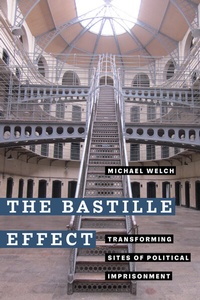
The Bastille Effect
Transforming Sites of Political Imprisonment
1st Edition
Published on 14. June 2022
Book
Paperback/Softback
249 pages
978-0-520-38603-7 (ISBN)
Description
A free open access ebook is available upon publication. Learn more at www.luminosoa.org.
As conceptualized throughout this richly illustrated book, the Bastille Effect represents the unique ways that former prisons and detention centers are transformed, both physically and culturally. In their afterlives, these sites deliver critiques of political imprisonment and the sustained efforts to hold perpetrators accountable for state violence. However, for that narrative to surface, the sites are cleansed of their profane past, and in some cases clergy are even enlisted to perform purifying rituals that grant the sites a new place identity as memorials. For example, at Villa Grimaldi, a former detention and torture center in Santiago, Chile, activists condemn the brutal Pinochet dictatorship by honoring the memory of victims, allowing the space to emerge as a "park for peace." Throughout the Southern Cone of Latin America, and elsewhere around the globe, carceral sites have been dramatically repurposed into places of enlightenment that offer inspiring allegories of human rights. Interpreting the complexities of those common threads, this book weaves together a broad range of cultural, interdisciplinary, and critical thought to offer new insights into the study of political imprisonment, collective memory, and postconflict societies.
As conceptualized throughout this richly illustrated book, the Bastille Effect represents the unique ways that former prisons and detention centers are transformed, both physically and culturally. In their afterlives, these sites deliver critiques of political imprisonment and the sustained efforts to hold perpetrators accountable for state violence. However, for that narrative to surface, the sites are cleansed of their profane past, and in some cases clergy are even enlisted to perform purifying rituals that grant the sites a new place identity as memorials. For example, at Villa Grimaldi, a former detention and torture center in Santiago, Chile, activists condemn the brutal Pinochet dictatorship by honoring the memory of victims, allowing the space to emerge as a "park for peace." Throughout the Southern Cone of Latin America, and elsewhere around the globe, carceral sites have been dramatically repurposed into places of enlightenment that offer inspiring allegories of human rights. Interpreting the complexities of those common threads, this book weaves together a broad range of cultural, interdisciplinary, and critical thought to offer new insights into the study of political imprisonment, collective memory, and postconflict societies.
More details
Edition
First Edition
Language
English
Place of publication
Berkerley
United States
Target group
Professional and scholarly
Product notice
Paperback (trade)
Illustrations
25 color photographs
Dimensions
Height: 229 mm
Width: 152 mm
Thickness: 15 mm
Weight
408 gr
ISBN-13
978-0-520-38603-7 (9780520386037)
Copyright in bibliographic data and cover images is held by Nielsen Book Services Limited or by the publishers or by their respective licensors: all rights reserved.
Schweitzer Classification
Other editions
Additional editions
E-Book
06/2022
1st Edition
De Gruyter
€12.49
Available for download
Person
Michael Welch is Professor of Criminal Justice at Rutgers University and Visiting Professor at Mannheim Centre for Criminology in the Department of Social Policy at the London School of Economics. He is author of several books, including Escape to Prison: Penal Tourism and the Pull of Punishment.