

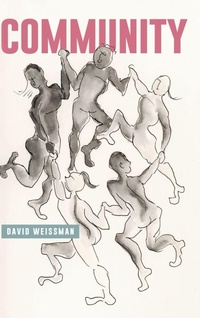
Community
Published on 1. February 2025
Book
Hardback
169 pages
979-8-8558-0104-0 (ISBN)
Description
Communities are vital to personal and social well-being because collaboration is required where skills and resources are scarce; their pathologies-anonymity and isolation, tribalism and murder-defeat us.
Community is often invoked respectfully but without a clear referent. The word is said to be used ninety-four ways, evidence that its sense is diffuse. Community clarifies the word's principal expressions and the alternative ideological spaces-holistic and hierarchical or open and tolerant-in which communities form. Members bind in the interest of utility-jobs or schools-or because home and friendship are the focus of feeling and significance. These binders are social glue: they explain our dedication to communal aims and loyalty to fellow members. Autonomy in their context is socialized; its bases are the information, attitudes, and skills acquired when families and schools prepare us for roles in communities inherited or chosen. Yet community is fraught. Holistic societies are repressive; open societies are vulnerable. The members of successful communities-families, businesses, and schools-often thrive. Those excluded for want of luck or skill are abandoned and anonymous. Their isolation is one of an open society's two pathologies: collaboration is a social necessity when resources, space, and skills are scarce; competition turned visceral and murderous is a vice.
Community is often invoked respectfully but without a clear referent. The word is said to be used ninety-four ways, evidence that its sense is diffuse. Community clarifies the word's principal expressions and the alternative ideological spaces-holistic and hierarchical or open and tolerant-in which communities form. Members bind in the interest of utility-jobs or schools-or because home and friendship are the focus of feeling and significance. These binders are social glue: they explain our dedication to communal aims and loyalty to fellow members. Autonomy in their context is socialized; its bases are the information, attitudes, and skills acquired when families and schools prepare us for roles in communities inherited or chosen. Yet community is fraught. Holistic societies are repressive; open societies are vulnerable. The members of successful communities-families, businesses, and schools-often thrive. Those excluded for want of luck or skill are abandoned and anonymous. Their isolation is one of an open society's two pathologies: collaboration is a social necessity when resources, space, and skills are scarce; competition turned visceral and murderous is a vice.
Reviews / Votes
"Community takes up a theme that has engaged Weissman, namely, community, to which he now adds new extended thought, exploring the complications and tensions surrounding some of the central social issues of our own time. The work's address of essential issues in ethics, politics, and social theory is not separable from Weissman's view of larger philosophical issues, such as the one and the many, issues that are diversely articulated in some of his other publications. The idea of community is introduced to make possible a multipronged approach to these issues. This is a forthright, lucid, and admirably thoughtful work." - William Desmond, University of VillanovaMore details
Language
English
Place of publication
Albany, NY
United States
Target group
College/higher education
US School Grade: College Graduate Student and over
Dimensions
Height: 235 mm
Width: 157 mm
Thickness: 14 mm
Weight
406 gr
ISBN-13
979-8-8558-0104-0 (9798855801040)
Copyright in bibliographic data and cover images is held by Nielsen Book Services Limited or by the publishers or by their respective licensors: all rights reserved.
Schweitzer Classification
Other editions
Additional editions
David Weissman
Community
E-Book
02/2025
1st Edition
State University of New York Press
€33.99
Available for download
Person
David Weissman is Professor of Philosophy at the City College of New York. He is the author of Eternal Possibilities: A Neutral Ground for Meaning and Existence and Truth's Debt to Value, among other books.
Content
Introduction. The Uses of Community
1. Community
2. Infrastructure
3. Meaning and Normativity
4. Autonomy
5. Cooperation and Conflict
6. The One and the Many
Afterword
Notes
Index
1. Community
2. Infrastructure
3. Meaning and Normativity
4. Autonomy
5. Cooperation and Conflict
6. The One and the Many
Afterword
Notes
Index