

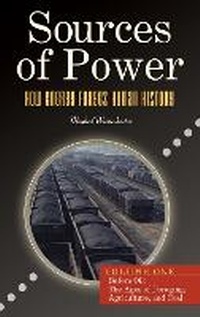
Sources of Power
How Energy Forges Human History [2 volumes]
Published on 30. September 2009
Book
978-0-313-35626-1 (ISBN)
Description
A landmark book rolls out a bold, new, energy-based theory of human history based on a simple, yet powerful law: whoever controls the world's effective energy supplies during a given energy age will inevitably dominate the economic, political, and cultural history of that age.
The innovative theory articulated in Sources of Power: How Energy Forges Human History parses history into four ages: the foraging, agriculture, coal, and oil ages, each defined by the dominant source of power. Manfred Weissenbacher tests this sweeping theory against the panorama of world history, combining formidable powers of synthesis with a specialist's deep understanding of energy systems and technologies.
After proving the operation of his law through history and into the present, Weissenbacher applies it to global geopolitical trends. He assesses the prospects of the various candidate technologies to succeed oil and charts future scenarios based on the distribution of energy reserves. Finally, he forecasts the fates of the American and Chinese empires in the twilight of the oil age: the United States as a mature superpower forced to deploy military might to occupy oilfields in the Middle East; China as an emerging superpower forced to deploy economic might to muscle in on the development of Third World oilfields.
The innovative theory articulated in Sources of Power: How Energy Forges Human History parses history into four ages: the foraging, agriculture, coal, and oil ages, each defined by the dominant source of power. Manfred Weissenbacher tests this sweeping theory against the panorama of world history, combining formidable powers of synthesis with a specialist's deep understanding of energy systems and technologies.
After proving the operation of his law through history and into the present, Weissenbacher applies it to global geopolitical trends. He assesses the prospects of the various candidate technologies to succeed oil and charts future scenarios based on the distribution of energy reserves. Finally, he forecasts the fates of the American and Chinese empires in the twilight of the oil age: the United States as a mature superpower forced to deploy military might to occupy oilfields in the Middle East; China as an emerging superpower forced to deploy economic might to muscle in on the development of Third World oilfields.
Reviews / Votes
This is a long single-authored work admirable for its clarity, depth, and informed synthesis-as well as its importance to scholars, policymakers, and students in the many intertwining fields concerned with energy and politics. * SciTech Book News * An excellent book for interdisciplinary discussion courses. Highly recommended. General readers and lower- and upper-division undergraduates. * Choice *More details
Language
English
Place of publication
United States
Publishing group
Bloomsbury Publishing Plc
Target group
Adult education
Interest Age: From 7 to 17 years
Illustrations
112 bw illus
Weight
1701 gr
ISBN-13
978-0-313-35626-1 (9780313356261)
Copyright in bibliographic data and cover images is held by Nielsen Book Services Limited or by the publishers or by their respective licensors: all rights reserved.
Schweitzer Classification
Other editions
Additional editions
E-Book
09/2009
1st Edition
Praeger Publishers Inc
€113.99
Available for download
Person
Manfred Weissenbacher is an independent energy consultant and teaches at the Department of Politics, Philosophy and Management at Copenhagen Business School.
Content
Volume 1. Before Oil: The Ages of Foraging, Agriculture, and Coal
Introduction
Part I. Foraging Age
Bibliography to Part I
Part II. Agricultural Age
chapter 1 what is agriculture?
chapter 2 How Did Agricultural Technology Emerge?
chapter 3 The Spread of Agriculture
chapter 4 Fruit, Measles, and Backache
chapter 5 Transformed Society
chapter 6 Muscle Power: The Mammalian Machine
chapter 7 Wind and WaterPower
chapter 8 Biomass: Energy for Lighting, Heating, and Metallurgy
chapter 9 Weapons Technology: Energy Used to Kill and Destroy
chapter 10 The Rise and Fall of Grain-Fueled Empires
chapter 11 The Early Wheat Empires
chapter 12 The Rise of Europe
chapter 13 The Opening of the World
chapter 14 The Super-Agricultural Era
Bibliography to part II
Part III. Coal Age
chapter 15 What Is Coal?
chapter 16 The Emergence of Coal Technology
chapter 17 How Coal Technology Spread
chapter 18 Transitional Downturn: Pollution, Poverty, and Hard Work
chapter 19 Longer Lives, Better Education, More Rights
chapter 20 Knowledge and Technology
chapter 21 Deadlier Weapons
chapter 22 Improved Agriculture
chapter 23 Increased Mobility and Trade: Global Economic Integration
chapter 24 The Coal-Powered Empires
Bibliography to Part III
Volume 2. The Oil Age and Beyond
Introduction
Part IV. Oil Age
chapter 25 What Is Crude Oil?
chapter 26 The Emergence of Oil Technology
chapter 27 How Oil Technology Spread
chapter 28 Life in the Oil Age
chapter 29 Technology and Knowledge
chapter 30 Weapons
chapter 31 Agriculture in the Oil Age
chapter 32 Diverse Energy Mix
chapter 33 Economic Expansion
chapter 34 Population Development
chapter 35 The Oil-Powered Empires
Bibliography to Part IV
Part V. Beyond the Oil Age
chapter 36 The Problem of Climate Change
chapter 37 Transport Fuel for the Future
chapter 38 Electricity for the Future
chapter 39 Extended Oil Age?-Energy Mix until 2030
chapter 40 Who Got the Power?
chapter 41 Nuclear Age or Second Coal Age?
chapter 42 Energy for All
Bibliography to Part V
Epilogue
Index
Introduction
Part I. Foraging Age
Bibliography to Part I
Part II. Agricultural Age
chapter 1 what is agriculture?
chapter 2 How Did Agricultural Technology Emerge?
chapter 3 The Spread of Agriculture
chapter 4 Fruit, Measles, and Backache
chapter 5 Transformed Society
chapter 6 Muscle Power: The Mammalian Machine
chapter 7 Wind and WaterPower
chapter 8 Biomass: Energy for Lighting, Heating, and Metallurgy
chapter 9 Weapons Technology: Energy Used to Kill and Destroy
chapter 10 The Rise and Fall of Grain-Fueled Empires
chapter 11 The Early Wheat Empires
chapter 12 The Rise of Europe
chapter 13 The Opening of the World
chapter 14 The Super-Agricultural Era
Bibliography to part II
Part III. Coal Age
chapter 15 What Is Coal?
chapter 16 The Emergence of Coal Technology
chapter 17 How Coal Technology Spread
chapter 18 Transitional Downturn: Pollution, Poverty, and Hard Work
chapter 19 Longer Lives, Better Education, More Rights
chapter 20 Knowledge and Technology
chapter 21 Deadlier Weapons
chapter 22 Improved Agriculture
chapter 23 Increased Mobility and Trade: Global Economic Integration
chapter 24 The Coal-Powered Empires
Bibliography to Part III
Volume 2. The Oil Age and Beyond
Introduction
Part IV. Oil Age
chapter 25 What Is Crude Oil?
chapter 26 The Emergence of Oil Technology
chapter 27 How Oil Technology Spread
chapter 28 Life in the Oil Age
chapter 29 Technology and Knowledge
chapter 30 Weapons
chapter 31 Agriculture in the Oil Age
chapter 32 Diverse Energy Mix
chapter 33 Economic Expansion
chapter 34 Population Development
chapter 35 The Oil-Powered Empires
Bibliography to Part IV
Part V. Beyond the Oil Age
chapter 36 The Problem of Climate Change
chapter 37 Transport Fuel for the Future
chapter 38 Electricity for the Future
chapter 39 Extended Oil Age?-Energy Mix until 2030
chapter 40 Who Got the Power?
chapter 41 Nuclear Age or Second Coal Age?
chapter 42 Energy for All
Bibliography to Part V
Epilogue
Index