

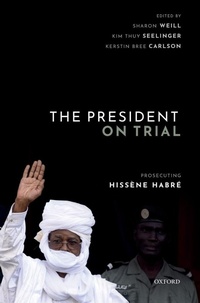
The President on Trial
Prosecuting Hissene Habre
Published on 28. May 2020
Book
Hardback
460 pages
978-0-19-885862-1 (ISBN)
Description
During the 1980s, thousands of Chadian citizens were detained, tortured, and raped by then-President Hissene Habre's security forces. Decades later, Habre was finally prosecuted for his role in these atrocities not in his own country or in The Hague, but across the African continent, at the Extraordinary African Chambers in Senegal. By some accounts, Habre's trial and conviction by a specially built court in Dakar is the most significant achievement of global criminal justice in the past decade. Simply creating a court and commencing a trial against a deposed head of state was an extraordinary success. With its 2016 judgment, affirmed on appeal in 2017, the hybrid tribunal in Senegal exceeded expectations, working to deadlines and within its budget, with no murdered witnesses or self-dealing officials.
This book details and contextualizes the Habre trial. It presents the trial and its impact using a novel structure of first-person accounts from 26 direct actors (Part I), accompanied by academic analysis from leading experts on international criminal justice (Part II). Combined, these views present both local and international perspectives through distinct but inter-locking parts: empirical source material from understudied actors both within and outside the court is then contextualized with expert analysis that reflects on the construction and work of: the Extraordinary African Chamber (EAC) as well as wider themes of international criminal law. Together with an introduction laying out the work and significance of the EAC and its trial of Hissene Habre, the book is a comprehensive consideration of a history-making trial.
This book details and contextualizes the Habre trial. It presents the trial and its impact using a novel structure of first-person accounts from 26 direct actors (Part I), accompanied by academic analysis from leading experts on international criminal justice (Part II). Combined, these views present both local and international perspectives through distinct but inter-locking parts: empirical source material from understudied actors both within and outside the court is then contextualized with expert analysis that reflects on the construction and work of: the Extraordinary African Chamber (EAC) as well as wider themes of international criminal law. Together with an introduction laying out the work and significance of the EAC and its trial of Hissene Habre, the book is a comprehensive consideration of a history-making trial.
Reviews / Votes
Ultimately, The President on Trial is a distinctive and timely read on an emblematic case. It captures the current preoccupations and hopes of advocates and practitioners of international criminal justice, at a time marked by a much - discussed African backlash against the International Criminal Court. The book looks back on the history of the Habre trial but remains rooted in the present and turned towards to the future, aiming to explore - and perhaps challenge - assumptions that the trial is doomed to be a precedent with no future. * Charlotte Mohr, International Review of the Red Cross * The President on Trial is a collection rich in material about the inner workings of the EAC and the place it occupies within the ever-expanding universe of hybrid courts ... this edited volume is the most comprehensive resource available on the Habre trial and a must-read for anyone interested in the real-time operation of hybrid courts. * Valerie Arnould, International Criminal Law Review * ... the book is exceptionally readable and engaging, and offers a 360-degree perspective of the court and trial, giving voice to the victims and their representatives, NGO actors, the prosecution, defence counsel, sexual violence experts and advocates, international actors, administrators, journalists, commentators, academics, and even the accused himself. It is one of those rare works that bridge practice and theory, and it should serve as a model for future analyses of courts and institutions. * Alex Whiting, Deputy Specialist Prosecutor, Kosovo Specialist Chambers, The Hague, Journal of International Criminal Justice * [The President on Trial] should be required reading for any sociolegal scholar. Not just because of its theoretical value, which is impressive, but because of its powerful reflection of a variety of human experiences as the personal and professional lives of the contributors collide with the hard life of the law. * Alexa Koenig, School of Law, University of California, Law and Society Review * The President on Trial is a tour-de-force. Edited by three distinguished international law scholars, the forty-three chapters of this volume are undoubtedly the definitive work on the trial of Hissene Habre before the Extraordinary African Chambers. A must read for any serious scholar or practitioner of international criminal justice. * Leila Sadat, Professor of International Criminal Law, Washington University in St Louis and Special Adviser on Crimes Against Humanity to the ICC Prosecutor * A work of hope for accountability: Together, these remarkable essays will surely serve as the first point of reference on the story of Hissene Habre's terrible crimes and the long path to justice. * Philippe Sands, Author of East West Street, Professor of Law and Director of the Centre on International Courts and Tribunals, UCL * The President on Trial makes an important empirical and methodological addition to the study of international courts. By combining first-person accounts and academic contextualizations, the book provides an encyclopedic account of the construction of a hybrid tribunal to address crimes against humanity committed by Chad's regime as well as a model for how to study new judicial institutions. * Mikael Rask Madsen, Professor and Director of iCourts, Centre of Excellence for International Courts, University of Copenhagen, Denmark * At a time when we are told that international criminal justice cannot work - this it is too weak, too slow, expensive, too disillusioning - this book stands for the proposition that it can work and has worked. In a novel and innovative study, the three author-editors bring the voices of participants to the fore, and in so doing reveal how it was possible to hold a powerful head of state to account for a multiplicity of heinous crimes. It is at once a moving account of a singularly important trial, and a model of scholarship. * Malcolm M. Feeley, Claire Sanders Clements Dean's Professor Emeritus, Berkeley School of Law26/06/2020. *More details
Language
English
Place of publication
Oxford
United Kingdom
Target group
Professional and scholarly
Dimensions
Height: 250 mm
Width: 175 mm
Thickness: 29 mm
Weight
967 gr
ISBN-13
978-0-19-885862-1 (9780198858621)
Copyright in bibliographic data and cover images is held by Nielsen Book Services Limited or by the publishers or by their respective licensors: all rights reserved.
Schweitzer Classification
Other editions
Additional editions
Sharon Weill | Kim Thuy Seelinger | Kerstin Bree Carlson
The President on Trial
Prosecuting Hissène Habré
E-Book
05/2020
1st Edition
OUP eBook
€76.49
Available for download
Sharon Weill | Kim Thuy Seelinger | Kerstin Bree Carlson
The President on Trial
Prosecuting Hissène Habré
E-Book
05/2020
1st Edition
OUP eBook
€84.99
Available for download
Persons
Dr. Sharon Weill is Assistant Professor at The American University of Paris and a Senior Lecturer in international law and associate researcher at Sciences-Po, Paris (PSIA/CERI). Her particular field of interest is the relationship between international and domestic law, the politics of international law and the role of courts- topics on which she has published several articles and book chapters. Her post-doctoral research on the Guantanamo Bay military commissions was conducted at the Center for the Study of Law and Society, University of California, Berkeley (2015-2016). Prior to that, she participated in the European research project "Security in Transition" led by Professor Mary Kaldor (London School of Economic), and was a research fellow at the Geneva Academy of International Humanitarian and Human rights law for several years. She received her PhD in international law from the University of Geneva in 2012.
Kim Thuy Seelinger, JD, is Research Associate Professor at the Brown School and Visiting Professor of Law, Washington University in St. Louis, where she is also the inaugural director of the cross-disciplinary Center for Human Rights, Gender, and Migration under the Institute of Public Health. From 2010-2019, Seelinger served as the founding Director of the Sexual Violence Program at the Human Rights Center at the University of California, Berkeley, School of Law, where she remains a Research Fellow. In 2015, she co-authored an amicus curiae brief on sexual violence under customary international law in the Habre case. Seelinger received her JD from New York University School of Law and is a member of the New York bar.
Dr Kerstin Bree Carlson is Associate Professor in the Law Department of the University of Southern Denmark, where she teaches in the Masters of International Security and Law program. She is also affiliated with The American University of Paris and iCourts at the University of Copenhagen. Carlson began her work on the Habre trial in 2015 as a post-doctoral researcher at iCourts at the University of Copenhagen, and did extensive field research in Dakar. Carlson received her JD and PhD degrees from the University of California, Berkeley.
Kim Thuy Seelinger, JD, is Research Associate Professor at the Brown School and Visiting Professor of Law, Washington University in St. Louis, where she is also the inaugural director of the cross-disciplinary Center for Human Rights, Gender, and Migration under the Institute of Public Health. From 2010-2019, Seelinger served as the founding Director of the Sexual Violence Program at the Human Rights Center at the University of California, Berkeley, School of Law, where she remains a Research Fellow. In 2015, she co-authored an amicus curiae brief on sexual violence under customary international law in the Habre case. Seelinger received her JD from New York University School of Law and is a member of the New York bar.
Dr Kerstin Bree Carlson is Associate Professor in the Law Department of the University of Southern Denmark, where she teaches in the Masters of International Security and Law program. She is also affiliated with The American University of Paris and iCourts at the University of Copenhagen. Carlson began her work on the Habre trial in 2015 as a post-doctoral researcher at iCourts at the University of Copenhagen, and did extensive field research in Dakar. Carlson received her JD and PhD degrees from the University of California, Berkeley.
Editor
Assistant Professor, The American University of Paris and Senior Lecturer in International Law and Associate ResearcherAssistant Professor, The American University of Paris and Senior Lecturer in International Law and Associate Researcher, Sciences-Po, Paris
Research Associate Professor at the Brown School, Visiting Professor of Law, and Director of the Center for Human Rights, Gender, and MigrationResearch Associate Professor at the Brown School, Visiting Professor of Law, and Director of the Center for Human Rights, Gender, and Migration, Washington University in St. Louis
Associate Professor in the Law DepartmentAssociate Professor in the Law Department, University of Southern Denmark
Content
Foreword, Denis Mukwege, 2018 Nobel Peace Prize Co-recipient
Hissene Habre on Trial: Mapping the Long Road to Justice (Sharon Weill, Kim Thuy Seelinger, and Kerstin Carlson)
Part I. The Trial as Told by its Actors
Editors' Introduction
A. Early Prosecution Attempts (1982-2012)
1: The 'Archives of Terror', Olivier Bercault, Human Rights Watch coordinator of the case (2000- 2008).
2: The Making of Chad's Truth Commission, Judge Abakar Mahamat Hassan, President of the Chadian Truth Commission
3: Documenting Crimes and Organizing Victims in Chad, Souleymane Guengueng, Founder of the Association of Victims of Political Repression in Chad
4: Tenacity, Perseverance, and Imagination in the 'Private International Prosecution' of Hissene Habre, Reed Brody, Senior Counsel with Human Rights Watch and architect of Chadian victims' long campaign for justice
5: Defending Habre in Senegal During the Early Years, Helene Cisse, member of Habre's defence team in the first domestic proceedings in Senegal (1999-2001)
6: The Belgian Investigation of the Habre Regime, Excerpt of EAC trial testimony of Daniel Fransen, Belgian Investigating Judge
7: In His Own Words: An Interview with Hissene Habre, Excerpted interview from La Gazette, Dakar, 2011
B. Establishing the Court
8: Creating the EAC in Senegal: Perspectives from the African Union, Ben Kioko, Former Legal Counsel to the Commission of the African Union and judge on the African Court on Human and People's Rights
9: Arresting Habre, Marcel Mendy, Coordinator of the EAC Communications Unit
10: Investigations in Senegal and Chad: Cooperation and Challenges, Judge Jean Kande, Investigating judge at the EAC
11: Managing the EAC, Amadou Mokhtar Seck, EAC Administration and Finance Office
12: Professionalizing a Political Trial: A Clerk's Perspective, Abouly Ba, clerk at the EAC
C. The Trial
13: Prosecuting International Crimes in Senegal, Mbacke Fall, EAC Prosecutor
14: Defending Habre, Mounir Ballal, court-appointed defense lawyer before the EAC
15: From Victim to Witness and the Challenges of Sexual Violence Testimony, Jacqueline Moudeina, Victims' Legal Counsel before the EAC
16: Supporting Victims at Trial: Civil Parties' Perspective, Alain Werner and Emmanuelle Marchand, Legal consultants for Civil Parties during the trial
17: Can we be friends? Offering an Amicus Curiae Brief to the EAC, Kim Thuy Seelinger, Naomi Fenwick, Khaled Alrabe, UC Berkeley
18: The Habre Trial Judgement: A Summary of the First Instance Judgements of the EAC, Elise Le Gall, International Criminal Law expert with the EAC Office of the Prosecutor
19: The Habre Appeals Decision: A Summary of the Appeal Decision of the EAC, Elise Le Gall
20: Reflections on the Habre Appeals Decision, Judge Ouagadeye Wafi, EAC Appeals Chamber
21: The Real Fight Begins; Victims Struggle for an Effective Right to Reparation, Gaelle Carayon and Jeanne Sulzer (Redress/FIDH)
D. Beyond the Courtroom
22: A Donor's Perspective, Sarah Valentina Fall, Human Rights and Human Security program, Swiss Embassy in Dakar
23: Outreach for the EAC: An Extraordinary Experience, Franck Petit, team leader for the Outreach Consortium on the EAC
24: Covering Habre: The Diary of a Local Journalist, Ngoundji Dieng, Senegalese Journalist for Senegalese daily, The Quotidien
25: Prosecutions in Chad, Henri Thulliez, Senior coordinator for Human Rights Watch
26: Academia as Partner in the Habre Trial, Erick Sullivan and Fannie Lafontaine, The Clinic for International Criminal and Humanitarian Law (CDIPH), Laval University, Canada
Part II. Reflections on the Significance of the Habre Case and Beyond
Editors' Introduction
A. Portraits, Positionality, Paradigms
27: Africa Against Global Justice? Stakes for Building a Political Sociology on the Futures of International Criminal Justice, Sara Dezalay
28: The Habre trial and the Malabo Protocol: An Emerging African Criminal Justice?, Ndeye Amy Ndiaye
29: Expertise in the Bench? The Dis-Embeddedness of International Criminal Justice, Julien Seroussi
30: Hybrid Justice and the Rights of the Defence: Existence at the Periphery, Dov Jacobs
B. Institutions, Norms, and Pillars
31: Hybrid: A Spectrum of Possibilities, Mark Kersten and Kirsten Ainley
32: "Civil Law" v. "Common Law" Criminal Procedure: The Key or the Lock for ICL Success, Leila Bourguiba
33: The ICJ's Senegal v. Belgium Judgment and the Obligation to Prosecute or Extradite Alleged Torturers: The Case of Al Bashir and the ICC, Manuel Ventura and Victor Baiesu
34: Victims as a Third Party at the ICCL Empowerment of Victims?, Liesbeth Zegveld
C. Capturing the Judicial Process: Actors and Dynamics
35: "We Will Not Go Away": The Participation of Victims in International Criminal Tribunals, Eric Stover and Stephen Cody
36: Reparations and the Habre Trial in Context, Christophe Sperfeldt
37: Hybrid Courts and Amicus Curiae Briefing, Sarah Williams
38: "Sexualized Slavery" and Customary International Law, Patricia Sellers and Jocelyn Kestenbaum
39: Witness Protection, Nancy Combs
D. The Political and its Interaction: Captured Institutions?
40: Hissene Habre, the Little Bird on the Brance, and the Challenges of International Criminal Justice, Pierre Hazan
41: The ICC and Africa, Richard Goldstone
42: The 'Habre Effect', Universal Jurisdiction and Courts in Africa, Mia Swart
43: Main Challenges and the Future of International Criminal Law, William Schabas
Hissene Habre on Trial: Mapping the Long Road to Justice (Sharon Weill, Kim Thuy Seelinger, and Kerstin Carlson)
Part I. The Trial as Told by its Actors
Editors' Introduction
A. Early Prosecution Attempts (1982-2012)
1: The 'Archives of Terror', Olivier Bercault, Human Rights Watch coordinator of the case (2000- 2008).
2: The Making of Chad's Truth Commission, Judge Abakar Mahamat Hassan, President of the Chadian Truth Commission
3: Documenting Crimes and Organizing Victims in Chad, Souleymane Guengueng, Founder of the Association of Victims of Political Repression in Chad
4: Tenacity, Perseverance, and Imagination in the 'Private International Prosecution' of Hissene Habre, Reed Brody, Senior Counsel with Human Rights Watch and architect of Chadian victims' long campaign for justice
5: Defending Habre in Senegal During the Early Years, Helene Cisse, member of Habre's defence team in the first domestic proceedings in Senegal (1999-2001)
6: The Belgian Investigation of the Habre Regime, Excerpt of EAC trial testimony of Daniel Fransen, Belgian Investigating Judge
7: In His Own Words: An Interview with Hissene Habre, Excerpted interview from La Gazette, Dakar, 2011
B. Establishing the Court
8: Creating the EAC in Senegal: Perspectives from the African Union, Ben Kioko, Former Legal Counsel to the Commission of the African Union and judge on the African Court on Human and People's Rights
9: Arresting Habre, Marcel Mendy, Coordinator of the EAC Communications Unit
10: Investigations in Senegal and Chad: Cooperation and Challenges, Judge Jean Kande, Investigating judge at the EAC
11: Managing the EAC, Amadou Mokhtar Seck, EAC Administration and Finance Office
12: Professionalizing a Political Trial: A Clerk's Perspective, Abouly Ba, clerk at the EAC
C. The Trial
13: Prosecuting International Crimes in Senegal, Mbacke Fall, EAC Prosecutor
14: Defending Habre, Mounir Ballal, court-appointed defense lawyer before the EAC
15: From Victim to Witness and the Challenges of Sexual Violence Testimony, Jacqueline Moudeina, Victims' Legal Counsel before the EAC
16: Supporting Victims at Trial: Civil Parties' Perspective, Alain Werner and Emmanuelle Marchand, Legal consultants for Civil Parties during the trial
17: Can we be friends? Offering an Amicus Curiae Brief to the EAC, Kim Thuy Seelinger, Naomi Fenwick, Khaled Alrabe, UC Berkeley
18: The Habre Trial Judgement: A Summary of the First Instance Judgements of the EAC, Elise Le Gall, International Criminal Law expert with the EAC Office of the Prosecutor
19: The Habre Appeals Decision: A Summary of the Appeal Decision of the EAC, Elise Le Gall
20: Reflections on the Habre Appeals Decision, Judge Ouagadeye Wafi, EAC Appeals Chamber
21: The Real Fight Begins; Victims Struggle for an Effective Right to Reparation, Gaelle Carayon and Jeanne Sulzer (Redress/FIDH)
D. Beyond the Courtroom
22: A Donor's Perspective, Sarah Valentina Fall, Human Rights and Human Security program, Swiss Embassy in Dakar
23: Outreach for the EAC: An Extraordinary Experience, Franck Petit, team leader for the Outreach Consortium on the EAC
24: Covering Habre: The Diary of a Local Journalist, Ngoundji Dieng, Senegalese Journalist for Senegalese daily, The Quotidien
25: Prosecutions in Chad, Henri Thulliez, Senior coordinator for Human Rights Watch
26: Academia as Partner in the Habre Trial, Erick Sullivan and Fannie Lafontaine, The Clinic for International Criminal and Humanitarian Law (CDIPH), Laval University, Canada
Part II. Reflections on the Significance of the Habre Case and Beyond
Editors' Introduction
A. Portraits, Positionality, Paradigms
27: Africa Against Global Justice? Stakes for Building a Political Sociology on the Futures of International Criminal Justice, Sara Dezalay
28: The Habre trial and the Malabo Protocol: An Emerging African Criminal Justice?, Ndeye Amy Ndiaye
29: Expertise in the Bench? The Dis-Embeddedness of International Criminal Justice, Julien Seroussi
30: Hybrid Justice and the Rights of the Defence: Existence at the Periphery, Dov Jacobs
B. Institutions, Norms, and Pillars
31: Hybrid: A Spectrum of Possibilities, Mark Kersten and Kirsten Ainley
32: "Civil Law" v. "Common Law" Criminal Procedure: The Key or the Lock for ICL Success, Leila Bourguiba
33: The ICJ's Senegal v. Belgium Judgment and the Obligation to Prosecute or Extradite Alleged Torturers: The Case of Al Bashir and the ICC, Manuel Ventura and Victor Baiesu
34: Victims as a Third Party at the ICCL Empowerment of Victims?, Liesbeth Zegveld
C. Capturing the Judicial Process: Actors and Dynamics
35: "We Will Not Go Away": The Participation of Victims in International Criminal Tribunals, Eric Stover and Stephen Cody
36: Reparations and the Habre Trial in Context, Christophe Sperfeldt
37: Hybrid Courts and Amicus Curiae Briefing, Sarah Williams
38: "Sexualized Slavery" and Customary International Law, Patricia Sellers and Jocelyn Kestenbaum
39: Witness Protection, Nancy Combs
D. The Political and its Interaction: Captured Institutions?
40: Hissene Habre, the Little Bird on the Brance, and the Challenges of International Criminal Justice, Pierre Hazan
41: The ICC and Africa, Richard Goldstone
42: The 'Habre Effect', Universal Jurisdiction and Courts in Africa, Mia Swart
43: Main Challenges and the Future of International Criminal Law, William Schabas