


Philosophy of Science
An Introduction to the Central Issues
1st Edition
Published on 1. August 2022
Book
Paperback/Softback
206 pages
978-0-367-69646-7 (ISBN)
Description
The book is a translation of the second edition of a much-used and research-based Chinese textbook. As a succinct and issue-based introduction to the Western philosophy of science, the book brings eight focal issues in the field to the fore and augments each topic by incorporating Chinese perspectives.
Followed by an overview of the historical framework and logical underpinnings of the philosophy of science, the book thoroughly discusses eight issues in the discipline: (1) the criteria of cognitive meaning, (2) induction and confirmation, (3) scientific explanation, (4) theories of scientific growth, (5) the demarcation between science and pseudoscience, (6) scientific realism and empiricism; (7) the philosophy of scientific experimentation, (8) science and value. Not confined to Western mainstream discourse in this field, the book also introduces voices of Chinese philosophers of note and adopts a stance that productively combines logical empiricism and Kuhnianism, both of which tend to be covered in less detail by many English language textbooks. In the final chapter the author offers a prognosis regarding the future of the discipline based on recent trends.
This book will be of value to students who study philosophy of science and hope to gain a better understanding of science and technology.
Followed by an overview of the historical framework and logical underpinnings of the philosophy of science, the book thoroughly discusses eight issues in the discipline: (1) the criteria of cognitive meaning, (2) induction and confirmation, (3) scientific explanation, (4) theories of scientific growth, (5) the demarcation between science and pseudoscience, (6) scientific realism and empiricism; (7) the philosophy of scientific experimentation, (8) science and value. Not confined to Western mainstream discourse in this field, the book also introduces voices of Chinese philosophers of note and adopts a stance that productively combines logical empiricism and Kuhnianism, both of which tend to be covered in less detail by many English language textbooks. In the final chapter the author offers a prognosis regarding the future of the discipline based on recent trends.
This book will be of value to students who study philosophy of science and hope to gain a better understanding of science and technology.
More details
Series
Language
English
Place of publication
London
United Kingdom
Publishing group
Taylor & Francis Ltd
Target group
College/higher education
General and Postgraduate
Illustrations
10 s/w Abbildungen, 10 s/w Zeichnungen
10 Line drawings, black and white; 10 Illustrations, black and white
Dimensions
Height: 234 mm
Width: 156 mm
Thickness: 12 mm
Weight
345 gr
ISBN-13
978-0-367-69646-7 (9780367696467)
Copyright in bibliographic data and cover images is held by Nielsen Book Services Limited or by the publishers or by their respective licensors: all rights reserved.
Schweitzer Classification
Other editions
Additional editions
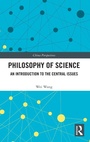
Book
12/2020
1st Edition
Routledge
€206.20
Shipment within 10-20 days
E-Book
12/2020
1st Edition
Routledge
€60.49
Available for download
E-Book
12/2020
1st Edition
Routledge
€60.49
Available for download
Person
Wei Wang is a professor of philosophy of science in the Department of History of Science at Tsinghua University.
Content
1. Introduction 2. Historical Introduction 3. Introduction to Logic 4. Criteria of Cognitive Significance 5. Induction and Confirmation 6. Scientific Explanation Models and Their Problems 7. Theories about the Growth of Scientific Knowledge 8. Demarcation between Science and Pseudoscience 9. Scientific Realism 10. Philosophy of Scientific Experimentation 11. Science and Values 12. New Developments in Philosophy of Science