


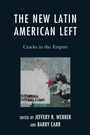
The New Latin American Left
Cracks in the Empire
Published on 4. October 2012
Book
Paperback/Softback
402 pages
978-0-7425-5758-1 (ISBN)
Description
This provocative, multidisciplinary work explores the dramatic resurgence of the Left in Latin America since the late 1990s. Offering a comprehensive account of the complexities and nuances of the shifting political tides in the region, the book provides both a theoretical framework for assessing the state of the Left and a set of cases highlighting key movements, successes, and failures. Its theoretical scope covers socialist strategy, working-class formation, peasant social movements, the role of women in popular politics, and the response of outside powers. These themes provide the foundation for rich country studies of the new Left in Bolivia, Venezuela, Ecuador, Argentina, Brazil, Mexico, Chile, Nicaragua, El Salvador, Guatemala, and Honduras. Too often, the book argues, the rise of the new Left has been the subject of caricature, either through conservative defamation or populist romanticism. Working from a range of critical perspectives, the contributors consider the Left's hopes, aims, and prospects, as well as its contradictions and fissures. As the first book to systematically consider the contemporary relevance of the Left, it will be central to any understanding of Latin American politics and society today.
Contributions by: Ricardo Antunes, Marc Becker, Jared Bibler, Barry Carr, Emilia Castorina, Todd Gordon, Sujatha Fernandes, Claudio Katz, Fernando Leiva, Marco Mojica, Hector Perla Jr., Richard Roman, Susan Spronk, Edur Velasco Arregui, Henry Veltmeyer, Leandro Vergara-Camus, Jeffery R. Webber, and Gregory Wilpert.
Contributions by: Ricardo Antunes, Marc Becker, Jared Bibler, Barry Carr, Emilia Castorina, Todd Gordon, Sujatha Fernandes, Claudio Katz, Fernando Leiva, Marco Mojica, Hector Perla Jr., Richard Roman, Susan Spronk, Edur Velasco Arregui, Henry Veltmeyer, Leandro Vergara-Camus, Jeffery R. Webber, and Gregory Wilpert.
Reviews / Votes
This volume provides a valuable focus on intraleft dynamics-the ever-shifting relations between party leaders and their allies in civil society. As a whole, the essays provide informed and in-depth analysis of such dynamics. . . .Overall, the book's focus, critical stance, and extensive coverage make it a good candidate for classroom adoption. For instructors seeking to make contemporary Latin American politics come to life, the ground-level perspective of these essays provides a good start. * Latin American Politics and Society * This is a densely argued text demonstrating high-quality research. . . . Many of the contributors provide valuable historical backgrounds, making it a highly useful teaching aid. * Bulletin of Latin American Research * The resurgence of the Left in Latin America has shifted the entire political landscape in the hemisphere and, indeed, worldwide. The new Latin American Left has challenged the neoliberal order and placed socialism back on the agenda. In the process, it has raised fundamental questions over political struggle and social change in this age of global capitalism. Webber and Carr have assembled an expert interdisciplinary team on the theory and practice of the twenty-first-century Latin American Left. The contributions take up a variety of theoretical issues, ranging from political strategy to neoliberal class formation and the prospects of revolution, as well as cutting-edge case studies, among them the burgeoning social movements of the indigenous, the landless, workers and the poor, to Argentina's experience, the Mexican Left, and Venezuela's experiment in twenty-first-century socialism. This volume is must reading for all those who wish to understand the political thunder emanating from Latin America and the insights it offers for transformative possibilities around the world in this new century. -- William I. Robinson, University of California, Santa Barbara; author of Latin America and Global Capitalism This important book systematically and thoroughly addresses the question of just how left are the leftist governments that have come to power in Latin America at the outset of the twenty-first century. Individual chapters offer different assessments. The chapters on Venezuela and Nicaragua recognize significant breakthroughs even while the governments of both nations face considerable problems, some of their own making. At the other extreme, Chile and Argentina are characterized as 'the authorized Left' in that they fail to break in any significant way with the established structures and are therefore accepted by Washington policymakers as legitimate. The conclusions challenge the simplistic thesis of the 'good Left' (e.g., Lula) and the 'bad Left' (e.g., Chavez). Extending the debate regarding the twenty-first-century Left to new territory, this groundbreaking collection thus represents a welcome contribution to the study of contemporary Latin American politics. -- Steve Ellner, author of Rethinking Venezuelan Politics: Class, Conflict, and the Chavez PhenomenonMore details
Series
Language
English
Place of publication
United States
Publishing group
Bloomsbury Publishing Plc
Dimensions
Height: 229 mm
Width: 152 mm
Thickness: 24 mm
Weight
650 gr
ISBN-13
978-0-7425-5758-1 (9780742557581)
Copyright in bibliographic data and cover images is held by Nielsen Book Services Limited or by the publishers or by their respective licensors: all rights reserved.
Schweitzer Classification
Other editions
Additional editions

E-Book
10/2012
1st Edition
Rowman & Littlefield Publishers
€55.99
Available for download
E-Book
10/2012
Bloomsbury eBooks US
€55.99
Available for download
Persons
Jeffery R. Webber is lecturer, School of Politics and International Relations, Queen Mary, University of London. Barry Carr is professor, Institute of Social Research, Swinburne University of Technology, Melbourne, and visiting professor of Latin American history, University of California, Berkeley.l
Content
Chapter 1: Introduction: The Latin American Left in Theory and Practice
Jeffery R. Webber and Barry Carr
Part I: Theoretical Issues
Chapter 2: Socialist Strategies in Latin America
Claudio Katz
Chapter 3: The Latin American Left in the Face of the New Imperialism
Henry Veltmeyer
Chapter 4: Neoliberal Class Formation(s): The Informal Proletariat and "New" Workers' Organizations in Latin America
Susan Spronk
Chapter 5: Revolution in Times of Neoliberal Hegemony: The Political Strategy of the MST in Brazil and the EZLN in Mexico
Leandro Vergara-Camus
Chapter 6:Barrio Women and Popular Politics in Chavez's Venezuela
Sujatha Fernandes
Part II: Case Studies of the New Latin American Left
Chapter 7: From Left-Indigenous Insurrection to Reconstituted Neoliberalism in Bolivia: Political Economy, Indigenous Liberation, and Class Struggle, 2000-2011
Jeffery R. Webber
Chapter 8:Venezuela: An Electoral Road to Twenty-First-Century Socialism?
Gregory Wilpert
Chapter 9:Ecuador: Indigenous Struggles and the Ambiguities of Electoral Power
Marc Becker
Chapter 10:Crisis and Recomposition in Argentina
Emilia Castorina
Chapter 11: Trade Unions, Social Conflict, and the Political Left in Present-Day Brazil: Between Breach and Compromise
Ricardo Antunes
Chapter 12: Neoliberal Authoritarianism, the "Democratic Transition," and the Mexican Left
Richard Roman and Edur Velasco Arregui
Chapter 13:The Chilean Left after 1990: An Izquierda Permitida Championing Transnational Capital, A Historical Left Ensnared in the Past, and a New Radical Left in Gestation
Fernando Leiva
Chapter 14:From Guerrillas to Government: The Continued Relevance of the Central American Left
Hector Perla Jr., Marco Mojica, and Jared Bibler
Chapter 15: The Overthrow of a Moderate and the Birth of a Radicalizing Resistance: The Coup against Manuel Zelaya and the History of Imperialism and Popular Struggle in Honduras
Todd Gordon and Jeffery R. Webber
Jeffery R. Webber and Barry Carr
Part I: Theoretical Issues
Chapter 2: Socialist Strategies in Latin America
Claudio Katz
Chapter 3: The Latin American Left in the Face of the New Imperialism
Henry Veltmeyer
Chapter 4: Neoliberal Class Formation(s): The Informal Proletariat and "New" Workers' Organizations in Latin America
Susan Spronk
Chapter 5: Revolution in Times of Neoliberal Hegemony: The Political Strategy of the MST in Brazil and the EZLN in Mexico
Leandro Vergara-Camus
Chapter 6:Barrio Women and Popular Politics in Chavez's Venezuela
Sujatha Fernandes
Part II: Case Studies of the New Latin American Left
Chapter 7: From Left-Indigenous Insurrection to Reconstituted Neoliberalism in Bolivia: Political Economy, Indigenous Liberation, and Class Struggle, 2000-2011
Jeffery R. Webber
Chapter 8:Venezuela: An Electoral Road to Twenty-First-Century Socialism?
Gregory Wilpert
Chapter 9:Ecuador: Indigenous Struggles and the Ambiguities of Electoral Power
Marc Becker
Chapter 10:Crisis and Recomposition in Argentina
Emilia Castorina
Chapter 11: Trade Unions, Social Conflict, and the Political Left in Present-Day Brazil: Between Breach and Compromise
Ricardo Antunes
Chapter 12: Neoliberal Authoritarianism, the "Democratic Transition," and the Mexican Left
Richard Roman and Edur Velasco Arregui
Chapter 13:The Chilean Left after 1990: An Izquierda Permitida Championing Transnational Capital, A Historical Left Ensnared in the Past, and a New Radical Left in Gestation
Fernando Leiva
Chapter 14:From Guerrillas to Government: The Continued Relevance of the Central American Left
Hector Perla Jr., Marco Mojica, and Jared Bibler
Chapter 15: The Overthrow of a Moderate and the Birth of a Radicalizing Resistance: The Coup against Manuel Zelaya and the History of Imperialism and Popular Struggle in Honduras
Todd Gordon and Jeffery R. Webber