

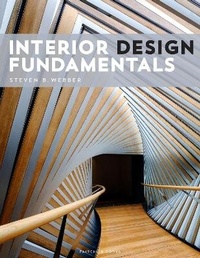
Interior Design Fundamentals
Bundle Book + Studio Access Card
Published on 28. November 2019
Book
Mixed media product
978-1-5013-2708-7 (ISBN)
Description
"The book's greatest strength is approaching the subject through the lens of design thinking. There is a need to emphasize design thinking at early foundation levels in interior design." Lee Keen, Louisiana State University, USA
Learn the basics of interior design thinking and the design process. Envision yourself in the role of professional designer as you learn about design theory, such as the phases of design, spatial well-being, color theory, history, professional practices, and design practicalities such as finishes, furnishings, lighting, environmental systems, and more. Learning how to think like a designer, and developing a process to do so, will be a valuable skill as you move forward in your studies and career.
Features
-Provides techniques for developing awareness of conditions related to urban and rural issues, building architecture, and societal and organizational cultures
-Case Studies showing how designers address important topics like homelessness and adaptive reuse, as well as use color, furniture, materials, lighting, and environmental support systems to reflect the client's message
-Learning objectives and outcomes, definitions of key terms, review questions, chapter summaries, and exercises reinforce the learning experience
Instructor's Resources
-Instructor's Guide provides suggestions for planning the course and using the text in the classroom, supplemental assignments, and lecture notes
-Test Bank includes sample questions for each chapter
-PowerPoint (R) presentations include images from the book and provide a framework for lecture and discussion
Within the STUDIO, students will be able to
-Study smarter with self-quizzes featuring scored results and personalized study tips
-Review concepts with flashcards of essential vocabulary
Learn the basics of interior design thinking and the design process. Envision yourself in the role of professional designer as you learn about design theory, such as the phases of design, spatial well-being, color theory, history, professional practices, and design practicalities such as finishes, furnishings, lighting, environmental systems, and more. Learning how to think like a designer, and developing a process to do so, will be a valuable skill as you move forward in your studies and career.
Features
-Provides techniques for developing awareness of conditions related to urban and rural issues, building architecture, and societal and organizational cultures
-Case Studies showing how designers address important topics like homelessness and adaptive reuse, as well as use color, furniture, materials, lighting, and environmental support systems to reflect the client's message
-Learning objectives and outcomes, definitions of key terms, review questions, chapter summaries, and exercises reinforce the learning experience
Instructor's Resources
-Instructor's Guide provides suggestions for planning the course and using the text in the classroom, supplemental assignments, and lecture notes
-Test Bank includes sample questions for each chapter
-PowerPoint (R) presentations include images from the book and provide a framework for lecture and discussion
Within the STUDIO, students will be able to
-Study smarter with self-quizzes featuring scored results and personalized study tips
-Review concepts with flashcards of essential vocabulary
Reviews / Votes
The book's greatest strength is approaching the subject through the lens of design thinking. There is a need to emphasize design thinking at early foundation levels in interior design. -- Lee Keen, Louisiana State University, USA I think the distinguishing factor of this book is the way it addresses design thinking and places it first and foremost in the book. This makes the book unique. -- Mary Ann Frank, Indiana University - Purdue University, USA The book is well organized and introduces topics that can later be covered in-depth in other courses. The design thinking approach is definitely a strength and the main reason to adopt this textbook. -- Mandy Berdami, Mississippi College, USAMore details
Language
English
Place of publication
London
United Kingdom
Publishing group
Bloomsbury Publishing PLC
Target group
College/higher education
Illustrations
377 color illus
Dimensions
Height: 280 mm
Width: 216 mm
Thickness: 22 mm
Weight
1260 gr
ISBN-13
978-1-5013-2708-7 (9781501327087)
Copyright in bibliographic data and cover images is held by Nielsen Book Services Limited or by the publishers or by their respective licensors: all rights reserved.
Schweitzer Classification
Other editions
Additional editions

E-Book
10/2019
1st Edition
Fairchild Books
€155.99
Available for download

E-Book
10/2019
1st Edition
Fairchild Books
€155.99
Available for download
Person
Steven Webber is Assistant Professor in the Department of Interior Architecture at Florida State University. He holds NCIDQ certification and is a LEED-AP and member of IDEC and EDRA. Prior to teaching, he practiced in the fields of architecture and interior design for several firms including Gensler.
Content
Preface
Introduction: What is Interior Design?
Chapter 1: The Foundation of Design: Design Thinking and the Elements and Principles of Design
Chapter 2: History of Architecture and Design
Chapter 3: The Design Process
Chapter 4: Spatial Well-Being
Chapter 5: Color Theory
Chapter 6: Professional Practice of Interior Design
Chapter 7: Contextual Factors of the Built Environment
Chapter 8: Planning
Chapter 9: Finishes
Chapter 10: Furnishings: Millwork, Furniture, Fixtures, and Equipment
Chapter 11: Lighting
Chapter 12: Built Environment Support Systems
Introduction: What is Interior Design?
Chapter 1: The Foundation of Design: Design Thinking and the Elements and Principles of Design
Chapter 2: History of Architecture and Design
Chapter 3: The Design Process
Chapter 4: Spatial Well-Being
Chapter 5: Color Theory
Chapter 6: Professional Practice of Interior Design
Chapter 7: Contextual Factors of the Built Environment
Chapter 8: Planning
Chapter 9: Finishes
Chapter 10: Furnishings: Millwork, Furniture, Fixtures, and Equipment
Chapter 11: Lighting
Chapter 12: Built Environment Support Systems