

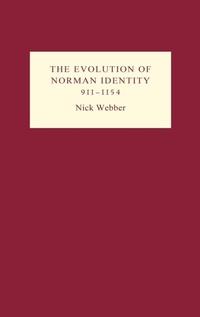
The Evolution of Norman Identity, 911-1154
Published on 15. March 2005
Book
Hardback
208 pages
978-1-84383-119-8 (ISBN)
Description
A close examination, through original sources, of the Norman self-image.
During the period 911-1154, a newly-constituted people came to control not only a Frankish duchy, but also the kingdoms of England and Sicily. This people, composed of Scandinavian settlers and Frankish natives, came to be known as the Normans. This book examines the growth of the concept of the Norman people (gens Normannorum), through the self-perception of group members (Normanitas or "Norman-ness") and the perceptions of "others". Using identity models which deal with the interaction of various types of communities, it examines narrative sources (both internally and externally produced) in order to establish what it meant to be a Norman, both to the Normans themselves, and to those with whom they had contact. Beyond these perceptions of self and otherness, examination focuses in particular on the role of the Norman leaders (as the embodiment of Norman identity), the effects of language, the importance of conquest and the sense of homeland, up until the significant change in rulership in both England and Sicily in 1154.
During the period 911-1154, a newly-constituted people came to control not only a Frankish duchy, but also the kingdoms of England and Sicily. This people, composed of Scandinavian settlers and Frankish natives, came to be known as the Normans. This book examines the growth of the concept of the Norman people (gens Normannorum), through the self-perception of group members (Normanitas or "Norman-ness") and the perceptions of "others". Using identity models which deal with the interaction of various types of communities, it examines narrative sources (both internally and externally produced) in order to establish what it meant to be a Norman, both to the Normans themselves, and to those with whom they had contact. Beyond these perceptions of self and otherness, examination focuses in particular on the role of the Norman leaders (as the embodiment of Norman identity), the effects of language, the importance of conquest and the sense of homeland, up until the significant change in rulership in both England and Sicily in 1154.
Reviews / Votes
Contributes in a timely fashion to current debates concerning medieval group identities. * MEDIUM AEVUM * Provides an ideal starting point for anyone wishing to study Norman identity in a broader European context. * EARLY MEDIEVAL EUROPE *More details
Language
English
Place of publication
Woodbridge
United Kingdom
Publishing group
Boydell & Brewer Ltd
Target group
Professional and scholarly
Product notice
Cloth over boards
Dimensions
Height: 240 mm
Width: 161 mm
Thickness: 16 mm
Weight
482 gr
ISBN-13
978-1-84383-119-8 (9781843831198)
Copyright in bibliographic data and cover images is held by Nielsen Book Services Limited or by the publishers or by their respective licensors: all rights reserved.
Schweitzer Classification
Person
Nick Webber is Resources Coordinator for the Department of Media and Communication at the University of Central England in Birmingham.