

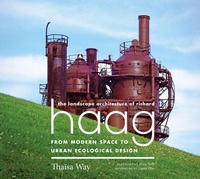
The Landscape Architecture of Richard Haag
From Modern Space to Urban Ecological Design
Published on 1. May 2015
Book
Hardback
248 pages
978-0-295-99448-2 (ISBN)
Description
Richard Haag is best known for his rehabilitation of Gas Works Park in Seattle and for a series of remarkable gardens at the Bloedel Reserve on Bainbridge Island. He reshaped the field of landscape architecture as a designer, teacher, and activist. In 1964, Haag founded the landscape architecture department at the University of Washington, and his innovative work contributed to the increasingly significant design approach known as urban ecological design, which encourages thinking beyond the boundaries of gardens and parks to consider the broader roles that landscapes play within urban ecosystems, such as storm water drainage and wildlife habitat.
Gas Works Park is studied in every survey of twentieth-century landscape architecture as a modern work that challenged the tenets of modernism by engaging a toxic site and celebrating an industrial past. Haag's work with ecologists and soil scientists in his landscape remediation and reclamation projects opened new areas of inquiry into the adaptive reuse of post-industrial sites.
Thaisa Way places Haag's work within the context of changes in the practice of landscape architecture over the past five decades in the Pacific Northwest and nationally. The book should be of interest to specialists as well as to readers who are interested in the changes in urban landscapes inspired by Haag's work.
Watch the book trailer: https://www.youtube.com/watch?v=fUBeOCA8-kQ
Gas Works Park is studied in every survey of twentieth-century landscape architecture as a modern work that challenged the tenets of modernism by engaging a toxic site and celebrating an industrial past. Haag's work with ecologists and soil scientists in his landscape remediation and reclamation projects opened new areas of inquiry into the adaptive reuse of post-industrial sites.
Thaisa Way places Haag's work within the context of changes in the practice of landscape architecture over the past five decades in the Pacific Northwest and nationally. The book should be of interest to specialists as well as to readers who are interested in the changes in urban landscapes inspired by Haag's work.
Watch the book trailer: https://www.youtube.com/watch?v=fUBeOCA8-kQ
Reviews / Votes
"While the book tells Haag's story, it also describes the evolution of landscape architecture in the Northwest."(Columns) "Since 1964, when he founded the Department of Landscape Architecture at the University of Washington, Haag has gained a warranted admiration that Way has sharply surveyed and illustrated in her new book."
- Paul Dorpat (Pacific NW Magazine) "This very detailed work is most useful for professionals. The book brings new attention to Pacific Northwest landscape design. Recommended."
(Choice)
More details
Series
Language
English
Place of publication
Seattle
United States
Product notice
sewn/stitched
Cloth over boards
Illustrations
185 color photos
Dimensions
Height: 249 mm
Width: 221 mm
Thickness: 24 mm
Weight
1106 gr
ISBN-13
978-0-295-99448-2 (9780295994482)
Copyright in bibliographic data and cover images is held by Nielsen Book Services Limited or by the publishers or by their respective licensors: all rights reserved.
Schweitzer Classification
Persons
Thaisa Way is associate professor of landscape architecture at the University of Washington. She is the author of Unbounded Practices: Women, Landscape Architecture, and Early Twentieth Century Design.
Content
Foreword by Marc Treib
Preface
Acknowledgments
1. Growing up in a Kentucky landscape
2. A Landscape Education
3. "Keep Your Eyes Open!"
4. Designing the Home Garden in California
5. A Teacher's Teacher
6. Gardens of the Pacific Northwest
7. From Modernism to Urbanism
8. The Art of the Landform as Landscape Architecture
9. "It Was a Gas!" at Gas Works Park
10. Land Sculpting and Ecological Design at the Bloedel Reserve
11. The Legacy
Afterword by Laurie Olin
Notes
Bibliography
Illustration Credits
Index
Preface
Acknowledgments
1. Growing up in a Kentucky landscape
2. A Landscape Education
3. "Keep Your Eyes Open!"
4. Designing the Home Garden in California
5. A Teacher's Teacher
6. Gardens of the Pacific Northwest
7. From Modernism to Urbanism
8. The Art of the Landform as Landscape Architecture
9. "It Was a Gas!" at Gas Works Park
10. Land Sculpting and Ecological Design at the Bloedel Reserve
11. The Legacy
Afterword by Laurie Olin
Notes
Bibliography
Illustration Credits
Index