


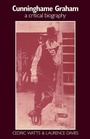
Cunninghame Graham
A Critical Biography
Published on 17. May 1979
Book
Hardback
346 pages
978-0-521-22467-3 (ISBN)
Description
R. B. Cunninghame Graham (1852-1936) was one of the most brilliant and mercurial characters of his day. Known as 'Don Roberto' and 'the Modern Don Quixote' because of his Spanish blood and impetuous life-style, and as 'the Uncrowned King of Scotland' because of his descent from King Robert II, he was a paradoxical man whose career was astonishingly varied. After an early period as an adventurer, when he worked as a cattle-rancher and horse-dealer in South America and Texas, he embarked on a stormy political career. He was the first socialist in Parliament, was gaoled after assailing the police at the Battle of Trafalgar Square on Bloody Sunday, 1887, later became the founder and president of the first Labour Party, and was eventually elected president of the Scottish National Party. Meanwhile he travelled in Morocco disguised as an Arab sheik and prospected for gold in Spain.
More details
Language
English
Place of publication
Cambridge
United Kingdom
Target group
College/higher education
Dimensions
Height: 216 mm
Width: 138 mm
Weight
552 gr
ISBN-13
978-0-521-22467-3 (9780521224673)
Copyright in bibliographic data is held by Nielsen Book Services Limited or its licensors: all rights reserved.
Schweitzer Classification
Other editions
New editions
Book
11/2008
Cambridge University Press
€57.50
Shipment within 15-20 days
Additional editions
Book
11/2008
Cambridge University Press
€57.50
Shipment within 15-20 days
Content
Part I. The Earlier Years: 1. 1852-77: Origins and Early Travels; 2. 1878-85: Marriage, Texas, Scotland; 3. 1886-8: First Years in Parliament; 4. 1888-92: After Trafalgar Square; 5. 1892-1900: Travels, Anti-Imperialism, the Last Years at Gartmore; 6. Friendships; 7. Early Writings; Part II. The Later Years: 8. Further Literary Matters; 9. His Later Political Career; 10. Friendships and Relationships; 11. Later Writings; 12. Conclusion.