

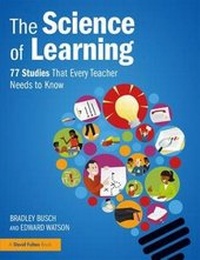
The Science of Learning
77 Studies That Every Teacher Needs to Know
1st Edition
Published on 7. May 2019
Book
Paperback/Softback
172 pages
978-1-138-61770-4 (ISBN)
Description
Supporting teachers in the quest to help students learn as effectively and efficiently as possible, The Science of Learning translates 77 of the most important and influential studies on the topic of learning into accessible and easily digestible overviews.
Demystifying key concepts and translating research into practical advice for the classroom, this unique resource will increase teachers' understanding of crucial psychological research so they can help students improve how they think, feel and behave in school. From large to- small-scale studies, from the quirky to the iconic, The Science of Learning breaks down complicated research to provide teachers with the need-to-know facts and implications of each study. Each overview combines graphics and text, asks key questions, describes related research and considers implications for practice. Highly accessible, each overview is attributed to one of seven key categories:
Memory: increasing how much students remember
Mindset, motivation and resilience: improving persistence, effort and attitude
Self-regulation and metacognition: helping students to think clearly and consistently
Student behaviours: encouraging positive student habits and processes
Teacher attitudes, expectations and behaviours: adopting positive classroom practices
Parents: how parents' choices and behaviours impact their childrens' learning
Thinking biases: avoiding faulty thinking habits that get in the way of learning
A hugely accessible resource, this unique book will support, inspire and inform teaching staff, parents and students, and those involved in leadership and CPD.
Demystifying key concepts and translating research into practical advice for the classroom, this unique resource will increase teachers' understanding of crucial psychological research so they can help students improve how they think, feel and behave in school. From large to- small-scale studies, from the quirky to the iconic, The Science of Learning breaks down complicated research to provide teachers with the need-to-know facts and implications of each study. Each overview combines graphics and text, asks key questions, describes related research and considers implications for practice. Highly accessible, each overview is attributed to one of seven key categories:
Memory: increasing how much students remember
Mindset, motivation and resilience: improving persistence, effort and attitude
Self-regulation and metacognition: helping students to think clearly and consistently
Student behaviours: encouraging positive student habits and processes
Teacher attitudes, expectations and behaviours: adopting positive classroom practices
Parents: how parents' choices and behaviours impact their childrens' learning
Thinking biases: avoiding faulty thinking habits that get in the way of learning
A hugely accessible resource, this unique book will support, inspire and inform teaching staff, parents and students, and those involved in leadership and CPD.
Reviews / Votes
"Like me, I trust you will enjoy reading, dipping into, thinking about, following up, questioning and asking for more - as you touch this book. This is my 'book of the decade'." - John Hattie, Laureate Professor at Melbourne University, Australia"This is the book I have been waiting for. Whether you are just beginning as a teacher, or a seasoned veteran, there will be something here that will be directly relevant to your practice, and, perhaps more importantly, will make you think." - Dylan Wiliam, Emeritus Professor of Educational Assessment at UCL, UK
"This book will prove irresistible to anyone keen to understand more about essential educational research findings in the most accessible manner possible. An absolute must for every school." - Professor Dame Alison Peacock, Chief Executive at The Chartered College of Teaching, UK
"The Science of Learning is a timely and precious gift to teachers. Interpreting research accurately and applying it intelligently are not easy tasks. This book has made them far easier. Every teacher should be given a copy." - Jonnie Noakes, Head of Teaching and Learning at Eton College, UK
"Busch and Watson have come up with that rarity: an educational must-read. I will be recommending it to every teacher I know!" - Chris Hildrew, Headteacher at Churchill Academy, UK
"This book is a highly practicable guide to the often impenetrable field of education research and is a very useful compass for school leaders, classroom teachers and parents alike in seeking which evidence based strategies to implement." - Carl Hendrick, author of What Does This Look Like in the Classroom?, UK
"The authors say they have three aims with the book: to bring together these articles in one book for people who otherwise don't know where to look; to provide such content without needing a costly subscription; and to make these sources more accessible, as they can be quite difficult to read. In my opinion, they succeed with all three." - Dr Christian Bokhove, TES
"The presentation of the topics in 77 succinct sections make this a really accessible, easy to use book. It's not daunting to just tackle one topic at a time, and in total the articles add up to really practical and useful knowledge, presented clearly." - Sarah Brew, Parents in Touch
"If you're a teacher who wants to find out about many interesting findings from educational research, without having to spend precious free periods or leisure time looking for it, you should buy this book. And if you're a team leader, buying a copy for each member of your team would not be a bad investment - especially if you used selected studies as the basis for team discussions." - Terry Freedman, Schools Week
"This is a really excellent resource for the busy teacher, education student or study support tutor with plenty of food for thought and easy to understand classroom or teaching suggestions." - Jan Beechey MCILIP, Dyslexia Review
More details
Language
English
Place of publication
London
United Kingdom
Publishing group
Taylor & Francis Ltd
Target group
Professional and scholarly
Illustrations
85 Farbfotos bzw. farbige Rasterbilder
85 Halftones, color
Dimensions
Height: 246 mm
Width: 189 mm
Weight
426 gr
ISBN-13
978-1-138-61770-4 (9781138617704)
Copyright in bibliographic data and cover images is held by Nielsen Book Services Limited or by the publishers or by their respective licensors: all rights reserved.
Schweitzer Classification
Other editions
New editions
Book
04/2021
2nd Edition
Routledge
€26.50
Shipment within 15-20 days
Additional editions
Book
04/2019
1st Edition
Routledge
€155.99
Withdrawn from sale
Persons
Bradley Busch is a Chartered Psychologist at InnerDrive, UK.
Edward Watson is the Founder of InnerDrive, UK.
Edward Watson is the Founder of InnerDrive, UK.
Content
Acknowledgments
About the Authors
Foreword by John Hattie
Introduction - How we wrote this book
Studies
1. The One About Memory
2. The One About Aspirations & Expectations
3. The One About the Planning Fallacy
4. The One About Spacing Your Learning
5. The One About Growth Mindset
6. The one About Predicating Future Behaviour
7. The One About Teacher Mindset
8. The One About Teenagers and Social Reflection
9. The One About High Expectations
10. The One About IQ and Success
11. Th One About Parents and Grades
12. The One About Student Resilience
13. The One About Marshmallow and Self-control
14. The One About Mindset and Purpose
15. The One About Spacing and Interleaving
16. The One About Parental Views on Failure
17. The one About Revising to Music
18. The One About the Importance of Sleep
19. The One About Parental Praise
20. The One About Effort being Contagious
21. The One About Teacher Rating and Learning
22. The One About Talent Bias
23. The Once About Retrieval Practice
24. The One About Thought Suppression
25. The One About Effective Feedback
26. The One About Motivating Bored Students
27. The One About Self-Analysis Over Time
28. The One About Asking Why
29. The One About the Importance of Sleep
30. The One About Mobile Phones
31. The One About Marshmallows, Reliability and Self-Control
32. The One About Note Taking
33. The One About the Impostor Syndrome
34. The One About Reading Out Loud
35. The One About Eating Breakfast
36. The One About Streaming
37. The One About Academic Buoyancy
38. The One About the Spotlight Effect
39. The One About Resilience
40. The One About Phones and Sleep
41. The One About Pictures and Words
42. The One About Teaching Others
43. The One About Experts Overclaiming
44. The One About The Kohler Effect
45. The One About the Ikea Effect
46. The One About Parental Beliefs
47. The One About Motivation
48. The One About Student Daydreaming
49. The One About Banning Mobile Phones
50. The One about going for a Walk
51. The One About Stress Mindset
52. The One About How to Give Better Feedback
53. The One About Self-Talk
54. The One About Parents and Reading
55. The One About the Seduction of Neuroscience
56. The Once About Deadlines, Choice and Procrastination
57. The One About Smart Reputations
58. The One About Emotions and Achievement
59. The One About Interacting with Nature
60. The One About Stress and Uncertainty
61. The One About Metacognition
62. The Once About Helping Disadvantages Students
63. The One About Picturing the Process
64. The One About What the Teacher Says
65. The One About Parental Warmth
66. The One About How Much We Forget
67. The One About Homework
68. The One About Mindset Attitude and Self-esteem
69. The One About Pre-questions
70. The One About the Learning Style Myth
71. The One About Eating Dinner Together
72. The One About Note Taking
73. The One About the Bandwagon Effect
74. The One About Struggling Scientists
75. The One About Effective Teachers
76. The One About Retrieval Practice and Stress
77. The One About False Confidence
Tips
Tips for Improving Memory
Tips for Improving Mindset, Motivation and Resilience
Tips for Improving Self-regulation and Metacognition
Tips for Students
Tips for Teachers' Attitudes, Expectations and Behaviours
Tips for Parents
Tips for Overcoming Thinking Biases
?
References - The Studies
About the Authors
Foreword by John Hattie
Introduction - How we wrote this book
Studies
1. The One About Memory
2. The One About Aspirations & Expectations
3. The One About the Planning Fallacy
4. The One About Spacing Your Learning
5. The One About Growth Mindset
6. The one About Predicating Future Behaviour
7. The One About Teacher Mindset
8. The One About Teenagers and Social Reflection
9. The One About High Expectations
10. The One About IQ and Success
11. Th One About Parents and Grades
12. The One About Student Resilience
13. The One About Marshmallow and Self-control
14. The One About Mindset and Purpose
15. The One About Spacing and Interleaving
16. The One About Parental Views on Failure
17. The one About Revising to Music
18. The One About the Importance of Sleep
19. The One About Parental Praise
20. The One About Effort being Contagious
21. The One About Teacher Rating and Learning
22. The One About Talent Bias
23. The Once About Retrieval Practice
24. The One About Thought Suppression
25. The One About Effective Feedback
26. The One About Motivating Bored Students
27. The One About Self-Analysis Over Time
28. The One About Asking Why
29. The One About the Importance of Sleep
30. The One About Mobile Phones
31. The One About Marshmallows, Reliability and Self-Control
32. The One About Note Taking
33. The One About the Impostor Syndrome
34. The One About Reading Out Loud
35. The One About Eating Breakfast
36. The One About Streaming
37. The One About Academic Buoyancy
38. The One About the Spotlight Effect
39. The One About Resilience
40. The One About Phones and Sleep
41. The One About Pictures and Words
42. The One About Teaching Others
43. The One About Experts Overclaiming
44. The One About The Kohler Effect
45. The One About the Ikea Effect
46. The One About Parental Beliefs
47. The One About Motivation
48. The One About Student Daydreaming
49. The One About Banning Mobile Phones
50. The One about going for a Walk
51. The One About Stress Mindset
52. The One About How to Give Better Feedback
53. The One About Self-Talk
54. The One About Parents and Reading
55. The One About the Seduction of Neuroscience
56. The Once About Deadlines, Choice and Procrastination
57. The One About Smart Reputations
58. The One About Emotions and Achievement
59. The One About Interacting with Nature
60. The One About Stress and Uncertainty
61. The One About Metacognition
62. The Once About Helping Disadvantages Students
63. The One About Picturing the Process
64. The One About What the Teacher Says
65. The One About Parental Warmth
66. The One About How Much We Forget
67. The One About Homework
68. The One About Mindset Attitude and Self-esteem
69. The One About Pre-questions
70. The One About the Learning Style Myth
71. The One About Eating Dinner Together
72. The One About Note Taking
73. The One About the Bandwagon Effect
74. The One About Struggling Scientists
75. The One About Effective Teachers
76. The One About Retrieval Practice and Stress
77. The One About False Confidence
Tips
Tips for Improving Memory
Tips for Improving Mindset, Motivation and Resilience
Tips for Improving Self-regulation and Metacognition
Tips for Students
Tips for Teachers' Attitudes, Expectations and Behaviours
Tips for Parents
Tips for Overcoming Thinking Biases
?
References - The Studies