

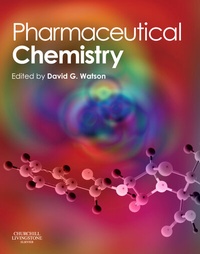
Pharmaceutical Chemistry
Published on 9. February 2011
Book
Paperback/Softback
652 pages
978-0-443-07232-1 (ISBN)
Description
This new book, from the editor of the highly successful Pharmaceutical Analysis, sets out to define the area of pharmaceutical chemistry as distinct from medicinal chemistry. It focuses less on prototypes of drugs that perhaps never came to market and more on the drugs currently in use. The emphasis in the book is on the physicochemical properties of drug molecules and, in so far as they are known, the way that these properties govern the interaction of the drug with its target. Important physicochemical properties include pKa and partition coefficient and the properties of the structural elements within the drug which provide interactions with the target via a range of intermolecular forces. The last fifteen years has seen a great advance in the knowledge of protein structures and a strong emphasis is given to the interaction of drugs with proteins which shape the majority of drug mechanisms.
Focus on intramolecular actions
Mechanisms of action richly illustrated
Self-assessment included
Comprehensive chapters on vitamins and biotechnological products
Focus on intramolecular actions
Mechanisms of action richly illustrated
Self-assessment included
Comprehensive chapters on vitamins and biotechnological products
More details
Language
English
Place of publication
London
United Kingdom
Publishing group
Elsevier Health Sciences
Target group
College/higher education
Primary markets: Pharmacy; Pharmaceutical science; Medicinal or Biochemistry
Illustrations
Approx. 843 illustrations
Dimensions
Height: 246 mm
Width: 189 mm
Weight
1230 gr
ISBN-13
978-0-443-07232-1 (9780443072321)
Copyright in bibliographic data and cover images is held by Nielsen Book Services Limited or by the publishers or by their respective licensors: all rights reserved.
Schweitzer Classification
Other editions
Additional editions
Person
Content
1 Bond type and bond strength; 2 Hydrocarbons: alkanes, alkenes, aromatics and alkylhalides; 3 Amines; 4 Neutral and acidic nitrogen compounds; 5 Oxygen- and sulphur-containing functional groups; 6 Protein structure and its relevance to drug action; 7 DNA structure and its importance to drug action; 8 Drug absorption, distribution, metabolism and excretion; 9 Structure, activity and drug design; 10 Drugs affecting the adrenergic system; 11 Drugs exerting non-adrenergic effects on cardiac output and vascular tone; 12 Drugs interacting with mammalian enzymes; 13 Central nervous system depressants; 14 Analgesics; 15 Local anaesthetics; 16 Anti-cholinergic agents; 17 Anti-histamine drugs ;18 CNS stimulants and CNS-active drugs affecting the serotonergic system; 19 Drugs affecting haemostasis and thrombosis; 20 Drugs affecting the endocrine system; 21 Anticancer drugs; 22 Antimicrobial chemotherapy: A. Antibiotics. B. Antituberculosis drugs; 23 Antiviral drugs; 24 Antifungal chemotherapy; 25 Antiparasitic drugs; 26 Vitamins and minerals; 27 Biotechnologically produced products; 28 Drug and gene delivery systems; 29 Alcohol