

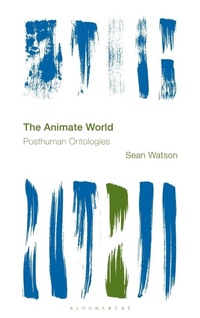
The Animate World
Posthuman Ontologies
Will be published approx. on 2. April 2026
Book
Hardback
338 pages
978-1-5381-6977-3 (ISBN)
Description
The Animate World: Posthuman Ontologies argues for the necessity of a post-humanism grounded in a vital ontology, in contrast to the nihilist ontological positions and assumptions of a range of existing post and anti-humanisms.
Still, the book affirms both the normative imperative and technological tendency that humanism is unsustainable and that technological developments are cumulatively pointing towards a surpassing of the human, conceptually and physically. Based in process philosophy, the post-human ontology is offered as an alternative philosophical grounding for post-humanism for an ethics and politics of ecological flourishing rather than exploitation of nature. Sean Watson critiques the existing nihilist ontological approaches to the post-human, which he argues are complicit with neoliberal, digital capitalism and its ideological justifications. In doing so, he conceives of an ontology of generative ethics and politics, capable of addressing the overwhelming accumulation of crises that Bernard Stiegler identified as the destruction of the future.
Still, the book affirms both the normative imperative and technological tendency that humanism is unsustainable and that technological developments are cumulatively pointing towards a surpassing of the human, conceptually and physically. Based in process philosophy, the post-human ontology is offered as an alternative philosophical grounding for post-humanism for an ethics and politics of ecological flourishing rather than exploitation of nature. Sean Watson critiques the existing nihilist ontological approaches to the post-human, which he argues are complicit with neoliberal, digital capitalism and its ideological justifications. In doing so, he conceives of an ontology of generative ethics and politics, capable of addressing the overwhelming accumulation of crises that Bernard Stiegler identified as the destruction of the future.
Reviews / Votes
Watson disrupts continental philosophy in the same way that Graeber unsettled anthropology. This book is too late to prevent the destruction of the world, but just in time for those who will put it back together again. It is a eulogy for the world that was (and could have been), and a manual for ways of being in the world that will follow. Watson provides a foundation for rigorous thinking and inquiry in the daunting project of rehabilitating the pathological ontologies of the less-than-human. -- Tyson Yunkaporta, Aboriginal scholar, founder of the Indigenous Knowledge Systems Lab at Deakin University, Australia, and author of <i>Sand Talk: How Indigenous Thinking Can Save the World</i>More details
Series
Language
English
Place of publication
United States
Publishing group
Bloomsbury Publishing Plc
Target group
Professional and scholarly
College/higher education
Dimensions
Height: 235 mm
Width: 157 mm
Thickness: 23 mm
Weight
641 gr
ISBN-13
978-1-5381-6977-3 (9781538169773)
Copyright in bibliographic data and cover images is held by Nielsen Book Services Limited or by the publishers or by their respective licensors: all rights reserved.
Schweitzer Classification
Other editions
Additional editions
E-Book
01/2026
1st Edition
Bloomsbury Academic
€107.99
Available for download
E-Book
01/2026
1st Edition
Bloomsbury Academic
€107.99
Available for download
Person
Sean Watson is Associate Head of the Department of Health and Social Science at the University of the West of England, Bristol, UK. He has been an academic for over 30 years. He has taught, and occasionally published on, aspects of European philosophy, and metaphysics throughout that time. He lives on an old Scottish fishing boat.
Content
Acknowledgments
Preface
Introduction: Is the Universe Alive or Dead: The Problem with Ontological Nihilism
1. The Post-Structuralist and Cognitive-Behavioural Origins of Critical Posthumanism
2. Transhumanism: The Post-Biological Ideology of Digital Capitalism
3. Speculative Posthumanism
4. The Libidinal Economy of Nihilist Posthumanism
5. The Culture of Nihilism
6. Indigenous Animism and the Decolonisation of Philosophy
7. The Posthuman Earth
8. Becoming Ecological/Posthumanist
9. Animist Praxis
10 Scientific Realism or Animism: The Physics and Metaphysics of the Anthropocene
11. Ontological Nihilism and the Thanatopolitics
Afterword: On Animism, Metaphysics, and those Tempted to Invoke the Spectre of Romantic Reaction
Bibliography
About the Author
Preface
Introduction: Is the Universe Alive or Dead: The Problem with Ontological Nihilism
1. The Post-Structuralist and Cognitive-Behavioural Origins of Critical Posthumanism
2. Transhumanism: The Post-Biological Ideology of Digital Capitalism
3. Speculative Posthumanism
4. The Libidinal Economy of Nihilist Posthumanism
5. The Culture of Nihilism
6. Indigenous Animism and the Decolonisation of Philosophy
7. The Posthuman Earth
8. Becoming Ecological/Posthumanist
9. Animist Praxis
10 Scientific Realism or Animism: The Physics and Metaphysics of the Anthropocene
11. Ontological Nihilism and the Thanatopolitics
Afterword: On Animism, Metaphysics, and those Tempted to Invoke the Spectre of Romantic Reaction
Bibliography
About the Author