

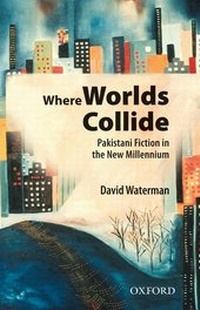
Where Worlds Collide
Pakistani Fiction in the New Millennium
Published on 26. March 2015
Book
Hardback
280 pages
978-0-19-940032-4 (ISBN)
Description
Pakistan's current generation of English-language novelists, born after the 1971 war and writing in the twenty-first century, must navigate between the ancient cultural history they have inherited and the relative youth of their country as a political construct. In this book, Dr David Waterman explores the works of seven writers of this generation, including both residents of Pakistan and authors from the diaspora, in order to examine the manner in which questions of
history, culture, and identity arise from this process.
Pakistan's history and its present moment have introduced a number of issues of urgent relevance that these writers explore in very practical terms: What does it mean to be a Pakistani now and what might it mean in the near future? How does one speak of past trauma without disrupting the present? What is the role for Islam to play in the governance of such a diverse country? How can we ensure the future of the boys and girls of this land, which is paradoxically both rich and poor? Where
Worlds Collide is a survey of contemporary Pakistani writers and their efforts to trace the itinerary of Pakistan in the twenty-first century. The fictional portrayals of lives represented in the works of these authors take into account everyday issues, stories of individuals and their families, their joys
and sorrows and fears, and place them in the context of the greater story of Pakistan.
history, culture, and identity arise from this process.
Pakistan's history and its present moment have introduced a number of issues of urgent relevance that these writers explore in very practical terms: What does it mean to be a Pakistani now and what might it mean in the near future? How does one speak of past trauma without disrupting the present? What is the role for Islam to play in the governance of such a diverse country? How can we ensure the future of the boys and girls of this land, which is paradoxically both rich and poor? Where
Worlds Collide is a survey of contemporary Pakistani writers and their efforts to trace the itinerary of Pakistan in the twenty-first century. The fictional portrayals of lives represented in the works of these authors take into account everyday issues, stories of individuals and their families, their joys
and sorrows and fears, and place them in the context of the greater story of Pakistan.
Reviews / Votes
Provides a perspective and useful contribution to a growing body of scholarly work on the literature produced by this still-forming nation [Pakistan]. * Madeline Clements, The Times Literary Supplement *More details
Language
English
Place of publication
Oxford
Pakistan
Target group
College/higher education
Dimensions
Height: 224 mm
Width: 144 mm
Thickness: 21 mm
Weight
392 gr
ISBN-13
978-0-19-940032-4 (9780199400324)
Copyright in bibliographic data and cover images is held by Nielsen Book Services Limited or by the publishers or by their respective licensors: all rights reserved.
Schweitzer Classification
Person
David Waterman is currently Professor at the University of La Rochelle, France, where he is Director of the Department of Applied Foreign Languages and a member of the research team of the Centre for Research in International and Atlantic History (CRHIA). He is currently working on Pakistani history, culture, and literature in English and has served as the Review Editor for Pakistaniaat.
His published works include Pat Barker and the Mediation of Social Reality (2009), Identity in Doris Lessing's Space Fiction (2006), Le miroir de la societe; La violence instutionnelle chez Anthony Burgess, Doris Lessing et Pat Barker (2003), and Disordered Bodies and Disrupted Borders: Representations of Resistance in Modern British Literature (1999).
His published works include Pat Barker and the Mediation of Social Reality (2009), Identity in Doris Lessing's Space Fiction (2006), Le miroir de la societe; La violence instutionnelle chez Anthony Burgess, Doris Lessing et Pat Barker (2003), and Disordered Bodies and Disrupted Borders: Representations of Resistance in Modern British Literature (1999).
Content
Acknowledgments ; Introduction ; 1.'Focus on the Fundamentals': Personal and Political Identity in Mohsin Hamid's The Reluctant Fundamentalist ; 2 Karachi's Fragmented Interdependence: Kamila Shamsie's In The City by the Sea ; 3.The Itinerary of Cultural Identity: Kamila Shamsie's Kartography and the 'Canker' of History ; 4. 'The Contact Zone' in Wartime: Hybridity's Promise and Terror in Nadeem Aslam's The Wasted Vigil ; 5. Memory and Cultural Identity: Negotiating Modernity in Nadeem Aslam's Maps for Lost Lovers ; 6. 'Zone of Exception': The Question of Constituency in H. M. Naqvi's Home Boy ; 7. Fiction, History, and a Story that Might be True: A Case of Exploding Mangoes ; 8. The Geological Pattern of Cultural Evolution: Bergsonian Time, Culture-quakes, and Muslim-Becoming in Geometry of God ; 9. The Translation of Inherited Trauma: Sorayya Khan's Noor and the 'Corrosive Traces' of what Others Have Forgotten ; 10. God in the Government: Kamila Shamsie's manifesto Offence: The Muslim Case ; Bibliography ; Index