

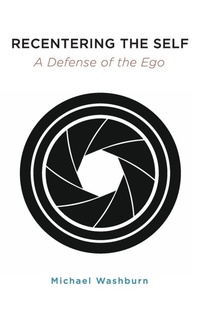
Recentering the Self
A Defense of the Ego
Published on 1. October 2023
Book
Hardback
534 pages
978-1-4384-9467-8 (ISBN)
Description
Reformulates the notion of the ego and provides a new perspective for understanding ego development and the role of the ego in spiritual life.
In Recentering the Self, Michael Washburn presents a new account of the ego, ego development, and the role of the ego in spiritual life. He starts by tracing the premodern antecedents of the notion of the ego in Greek philosophy and Christian theology and then explains the seventeenth-century emergence of the notion in Descartes's radically new account of the soul's relation to the body. Reviewing subsequent criticisms of the notion, the author formulates a revised conception of the ego that highlights the ego's inherently two-sided nature, as a subject and agency that, although rooted within interior consciousness, lives originally and primarily in the material, social world. Washburn uses this revised conception of the ego to explain how the two sides of the ego develop in concert over major stages of the human lifespan and why the ego, despite widespread belief to the contrary, plays primarily a positive role in spiritual life. Recentering the Self makes important contributions to the history of philosophy, consciousness studies, phenomenology, developmental psychology, and spiritual or transpersonal psychology.
In Recentering the Self, Michael Washburn presents a new account of the ego, ego development, and the role of the ego in spiritual life. He starts by tracing the premodern antecedents of the notion of the ego in Greek philosophy and Christian theology and then explains the seventeenth-century emergence of the notion in Descartes's radically new account of the soul's relation to the body. Reviewing subsequent criticisms of the notion, the author formulates a revised conception of the ego that highlights the ego's inherently two-sided nature, as a subject and agency that, although rooted within interior consciousness, lives originally and primarily in the material, social world. Washburn uses this revised conception of the ego to explain how the two sides of the ego develop in concert over major stages of the human lifespan and why the ego, despite widespread belief to the contrary, plays primarily a positive role in spiritual life. Recentering the Self makes important contributions to the history of philosophy, consciousness studies, phenomenology, developmental psychology, and spiritual or transpersonal psychology.
Reviews / Votes
"Michael Washburn is considered one of the most authoritative theorists of transpersonal development, and Recentering the Self provides a much-needed supplement to his theory, offering a reexamination of the notion of the ego and its development, first within the general context of the human lifespan and then within the specific context of spiritual life." - Massimo Marraffa, Roma Tre UniversityMore details
Series
Language
English
Place of publication
Albany, NY
United States
Target group
Professional and scholarly
US School Grade: College Graduate Student and over
Illustrations
6 Tables, black and white
Dimensions
Height: 235 mm
Width: 157 mm
Thickness: 36 mm
Weight
1012 gr
ISBN-13
978-1-4384-9467-8 (9781438494678)
Copyright in bibliographic data and cover images is held by Nielsen Book Services Limited or by the publishers or by their respective licensors: all rights reserved.
Schweitzer Classification
Other editions
Additional editions
E-Book
10/2023
1st Edition
De Gruyter
from
€91.99
Available for download
Person
Michael Washburn is Professor Emeritus of Philosophy at Indiana University South Bend. He is the author of Embodied Spirituality in a Sacred World, The Ego and the Dynamic Ground: A Transpersonal Theory of Human Development, and Transpersonal Psychology in Psychoanalytic Perspective, all published by SUNY Press.
Content
List of Tables
Acknowledgments
Introduction
PART I: RETHINKING THE NOTION OF THE EGO
1. The Birth of the Ego: Descartes's "Thing That Thinks"
2. Before the Ego: Greek Philosophy, Christian Doctrine, and the New Physics of the Seventeenth Century
3. Rethinking the Notion of the Ego, Stage One: From Descartes to the End of the Nineteenth Century
4. Rethinking the Notion of the Ego, Stage Two: The Twentieth Century
5. The Ego's Self-System and Lifeworld
PART II: RETHINKING EGO DEVELOPMENT
6. The First Four Weeks
7. Infancy
8. Early Toddling
9. Late Toddling and the Preschool Years
10. Middle Childhood
11. Adolescence
12. Early Adulthood
13. Midlife
14. Retirement
15. Old Age
PART III: RETHINKING THE EGO'S ROLE IN SPIRITUAL LIFE
16. Spiritual Preawakening
17. Spiritual Awakening
18. Spiritual Growth
19. Spiritual Maturity
Notes
References
Index
Acknowledgments
Introduction
PART I: RETHINKING THE NOTION OF THE EGO
1. The Birth of the Ego: Descartes's "Thing That Thinks"
2. Before the Ego: Greek Philosophy, Christian Doctrine, and the New Physics of the Seventeenth Century
3. Rethinking the Notion of the Ego, Stage One: From Descartes to the End of the Nineteenth Century
4. Rethinking the Notion of the Ego, Stage Two: The Twentieth Century
5. The Ego's Self-System and Lifeworld
PART II: RETHINKING EGO DEVELOPMENT
6. The First Four Weeks
7. Infancy
8. Early Toddling
9. Late Toddling and the Preschool Years
10. Middle Childhood
11. Adolescence
12. Early Adulthood
13. Midlife
14. Retirement
15. Old Age
PART III: RETHINKING THE EGO'S ROLE IN SPIRITUAL LIFE
16. Spiritual Preawakening
17. Spiritual Awakening
18. Spiritual Growth
19. Spiritual Maturity
Notes
References
Index