

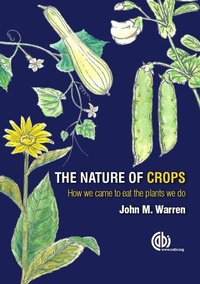
The Nature of Crops
How we came to eat the plants we do
Published on 24. April 2015
Book
Paperback/Softback
192 pages
978-1-78064-509-4 (ISBN)
Description
Have you ever wondered why we eat wheat, rice, potatoes and cassava? Why we routinely domesticate foodstuffs with the power to kill us, or why we chose almonds over acorns? Answering all these questions and more in a readable and friendly style, this book takes you on a journey through our history with crop plants. Arranged into recurrent themes in plant domestication, this book documents the history and biology of over 50 crops, including cereals, spices, legumes, fruits and cash crops such as chocolate, tobacco and rubber. In The Nature of Crops John Warren reveals: -Why the Egyptians worshipped onions; -Why red-flowering runner beans provide fewer beans than white-flowering; -The inherent dangers of being a pineapple worker; and -Why a bird will always beat you in a chilli pepper eating competition!
Reviews / Votes
"Written by a natural story-teller, this book is a 'must' - a very readable book, packed with interesting and useful information, exploring and clearly explaining the cool science behind the development of the plants that sustain us." Dr Tim Pettitt, Eden Project "This book is a journey of discovery - Astute, funny and eye-opening, it is essential reading for serious plant geeks and curious foodies alike." James Wong, Ethno-botanist and Broadcaster "John Warren tells astonishing stories in this book - often funny, sometimes alarming, and always riveting." Dr Peter Wakelin, Amgueddfa Cymru-National Museum Wales "This well-researched and engagingly written book takes us on a fascinating journey... It provides new insights into the process of crop domestication and reveals much about why we eat the plants that we do." Dr Colin Clubbe, Royal Botanic Gardens Kew "This book is a fun and informative romp through the history of our favourite crops but it has an important message - is our diet sustainable? It's high time to look at the history of our current crops and to consider our food supply for the future." Dr Natasha de Vere, National Botanic Garden of WalesMore details
Language
English
Place of publication
Wallingford
United Kingdom
Target group
College/higher education
Professional and scholarly
Product notice
Paperback (trade)
Unsewn / adhesive bound
Dimensions
Height: 208 mm
Width: 146 mm
Thickness: 15 mm
Weight
320 gr
ISBN-13
978-1-78064-509-4 (9781780645094)
Copyright in bibliographic data and cover images is held by Nielsen Book Services Limited or by the publishers or by their respective licensors: all rights reserved.
Schweitzer Classification
Other editions
Additional editions
E-Book
04/2015
CABI Publishing
€41.99
Available for download
Person
John Warren has had a career spread across three continents and many different agricultural systems. He has worked with farmers and growers from the Highlands and Islands of Scotland to the smallholder farmers and oil palm plantations of Papua New Guinea. Within education he was involved in teaching students from diploma level through to post-graduates, covering topics including: sustainable agriculture, countryside management, conservation, and ecological design. In 2016, he left Aberystwyth University where he had been Professor of Agri-Botany to become Vice Chancellor of the Papua New Guinea, University of Natural Resources and Environment. Since retiring, he runs a small holding in west Wales, trying to put into practice much of what he covered in lectures.
Content
1: Introduction: The Nature of Natural - What does domestication involve? 2: Wild Things - Recently domesticated crops and crops that have returned to the wild 3: Learning to Live with Exotic Sexual Practices - How plant breeding systems limit domestication 4: Storing up Trouble - Plants with storage organs 5: The Weird and Wonderful - Herbs, spices and crops with exotic phytochemicals 6: Accidents of History - The role of chance events in domestication 7: Classic Combinations and Reoccurring Themes - Plant families that have been repeatedly domesticated 8: Ownership and Theft - How the economic value of crops has influenced their domestication 9: Fifty Shades of Green - Nutrient rich crops and the next generation