

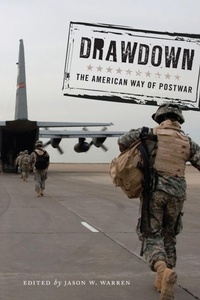
Drawdown
The American Way of Postwar
Published on 18. October 2016
Book
Paperback/Softback
336 pages
978-1-4798-7557-3 (ISBN)
Description
Analyzes the cultural attitudes, political decisions, and institutions surrounding the maintenance of armed forces throughout American history
While traditionally, Americans view expensive military structure as a poor investment and a threat to liberty, they also require a guarantee of that very freedom, necessitating the employment of armed forces. Beginning with the seventeenth-century wars of the English colonies, Americans typically increased their military capabilities at the beginning of conflicts only to decrease them at the apparent conclusion of hostilities. In Drawdown: The American Way of Postwar, a stellar team of military historians argue that the United States sometimes managed effective drawdowns, sowing the seeds of future victory that Americans eventually reaped. Yet at other times, the drawing down of military capabilities undermined our readiness and flexibility, leading to more costly wars and perhaps defeat. The political choice to reduce military capabilities is influenced by Anglo-American pecuniary decisions and traditional fears of government oppression, and it has been haphazard at best throughout American history. These two factors form the basic American "liberty dilemma," the vexed relationship between the nation and its military apparatuses from the founding of the first colonies through to present times.
With the termination of large-scale operations in Iraq and the winnowing of forces in Afghanistan, the United States military once again faces a significant drawdown in standing force structure and capabilities. The political and military debate currently raging around how best to affect this force reduction continues to lack a proper historical perspective. This volume aspires to inform this dialogue. Not a traditional military history, Drawdown analyzes cultural attitudes, political decisions, and institutions surrounding the maintenance of armed forces.
While traditionally, Americans view expensive military structure as a poor investment and a threat to liberty, they also require a guarantee of that very freedom, necessitating the employment of armed forces. Beginning with the seventeenth-century wars of the English colonies, Americans typically increased their military capabilities at the beginning of conflicts only to decrease them at the apparent conclusion of hostilities. In Drawdown: The American Way of Postwar, a stellar team of military historians argue that the United States sometimes managed effective drawdowns, sowing the seeds of future victory that Americans eventually reaped. Yet at other times, the drawing down of military capabilities undermined our readiness and flexibility, leading to more costly wars and perhaps defeat. The political choice to reduce military capabilities is influenced by Anglo-American pecuniary decisions and traditional fears of government oppression, and it has been haphazard at best throughout American history. These two factors form the basic American "liberty dilemma," the vexed relationship between the nation and its military apparatuses from the founding of the first colonies through to present times.
With the termination of large-scale operations in Iraq and the winnowing of forces in Afghanistan, the United States military once again faces a significant drawdown in standing force structure and capabilities. The political and military debate currently raging around how best to affect this force reduction continues to lack a proper historical perspective. This volume aspires to inform this dialogue. Not a traditional military history, Drawdown analyzes cultural attitudes, political decisions, and institutions surrounding the maintenance of armed forces.
Reviews / Votes
"In Drawdown, the contributors explain how and why America, despite repeated lessons, failed to sustain ready military forces in sufficient scale to secure the nation. Jason Warren has pulled together well-researched and accessible essays that shed light and understanding on the cultural, political, strategic, and financial causes of unpreparedness. Breaking the cycle of unpreparedness in an era of increasing security risk requires historical understanding. Making the most out of the resources available to secure our nation and vital interests requires imaginative military and civilian leadership. Drawdowndelivers the former and helps cultivate the latter." - General H.R. McMaster,author of Dereliction of Duty "Positioned to provoke thought on the present U.S. military force reductions. . . . Coming on the heels of the so-called conclusion of the United States wars in Iraq and Afghanistan, this work will, I hope, provoke serious thought, discussion, and a greater maturity in considering the current environment." - Ricardo Herrera,author of For Liberty and the Republic: The American Citizen as Soldier, 1775-1861 "Overall, the editor did a fine job of compiling the essays presented in this book. All are well-written, provide much to think about, and are supported by excellent documentation. This book should be read by all those interested in the management of the U.S. Army." (The Journal of America's Military Past)More details
Series
Language
English
Place of publication
New York
United States
Target group
Professional and scholarly
Product notice
Paperback (trade)
Dimensions
Height: 226 mm
Width: 150 mm
Thickness: 23 mm
Weight
454 gr
ISBN-13
978-1-4798-7557-3 (9781479875573)
Copyright in bibliographic data and cover images is held by Nielsen Book Services Limited or by the publishers or by their respective licensors: all rights reserved.
Schweitzer Classification
Other editions
Person
Major Jason W. Warren is Assistant Professor of History at the U.S. Army War College. He is the author of Connecticut Unscathed: Victory in the Great Narragansett War, 1675-1676.