

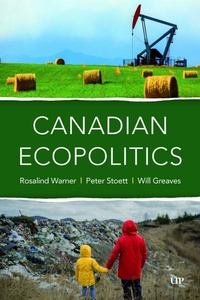
Canadian Ecopolitics
Published on 30. May 2025
Book
Hardback
380 pages
978-1-4875-0816-6 (ISBN)
Description
Canadian Ecopolitics provides a comprehensive overview of the intersection between environmental issues and political processes in Canada. It explores key concepts, historical developments, and contemporary challenges in environmental governance, highlighting the diverse world views that shape ecopolitical discourse - from resource extractivism to deep ecology. Rosalind Warner, Peter Stoett, and Will Greaves analyse Canada's role on the global stage as well as the challenges of multilevel governance of natural resources. The book traces the country's ecopolitical history from pre-colonial times through confederation to modern environmental movements.
The book emphasizes the critical relationship between environmental issues and political processes in governing vital resources such as energy, water, climate, oceans, and biodiversity, making this analysis both timely and essential. The authors explore the complex interactions among different levels of governance, Indigenous perspectives, and competing interests that influence Canadian environmental policy. With a critical focus on the challenges and opportunities within Canada's environmental landscape, Canadian Ecopolitics offers valuable insights for students, policymakers, and engaged citizens aiming to understand and transform this crucial area of governance.
The book emphasizes the critical relationship between environmental issues and political processes in governing vital resources such as energy, water, climate, oceans, and biodiversity, making this analysis both timely and essential. The authors explore the complex interactions among different levels of governance, Indigenous perspectives, and competing interests that influence Canadian environmental policy. With a critical focus on the challenges and opportunities within Canada's environmental landscape, Canadian Ecopolitics offers valuable insights for students, policymakers, and engaged citizens aiming to understand and transform this crucial area of governance.
Reviews / Votes
"This book is an essential contribution to our understanding of complex environmental issues in an age of multiple intersecting crises. Covering a diverse range of topics, from Canadian ecopolitical history to biosecurity and health, the authors have produced an engaging and accessible book that prompts us to reflect deeply, and carefully, about Canadian ecopolitics." -- Heather A. Smith, Professor of Global and International Studies, University of Northern British Columbia "Canadian Ecopolitics is never just descriptive about environmental political institutions - it offers real and meaningful examples throughout the text. The book is accessible without oversimplifying or omitting key details. It offers a complex portrait of Canadian environmental politics. The authors take seriously the need to teach the history of colonialism, the politics within and between Indigenous communities, and the politics and power relations between Indigenous Peoples and federal and provincial governments." -- Andrea M. Collins, Associate Professor, School of Environment, Resources and Sustainability, University of WaterlooMore details
Language
English
Place of publication
Toronto
Canada
Target group
College/higher education
Professional and scholarly
Product notice
sewn/stitched
Cloth over boards
Dimensions
Height: 229 mm
Width: 152 mm
Thickness: 22 mm
Weight
676 gr
ISBN-13
978-1-4875-0816-6 (9781487508166)
Copyright in bibliographic data and cover images is held by Nielsen Book Services Limited or by the publishers or by their respective licensors: all rights reserved.
Schweitzer Classification
Persons
Rosalind Warner is a continuing college professor of political science at Okanagan College.
Peter J. Stoett is Dean of the Faculty of Social Science and Humanities at the University of Ontario Institute Of Technology.
Will Greaves is an associate professor of International Relations at the University of Victoria.
Peter J. Stoett is Dean of the Faculty of Social Science and Humanities at the University of Ontario Institute Of Technology.
Will Greaves is an associate professor of International Relations at the University of Victoria.
Content
List of Illustrations
List of Boxes and Case Studies
Acknowledgments
1. The Canadian Ecopolitical Landscape
L earning Objectives
Introduction: What Is Canadian Ecopolitics?
Canadian Political Basics
Common Themes
Structure of the Book
Conclusion: Putting on the Ecopolitical Lenses
2. Ecopolitical World Views
Learning Objectives
Introduction: Ideas in Canadian Ecopolitics
Ecopolitical Worldviews
From a National to a Planetary Imaginary
Comparing World Views
Four Key Debates within Ecopolitical Thought
Conclusion: Inescapable Complexities
3. The Global Commons and Global Issues
Learning Objectives
Introduction: Canada in the World
The Commons and Global Issues
Ozone Depletion
Biodiversity
Conclusion: From a Commons to a Community
4. Canadian Ecopolitical History
Learning Objectives
Introduction: The Story of Ecopolitical History
Pre-Confederation History: Early Ecopolitical Structures
Post-Confederation Period and Staples
New National Parks and Protected Areas
The Westward Expansion
The Effects of Globalization in Canada
The Road to Indigenous Self-Governance
Conclusion: A Mixed History
5. People, Products, and Planning
Learning Objectives
Introduction
People
Products
Dealing with Pollutants
Food and Agricultural Production
The Forest Industry
International Trade
Planning
Conclusion: Connecting Ecopolitics with Everyday Life
6. Energy
Learning Objectives
Introduction: The Vital Need for Energy
Early Energy
Oil and Gas
Alberta's Bitumen Sands
Liquified Natural Gas
Electricity
Hydro-Electricity
Nuclear Power
Renewables
Electric Vehicles: The Future of Transportation
Conclusion: Finding the Right Energy Mix
7. Freshwater and Canadian Ecopolitics
Learning Objectives
Introduction: Water and Life
The Water Cycle and Human Control
Water Users and Rights
Water Quality and Pollution
Multi-Level Governance of Water
Crossing The Border
Inherent Rights for Water?
Conclusion: Future Flows
8. Oceans
Learning Objectives
Introduction: The Changing Oceans
Climate Change and the Oceans
The Fishing Nations
Aquaculture
Pollution
Marine Noise Pollution
Deep Seabed Mining
Conclusion: The Oceanic Imperative
9. Climate Ecopolitics
Learning Objectives
Introduction: The Climate Crisis
Early Canadian Activism
The Kyoto Roller Coaster
After Kyoto
The Paris Agreement
Conclusion: Future Prospects for Progress
10. Biosecurity and Health
Learning Objectives
Introduction: Health Is Ecopolitical?
Disease
Biodiversity Loss as a Threat to Biosecurity and Health
Biological Invasion
The Illegal Wildlife Trade
Climate Change: The Ultimate Biosecurity and Health Threat
Conclusion: An Overlooked Agenda
11. The Arctic
Learning Objectives
Introduction: The View from the North
Climate Change Impacts in the Arctic
Arctic Natural Resources
Governing the Arctic Environment
International Law and Institutions
The Urban Arctic
Indigenous Governance
Conclusion: The Arctic as An Ecopolitical Fulcrum
12. Assessing Canadian Ecopolitics
Learning Objectives
Introduction: The Panorama of Canadian Ecopolitics
Indigenous Peoples
Climate Change
Biodiversity Loss
Pollution and Product Life Cycles
Security
Environmental Ethics
Multi-Level Adaptive Governance Gaps
Indigenous Sovereignty and Ways of Being
Accountability and Good Ecopolitical Citizenship
Environmental and Non-Human Legal Rights and Representation
Canada as a Global Citizen
What Can You Do?
Notes
References
Index
List of Boxes and Case Studies
Acknowledgments
1. The Canadian Ecopolitical Landscape
L earning Objectives
Introduction: What Is Canadian Ecopolitics?
Canadian Political Basics
Common Themes
Structure of the Book
Conclusion: Putting on the Ecopolitical Lenses
2. Ecopolitical World Views
Learning Objectives
Introduction: Ideas in Canadian Ecopolitics
Ecopolitical Worldviews
From a National to a Planetary Imaginary
Comparing World Views
Four Key Debates within Ecopolitical Thought
Conclusion: Inescapable Complexities
3. The Global Commons and Global Issues
Learning Objectives
Introduction: Canada in the World
The Commons and Global Issues
Ozone Depletion
Biodiversity
Conclusion: From a Commons to a Community
4. Canadian Ecopolitical History
Learning Objectives
Introduction: The Story of Ecopolitical History
Pre-Confederation History: Early Ecopolitical Structures
Post-Confederation Period and Staples
New National Parks and Protected Areas
The Westward Expansion
The Effects of Globalization in Canada
The Road to Indigenous Self-Governance
Conclusion: A Mixed History
5. People, Products, and Planning
Learning Objectives
Introduction
People
Products
Dealing with Pollutants
Food and Agricultural Production
The Forest Industry
International Trade
Planning
Conclusion: Connecting Ecopolitics with Everyday Life
6. Energy
Learning Objectives
Introduction: The Vital Need for Energy
Early Energy
Oil and Gas
Alberta's Bitumen Sands
Liquified Natural Gas
Electricity
Hydro-Electricity
Nuclear Power
Renewables
Electric Vehicles: The Future of Transportation
Conclusion: Finding the Right Energy Mix
7. Freshwater and Canadian Ecopolitics
Learning Objectives
Introduction: Water and Life
The Water Cycle and Human Control
Water Users and Rights
Water Quality and Pollution
Multi-Level Governance of Water
Crossing The Border
Inherent Rights for Water?
Conclusion: Future Flows
8. Oceans
Learning Objectives
Introduction: The Changing Oceans
Climate Change and the Oceans
The Fishing Nations
Aquaculture
Pollution
Marine Noise Pollution
Deep Seabed Mining
Conclusion: The Oceanic Imperative
9. Climate Ecopolitics
Learning Objectives
Introduction: The Climate Crisis
Early Canadian Activism
The Kyoto Roller Coaster
After Kyoto
The Paris Agreement
Conclusion: Future Prospects for Progress
10. Biosecurity and Health
Learning Objectives
Introduction: Health Is Ecopolitical?
Disease
Biodiversity Loss as a Threat to Biosecurity and Health
Biological Invasion
The Illegal Wildlife Trade
Climate Change: The Ultimate Biosecurity and Health Threat
Conclusion: An Overlooked Agenda
11. The Arctic
Learning Objectives
Introduction: The View from the North
Climate Change Impacts in the Arctic
Arctic Natural Resources
Governing the Arctic Environment
International Law and Institutions
The Urban Arctic
Indigenous Governance
Conclusion: The Arctic as An Ecopolitical Fulcrum
12. Assessing Canadian Ecopolitics
Learning Objectives
Introduction: The Panorama of Canadian Ecopolitics
Indigenous Peoples
Climate Change
Biodiversity Loss
Pollution and Product Life Cycles
Security
Environmental Ethics
Multi-Level Adaptive Governance Gaps
Indigenous Sovereignty and Ways of Being
Accountability and Good Ecopolitical Citizenship
Environmental and Non-Human Legal Rights and Representation
Canada as a Global Citizen
What Can You Do?
Notes
References
Index