

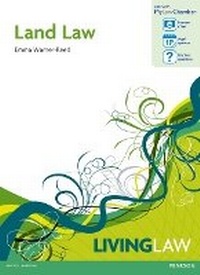
Land Law
Published on 16. May 2013
Book
Paperback/Softback
512 pages
978-1-4082-1912-6 (ISBN)
Description
Your textbook is about more than simply learning the legal principles. That's why every title in the Living Law Series is packed with innovative and interactive activities that will improve your understanding of the law, strengthen your legal writing, problem solving and research skills - enabling you to see how the law works in the real 'living' world and equipping you with the knowledge and skills needed to succeed in your study.
More details
Series
Language
English
Place of publication
Harlow
United Kingdom
Target group
Professional and scholarly
Dimensions
Height: 263 mm
Width: 195 mm
Thickness: 27 mm
Weight
1088 gr
ISBN-13
978-1-4082-1912-6 (9781408219126)
Copyright in bibliographic data and cover images is held by Nielsen Book Services Limited or by the publishers or by their respective licensors: all rights reserved.
Schweitzer Classification
Other editions
New editions
Emma Warner-Reed
Land Law mylawchamber premium pack
Book
07/2013
Pearson Education Limited
€85.67
Article is exhausted; no reprint
Content
Guided tour
Preface
Acknowledgements
Table of cases
Table of statutes
Table of statutory instruments
Table of European legislation
Chapter 1 Introduction to land law
The national obsession
The structure of land ownership in England and Wales
The 1925 reforms and the doctrine of estates
The two legal estates: freehold and leasehold
Commonhold land
Registered and unregistered land
Chapter 2 What is land?
What does it mean to own land?
The definition of land
Land as a slice of the earth
Boundaries
Fixtures and chattels
Things found on the land
Limitations on land ownership
Chapter 3 The acquisition of freehold land
The conveyancing process
Investigation of title
Formalities
The contract
Completion
Registration
Chapter 4 Interests in land
Legal interests
Creation of legal interests
Equitable interests
The creation and transfer of equitable interests
Importance of the distinction betweeen legal and equitable interests
Enforcement of legal and equitable remedies
Enforcing interests in land pre-1926
Enforcement of interests in registered land
Enforcement of interests in unregistered land
Overreaching - a little help at hand
Chapter 5 The leasehold estate
Why do we need leases?
The terminology of leases
Different types of lease
Licences and the lease/licence distinction
Essential characteristics of a lease
Formalities for the creation or transfer of a lease (including registration)
Registration requirements
Termination of leases
Chapter 6 Informal methods of acquisition: adverse possession
What is adverse possession?
Adverse possession: a controversial method of land acquisition?
Acquiring land through adverse possession
The mechanics of claiming adverse possession
Getting the squatter out
Preventing time from running
Leaseholds and adverse possession
The political aspect
Changes in the law affecting adverse possession claims
Chapter 7 Informal methods of acquisition: resulting and constructive trusts
Resulting trusts
Constructive trusts
What is a constructive trust?
'Surveying the whole course of dealings': does it relate to acquisiton or quantification of share?
Other uses for constructive trusts
Chapter 8 Informal acquisition of rights in land: Proprietary estoppel
What is proprietary estoppel?
Why is proprietary estoppel important?
How to establish a claim in proprietary estoppel
The effect of proprietary estoppel
Similarities to constructive trusts
Chapter 9 Co-ownership
Co-ownership as a concept
Separation of legal and equitable title
Co-ownership of the legal estate
Co-ownership of the equitable estate
Recognising the form of co-ownership
Severing the joint tenancy
Bringing an end to co-ownership
Chapter 10 Interests in land: easements
What is an easement?
Easements compared with other forms of right
Essential characterisitics of an easement
The creation of easements
The protection of easements
Extinguishment of easements
Reform
Chapter 11 Freehold Covenants
What is a covenant?
Enforceability of freehold covenants
The position with positive covenants
Protection of freehold covenants
Remedies for breach of covenant</
Preface
Acknowledgements
Table of cases
Table of statutes
Table of statutory instruments
Table of European legislation
Chapter 1 Introduction to land law
The national obsession
The structure of land ownership in England and Wales
The 1925 reforms and the doctrine of estates
The two legal estates: freehold and leasehold
Commonhold land
Registered and unregistered land
Chapter 2 What is land?
What does it mean to own land?
The definition of land
Land as a slice of the earth
Boundaries
Fixtures and chattels
Things found on the land
Limitations on land ownership
Chapter 3 The acquisition of freehold land
The conveyancing process
Investigation of title
Formalities
The contract
Completion
Registration
Chapter 4 Interests in land
Legal interests
Creation of legal interests
Equitable interests
The creation and transfer of equitable interests
Importance of the distinction betweeen legal and equitable interests
Enforcement of legal and equitable remedies
Enforcing interests in land pre-1926
Enforcement of interests in registered land
Enforcement of interests in unregistered land
Overreaching - a little help at hand
Chapter 5 The leasehold estate
Why do we need leases?
The terminology of leases
Different types of lease
Licences and the lease/licence distinction
Essential characteristics of a lease
Formalities for the creation or transfer of a lease (including registration)
Registration requirements
Termination of leases
Chapter 6 Informal methods of acquisition: adverse possession
What is adverse possession?
Adverse possession: a controversial method of land acquisition?
Acquiring land through adverse possession
The mechanics of claiming adverse possession
Getting the squatter out
Preventing time from running
Leaseholds and adverse possession
The political aspect
Changes in the law affecting adverse possession claims
Chapter 7 Informal methods of acquisition: resulting and constructive trusts
Resulting trusts
Constructive trusts
What is a constructive trust?
'Surveying the whole course of dealings': does it relate to acquisiton or quantification of share?
Other uses for constructive trusts
Chapter 8 Informal acquisition of rights in land: Proprietary estoppel
What is proprietary estoppel?
Why is proprietary estoppel important?
How to establish a claim in proprietary estoppel
The effect of proprietary estoppel
Similarities to constructive trusts
Chapter 9 Co-ownership
Co-ownership as a concept
Separation of legal and equitable title
Co-ownership of the legal estate
Co-ownership of the equitable estate
Recognising the form of co-ownership
Severing the joint tenancy
Bringing an end to co-ownership
Chapter 10 Interests in land: easements
What is an easement?
Easements compared with other forms of right
Essential characterisitics of an easement
The creation of easements
The protection of easements
Extinguishment of easements
Reform
Chapter 11 Freehold Covenants
What is a covenant?
Enforceability of freehold covenants
The position with positive covenants
Protection of freehold covenants
Remedies for breach of covenant</