

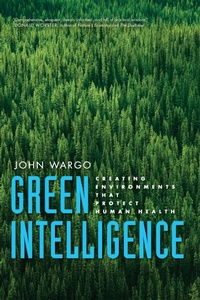
Green Intelligence
Creating Environments That Protect Human Health
Will be published approx. on 5. October 2010
Book
Paperback/Softback
400 pages
978-0-300-16790-0 (ISBN)
Description
An environmental expert offers sound advice on the world's growing chemical dangers
We live in a world awash in manmade chemicals, from the pesticides on our front lawns to the diesel exhaust in the air we breathe. Although experts are beginning to understand the potential dangers of these substances, there are still more than 80,000 synthetic compounds that have not been sufficiently tested to interpret their effects on human health. Yale University professor John Wargo has spent much of his career researching the impact of chemical exposures on women and children. In this book, he explains the origins of society's profound misunderstanding of everyday chemical hazards and offers a practical path toward developing greater "green intelligence."
Despite the rising trend in environmental awareness, information about synthetic substances is often unavailable, distorted, kept secret, or presented in a way that prevents citizens from acting to reduce threats to their health and the environment. By examining the histories of five hazardous technologies and practices, Wargo finds remarkable patterns in the delayed discovery of dangers and explains the governments' failures to manage them effectively. Sobering yet eminently readable, Wargo's book ultimately offers a clear vision for a safer future through prevention, transparency, and awareness.
We live in a world awash in manmade chemicals, from the pesticides on our front lawns to the diesel exhaust in the air we breathe. Although experts are beginning to understand the potential dangers of these substances, there are still more than 80,000 synthetic compounds that have not been sufficiently tested to interpret their effects on human health. Yale University professor John Wargo has spent much of his career researching the impact of chemical exposures on women and children. In this book, he explains the origins of society's profound misunderstanding of everyday chemical hazards and offers a practical path toward developing greater "green intelligence."
Despite the rising trend in environmental awareness, information about synthetic substances is often unavailable, distorted, kept secret, or presented in a way that prevents citizens from acting to reduce threats to their health and the environment. By examining the histories of five hazardous technologies and practices, Wargo finds remarkable patterns in the delayed discovery of dangers and explains the governments' failures to manage them effectively. Sobering yet eminently readable, Wargo's book ultimately offers a clear vision for a safer future through prevention, transparency, and awareness.
Reviews / Votes
"'Wargo's proposed strategy for winning the chemical war is sensible: we need to create an environmentally intelligent society, one that is conscious of the ways in which humanity is transforming the chemistry of the environment and our bodies.... His clear-eyed approach offers transparency and a solution to the frenzy of chemical misinformation in our lives.' Stephanie Wallis, The Ecologist 'Wargo's arguments are empirical, scientifically literate and ultimately convincing... The result is a powerful indictment of a flawed system.' Rob Edwards, New Scientist"More details
Language
English
Place of publication
United States
Target group
College/higher education
Professional and scholarly
Product notice
Paperback (trade)
Illustrations
17 b-w illus.
Dimensions
Height: 233 mm
Width: 154 mm
Thickness: 27 mm
Weight
550 gr
ISBN-13
978-0-300-16790-0 (9780300167900)
Copyright in bibliographic data and cover images is held by Nielsen Book Services Limited or by the publishers or by their respective licensors: all rights reserved.
Schweitzer Classification
Person
John Wargo is professor of environmental policy, risk analysis, and political science at the Yale School of Forestry and Environmental Studies and the Department of Political Science at Yale University. The author of Our Children's Toxic Legacy, he has been an adviser to Vice President Al Gore, the U.S. Congress, the U.N. World Health Organization, and other institutions.