

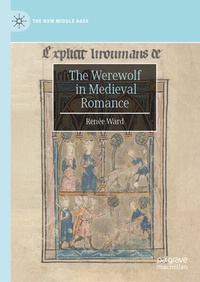
The Werewolf in Medieval Romance
Description
The Werewolf in Medieval Romance argues that in Guillaume de Palerne , Bisclavret , Arthur and Gorlagon , Melion, William of Palerne , and Biclarel the werewolf's identity incorporates a variety of assemblages, including human and animal bodies, and physical spaces and the animate and inanimate beings or objects therein. Whether in lupine or human form, the werewolf's identity is a perpetual becoming, one with extensive queer, and thus disruptive, potential. Additionally, the werewolf's identity incorporates political systems and violence, specifically through his status as a knight, prince, and/or king. He is an expression of sovereign power and an extension of the identity the sovereign presents, often functioning as a blunt instrument of the crown.
More details
Other editions
Additional editions
Person
Renée Ward is a Senior Lecturer of Medieval Literature in the School of Humanities and Heritage at the University of Lincoln, UK. She co-edited The Arthurian World (Routledge) and also co-edits The Year's Work in Medievalism , the journal of the International Society for the Study of Medievalism.
Content
1. Introduction.- Part I: Knightly Assemblages.- 2. Guillaume de Palerne .- 3. Bisclavret.- Part II: Arthur and the Werewolf.- 4. Arthur and Gorlagon.- 5. Melion.- Part III: Adapting and Politicizing the Werewolf.- 6. William of Palerne.- 7. Biclarel.