

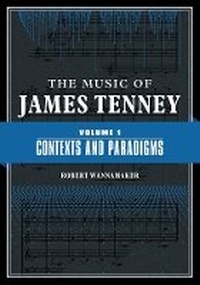
The Music of James Tenney
Volume 1: Contexts and Paradigms
Published on 14. December 2021
Book
Hardback
344 pages
978-0-252-04367-3 (ISBN)
Description
Parsing the works of the experimental music pioneer
Robert Wannamaker's monumental two-volume study explores the influential music and ideas of American composer, theorist, writer, performer, and educator James Tenney. Delving into the whole of Tenney's far-ranging oeuvre, Wannamaker provides in-depth, aurally grounded analyses of works linked to the artist's revolutionary theories of musical form, timbre, and harmonic perception. Volume 1, Contexts and Paradigms, chronologically surveys Tenney's creative development and output. Wannamaker begins each section with biographical, aesthetic, and technical context that illuminates a distinct period in Tenney's career. From there, he analyzes a small number of pieces that illuminate the concerns, characteristics, and techniques that emerged in Tenney's music during that time. Wannamaker supplements the text with musical examples, graphs, and diagrams while also drawing on unpublished material and newly available primary sources to flesh out each work and the ideas that shaped it.
A landmark in experimental music scholarship, The Music of James Tenney is a first-of-its-kind consideration of the experimental music titan and his work.
Robert Wannamaker's monumental two-volume study explores the influential music and ideas of American composer, theorist, writer, performer, and educator James Tenney. Delving into the whole of Tenney's far-ranging oeuvre, Wannamaker provides in-depth, aurally grounded analyses of works linked to the artist's revolutionary theories of musical form, timbre, and harmonic perception. Volume 1, Contexts and Paradigms, chronologically surveys Tenney's creative development and output. Wannamaker begins each section with biographical, aesthetic, and technical context that illuminates a distinct period in Tenney's career. From there, he analyzes a small number of pieces that illuminate the concerns, characteristics, and techniques that emerged in Tenney's music during that time. Wannamaker supplements the text with musical examples, graphs, and diagrams while also drawing on unpublished material and newly available primary sources to flesh out each work and the ideas that shaped it.
A landmark in experimental music scholarship, The Music of James Tenney is a first-of-its-kind consideration of the experimental music titan and his work.
Reviews / Votes
"A welcome contribution to the literature of modern music. . . . Highly recommended." --Choice "An astonishing book, a virtual encyclopedia of James Tenney that threatens to leave no remaining scope for further scholarly work on his music. It answered many questions I've long had about Tenney's music, and has already acted as a spur to my own work. The amount of information one could currently find on Tenney's work would comprise only a small fraction of what is included here."--Kyle Gann, author of The Arithmetic of Listening: Tuning Theory and History for the Impractical Musician "Wannamaker's essential, extraordinary work on the music of James Tenney is a brilliantly detailed and exhaustively researched addition to our comprehensive understanding of Tenney's music and compositional ideas, and to our conception of music of the second half of the twentieth century."--Larry Polansky, Emeritus Strauss Professor of Music, Dartmouth CollegeMore details
Edition
New edition
Language
English
Place of publication
Baltimore
United States
Target group
Professional and scholarly
Edition type
New edition
Illustrations
84 black & white photographs, 6 tables
Dimensions
Height: 254 mm
Width: 178 mm
Thickness: 25 mm
Weight
934 gr
ISBN-13
978-0-252-04367-3 (9780252043673)
Copyright in bibliographic data and cover images is held by Nielsen Book Services Limited or by the publishers or by their respective licensors: all rights reserved.
Schweitzer Classification
Other editions
Additional editions
E-Book
12/2021
University of Illinois Press
€24.49
Available for download
Person
Robert Wannamaker is Associate Dean for Academic and Special Projects in the School of Music at the California Institute of the Arts. He is a composer, improviser, music theorist, mathematician, and educator.
Content
Preface xi
Conventions and Abbreviations xv
1. Introduction 1
1.1. A Summary Chronology 3
1.2. Aesthetic and Methodological Bases: Music in Sound 10
2. Early Works and Influences (1934-59) 18
2.1. Stan Brakhage and Interim (1952) 19
2.2. Manhattan and Meeting Carolee Schneemann 21
2.3. Lionel Nowak, Carl Ruggles, and Charles Ives's Concord Sonata 23
2.4. Seeds (1956/1961) 25
3. Tape Music and "Meta/-Hodos" (1959-61) 31
3.1. Lejaren Hiller and Harry Partch 31
3.2. The University of Illinois Electronic Music Studio 32
3.3. Collage #1 ("Blue Suede") (1961) 34
3.4. "Meta/-Hodos" (1961) 41
4. Computer Music and Ergodicity (1961-64) 48
4.1. Edgard Var?se, D'Arcy Thompson, and "Growth to Form" 51
4.2. John Cage, Variety, and Ergodicity 54
4.3. Max Mathews and MUSIC 59
4.4. The Acoustic Correlates of Timbre 62
4.5. Algorithmic Composition 63
4.6. Analog #1 (Noise Study) (1961) 68
4.7. Phases (1963) 76
5. Performance and the Social (1964-68) 83
5.1. Downtown in the 1960s 83
5.2. Tone Roads and an American Experimental Tradition 86
5.3. Fluxus and Friends 89
5.4. Carolee Schneemann, Antonin Artaud, Wilhelm Reich 93
5.5. Choreogram (1964) 97
5.6. Fabric for Che (1967) 101
6. Process and Continuity (1969-71) 110
6.1. Gradual Processes 112
6.2. For Ann (rising) (1969) 118
6.3. Postal Pieces (1965-71) 124
7. Interlude: Harmonic Theory 135
7.1. The Meaning of Harmony 137
7.2. The Harmonic Series 140
7.3. Interval Tolerance and "The Language of Ratios" 144
7.4. A History of Consonance and Dissonance 147
7.5. Roughness and Beating (CDC-5) 148
7.6. Toneness and Harmonicity (CDC-2) 149
7.7. Harmonic Space (CDC-1) 155
7.8. Harmonic Measures and Their Applications 165
8. Canons and the Harmonic Series (1972-79) 169
8.1. The Harmonic-Series Music 170
8.2. Clang (1972) 172
8.3. Spectral CANON for CONLON Nancarrow (1974) 176
8.4. Harmonium #1 (1976) 183
8.5. Three Indigenous Songs (1979) 189
9. Harmonic Spaces (1980-85) 193
9.1. The Harmonic-Space Music 193
9.2. Harmonium #3 (1980) 195
9.3. Bridge (1984) 199
9.4. Koan for String Quartet (1984) 216
10. Transition and Tradition (1986-94) 224
10.1. Critical Band (1988) 225
10.2. Flocking (1993) 231
11. Spectra and Diaphony (1994-2006) 237
11.1. Dissonant Counterpoint and Statistical Feedback 237
11.2. In a Large, . . . (1994-95) 241
11.3. Diaphonic Study (1997) 246
11.4. Arbor Vitae (2006) 250
12. A Tradition of Experimentation 259
Appendix A. Acoustics, Sensation, and Logarithmic Models 261
Appendix B. Spectrographic Analysis 265
Notes 271
References 301
Index 315
Conventions and Abbreviations xv
1. Introduction 1
1.1. A Summary Chronology 3
1.2. Aesthetic and Methodological Bases: Music in Sound 10
2. Early Works and Influences (1934-59) 18
2.1. Stan Brakhage and Interim (1952) 19
2.2. Manhattan and Meeting Carolee Schneemann 21
2.3. Lionel Nowak, Carl Ruggles, and Charles Ives's Concord Sonata 23
2.4. Seeds (1956/1961) 25
3. Tape Music and "Meta/-Hodos" (1959-61) 31
3.1. Lejaren Hiller and Harry Partch 31
3.2. The University of Illinois Electronic Music Studio 32
3.3. Collage #1 ("Blue Suede") (1961) 34
3.4. "Meta/-Hodos" (1961) 41
4. Computer Music and Ergodicity (1961-64) 48
4.1. Edgard Var?se, D'Arcy Thompson, and "Growth to Form" 51
4.2. John Cage, Variety, and Ergodicity 54
4.3. Max Mathews and MUSIC 59
4.4. The Acoustic Correlates of Timbre 62
4.5. Algorithmic Composition 63
4.6. Analog #1 (Noise Study) (1961) 68
4.7. Phases (1963) 76
5. Performance and the Social (1964-68) 83
5.1. Downtown in the 1960s 83
5.2. Tone Roads and an American Experimental Tradition 86
5.3. Fluxus and Friends 89
5.4. Carolee Schneemann, Antonin Artaud, Wilhelm Reich 93
5.5. Choreogram (1964) 97
5.6. Fabric for Che (1967) 101
6. Process and Continuity (1969-71) 110
6.1. Gradual Processes 112
6.2. For Ann (rising) (1969) 118
6.3. Postal Pieces (1965-71) 124
7. Interlude: Harmonic Theory 135
7.1. The Meaning of Harmony 137
7.2. The Harmonic Series 140
7.3. Interval Tolerance and "The Language of Ratios" 144
7.4. A History of Consonance and Dissonance 147
7.5. Roughness and Beating (CDC-5) 148
7.6. Toneness and Harmonicity (CDC-2) 149
7.7. Harmonic Space (CDC-1) 155
7.8. Harmonic Measures and Their Applications 165
8. Canons and the Harmonic Series (1972-79) 169
8.1. The Harmonic-Series Music 170
8.2. Clang (1972) 172
8.3. Spectral CANON for CONLON Nancarrow (1974) 176
8.4. Harmonium #1 (1976) 183
8.5. Three Indigenous Songs (1979) 189
9. Harmonic Spaces (1980-85) 193
9.1. The Harmonic-Space Music 193
9.2. Harmonium #3 (1980) 195
9.3. Bridge (1984) 199
9.4. Koan for String Quartet (1984) 216
10. Transition and Tradition (1986-94) 224
10.1. Critical Band (1988) 225
10.2. Flocking (1993) 231
11. Spectra and Diaphony (1994-2006) 237
11.1. Dissonant Counterpoint and Statistical Feedback 237
11.2. In a Large, . . . (1994-95) 241
11.3. Diaphonic Study (1997) 246
11.4. Arbor Vitae (2006) 250
12. A Tradition of Experimentation 259
Appendix A. Acoustics, Sensation, and Logarithmic Models 261
Appendix B. Spectrographic Analysis 265
Notes 271
References 301
Index 315