

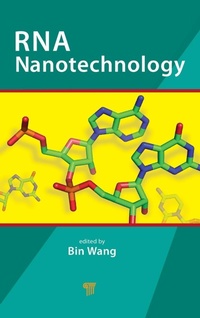
RNA Nanotechnology
1st Edition
Published on 2. April 2014
Book
Hardback
466 pages
978-981-4411-64-6 (ISBN)
Description
In the past few decades there has been incredible growth in "bionano"-related research, which has been accompanied by numerous publications in this field. Although various compilations address topics related to deoxyribonucleic acid (DNA) and protein, there are few books that focus on determining the structure of ribonucleic acid (RNA) and using RNA as building blocks to construct nanoarchitectures for biomedical and healthcare applications.
RNA Nanotechnology is a comprehensive volume that details both the traditional approaches and the latest developments in the field of RNA-related technology. This book targets a wide audience: a broad introduction provides a solid academic background for students, researchers, and scientists who are unfamiliar with the subject, while the in-depth descriptions and discussions are useful for advanced professionals.
The book opens with reviews on the basic aspects of RNA biology, computational approaches for predicting RNA structures, and traditional and emerging experimental approaches for probing RNA structures. This section is followed by explorations of the latest research and discoveries in RNA nanotechnology, including the design and construction of RNA-based nanostructures. The final segment of the book includes descriptions and discussions of the potential biological and therapeutic applications of small RNA molecules, such as small/short interfering RNAs (siRNAs), microRNAs (miRNAs), RNA aptamers, and ribozymes.
RNA Nanotechnology is a comprehensive volume that details both the traditional approaches and the latest developments in the field of RNA-related technology. This book targets a wide audience: a broad introduction provides a solid academic background for students, researchers, and scientists who are unfamiliar with the subject, while the in-depth descriptions and discussions are useful for advanced professionals.
The book opens with reviews on the basic aspects of RNA biology, computational approaches for predicting RNA structures, and traditional and emerging experimental approaches for probing RNA structures. This section is followed by explorations of the latest research and discoveries in RNA nanotechnology, including the design and construction of RNA-based nanostructures. The final segment of the book includes descriptions and discussions of the potential biological and therapeutic applications of small RNA molecules, such as small/short interfering RNAs (siRNAs), microRNAs (miRNAs), RNA aptamers, and ribozymes.
More details
Language
English
Place of publication
Singapore
Singapore
Target group
College/higher education
Professional and scholarly
Academic and Postgraduate
Illustrations
65 s/w Abbildungen, 21 farbige Abbildungen
21 Illustrations, color; 65 Illustrations, black and white
Dimensions
Height: 235 mm
Width: 157 mm
Thickness: 30 mm
Weight
823 gr
ISBN-13
978-981-4411-64-6 (9789814411646)
Copyright in bibliographic data and cover images is held by Nielsen Book Services Limited or by the publishers or by their respective licensors: all rights reserved.
Schweitzer Classification
Other editions
Additional editions
Bin Wang
RNA Nanotechnology
E-Book
04/2014
1st Edition
Pan Stanford Publishing Pte Ltd
€152.99
Available for download
Person
Bin Wang obtained her Ph.D. from the Department of Chemistry at Queen's University (Canada). Her doctoral studies with Richard D. Oleschuk and J. Hugh Horton spanned the areas of analytical chemistry, nanotechnology, and surface chemistry, which involved developing polymer materials to fabricate microfluidic devices and further chemical modification of polymer surfaces for specific microfluidic applications. After finishing her Ph.D. study, Dr. Wang conducted a one-year postdoctoral research with P. Martin Petkovich at Queen's University to develop antigen- and antibody-modified polymer microdevices. In 2005, she joined Kevin M. Weeks' research group at the University of North Carolina at Chapel Hill. Her postdoctoral work involved applying the newly developed RNA structure-analyzing technology to monitor ligand-induced conformational changes in tRNAs and mRNAs. Dr. Wang's areas of interest are RNA biochemistry and nanotechnology.
Content
Fundamental Aspects of RNA; Computational Approaches for Predicting RNA Structures; Traditional and Emerging Experimental Approaches for Probing RNA Structures, Including X-Ray Crystallography, Nuclear Magnetic Resonance (NMR) Spectroscopy, Enzymatic Cleavage, Chemical Probing, Nucleotide Analog Interference Mapping (NAIM), In-Line Probing, Thermal Denaturation, and Single-Molecule Approaches; The Design and Construction of RNA-Based Nanostructures; The Potential Biological and Therapeutic Applications of Small RNA Molecules Such as Small/Short Interfering RNAs (siRNAs), MicroRNAs (miRNAs), RNA Aptamers, and Ribozymes; Alternative Splicing; RNA Motifs for Sensing Metal Ions.