

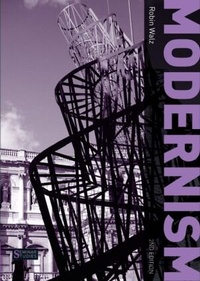
Modernism
2nd Edition
Published on 22. November 2012
Book
Paperback/Softback
204 pages
978-1-4082-6449-2 (ISBN)
Description
Robin Walz's updated Modernism, now part of the Seminar Studies series, has been updated to include significant primary source material and features to make it more accessible for students returning to, or studying the topic for the first time.
The twentieth century was a period of seismic change on a global scale, witnessing two world wars, the rise and fall of communism, the establishment of a global economy, the beginnings of global warming and a complete reversal in the status of women in large parts of the world.
The modernist movements of the early twentieth century launched a cultural revolution without which the multi-media-driven world in which we live today would not have been possible. Today modernism is enshrined in art galleries and university courses. Its techniques of abstraction and montage, and its creative impulse to innovate and shock, are the stock-in-trade of commercial advertising, feature films, television and computer-generated graphics.
In this concise cultural history, Robin Walz vividly recaptures what was revolutionary about modernism. He shows how an aesthetic concept, arising from a diversity of cultural movements, from Cubism and Bauhaus to Abstract Expressionism and Pop Art, and operating in different ways across the fields of art, literature, music, design and architecture, came to turn intellectual and cultural life and assumptions upside down, first in Europe and then around the world.
From the nineteenth century origins of modernism to its postmodern legacies, this book will give the reader access to the big picture of modernism as a dynamic historical process and an unfinished project which still speaks to our times.
The twentieth century was a period of seismic change on a global scale, witnessing two world wars, the rise and fall of communism, the establishment of a global economy, the beginnings of global warming and a complete reversal in the status of women in large parts of the world.
The modernist movements of the early twentieth century launched a cultural revolution without which the multi-media-driven world in which we live today would not have been possible. Today modernism is enshrined in art galleries and university courses. Its techniques of abstraction and montage, and its creative impulse to innovate and shock, are the stock-in-trade of commercial advertising, feature films, television and computer-generated graphics.
In this concise cultural history, Robin Walz vividly recaptures what was revolutionary about modernism. He shows how an aesthetic concept, arising from a diversity of cultural movements, from Cubism and Bauhaus to Abstract Expressionism and Pop Art, and operating in different ways across the fields of art, literature, music, design and architecture, came to turn intellectual and cultural life and assumptions upside down, first in Europe and then around the world.
From the nineteenth century origins of modernism to its postmodern legacies, this book will give the reader access to the big picture of modernism as a dynamic historical process and an unfinished project which still speaks to our times.
More details
Series
Edition
2nd edition
Language
English
Place of publication
London
United Kingdom
Publishing group
Taylor & Francis Ltd
Target group
College/higher education
Professional and scholarly
Dimensions
Height: 240 mm
Width: 170 mm
Thickness: 11 mm
Weight
380 gr
ISBN-13
978-1-4082-6449-2 (9781408264492)
Schweitzer Classification
Other editions
Additional editions
Previous edition
Person
Robin Walz is Associate Professor of History at the University of Alaska Southeast. He has published books and articles on Modernism and aspects of popular culture in the twentieth century.
Content
CONTENTS
Acknowledgements ooo
Chronology ooo
Who's Who
Glossary ooo
Maps ooo
Plates ooo
PART ONE ANALYSIS AND ASSESSMENT
1. THE PROBLEM 000
What is Modernism? 000
2. THE HISTORICAL ORIGINS OF MODERNISM 000
Art and Modernity in the Nineteenth Century 000
The Perceptual Revolution 000
3. HIGH MODERNISM 000
The Early Avant-Garde 000
The Radical Avant-Garde 000
The New Sobriety 000
4. AFTER MODERNISM 000
The Neo-Avant-Garde 000
Postmodernism 000
PART TWO DOCUMENTS 000
1. Charles Baudelaire, 'The Painter of Modern Life' 000
2. Virginia Woolf, 'Mr. Bennett and Mrs. Brown' 000
3. Henri Matisse, 'Notes of a Painter' 000
4. Wassily Kandinsky, Concerning the Spiritual in Art 000
5. Piet Mondrian, "Neo-Plasticism: The General Principle of Plastic Equivalence" 000
6. Emil Nolde, 'On Primitive Art' 000
7. F. T. Marinetti, 'The Founding and the Manifesto of Futurism' 000
8. Tristan Tzara, 'Dada Manifesto 1918' 000
9. Andre Breton, "The Manifesto of Surrealism 000
10. Le Corbusier and Amedee Ozenfant, 'Purism' 000
11. Walter Gropius, 'The Theory and Organisation of the Bauhaus' 000
12. Alfred H. Barr, Jr., Cubism and Abstract Art 000
13. Clement Greenberg, 'Avant-Garde and Kitsch' 000
14. Walter Benjamin, 'The Work of Art in the Age of Mechanical Reproduction' 000
15. Richard Hamilton, 'For the Finest Art try - POP' 000
16. Peter Buerger, 'The Negation of the Autonomy of Art by the Avant-Garde' 000
17. Jean Baudrillard, Simulations 000
18. Frederic Jameson, 'Postmodernism, or The Cultural Logic of Late Capitalism' 000
19. Lucy R. Lippard, 'Trojan Horses: Activist Art and Power" 000
20. Raymond Williams, 'When Was Modernism?' 000
FURTHER READINGS 000
REFERENCES 000
INDEX 000
Acknowledgements ooo
Chronology ooo
Who's Who
Glossary ooo
Maps ooo
Plates ooo
PART ONE ANALYSIS AND ASSESSMENT
1. THE PROBLEM 000
What is Modernism? 000
2. THE HISTORICAL ORIGINS OF MODERNISM 000
Art and Modernity in the Nineteenth Century 000
The Perceptual Revolution 000
3. HIGH MODERNISM 000
The Early Avant-Garde 000
The Radical Avant-Garde 000
The New Sobriety 000
4. AFTER MODERNISM 000
The Neo-Avant-Garde 000
Postmodernism 000
PART TWO DOCUMENTS 000
1. Charles Baudelaire, 'The Painter of Modern Life' 000
2. Virginia Woolf, 'Mr. Bennett and Mrs. Brown' 000
3. Henri Matisse, 'Notes of a Painter' 000
4. Wassily Kandinsky, Concerning the Spiritual in Art 000
5. Piet Mondrian, "Neo-Plasticism: The General Principle of Plastic Equivalence" 000
6. Emil Nolde, 'On Primitive Art' 000
7. F. T. Marinetti, 'The Founding and the Manifesto of Futurism' 000
8. Tristan Tzara, 'Dada Manifesto 1918' 000
9. Andre Breton, "The Manifesto of Surrealism 000
10. Le Corbusier and Amedee Ozenfant, 'Purism' 000
11. Walter Gropius, 'The Theory and Organisation of the Bauhaus' 000
12. Alfred H. Barr, Jr., Cubism and Abstract Art 000
13. Clement Greenberg, 'Avant-Garde and Kitsch' 000
14. Walter Benjamin, 'The Work of Art in the Age of Mechanical Reproduction' 000
15. Richard Hamilton, 'For the Finest Art try - POP' 000
16. Peter Buerger, 'The Negation of the Autonomy of Art by the Avant-Garde' 000
17. Jean Baudrillard, Simulations 000
18. Frederic Jameson, 'Postmodernism, or The Cultural Logic of Late Capitalism' 000
19. Lucy R. Lippard, 'Trojan Horses: Activist Art and Power" 000
20. Raymond Williams, 'When Was Modernism?' 000
FURTHER READINGS 000
REFERENCES 000
INDEX 000