

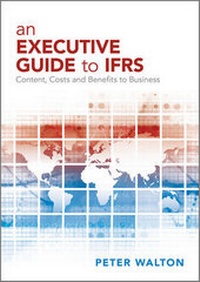
An Executive Guide to IFRS
Content, Costs and Benefits to Business
Published on 8. April 2011
Book
Paperback/Softback
240 pages
978-0-470-66490-2 (ISBN)
Description
Globalisation of financial reporting is proceeding very fast, and managers need to understand the world of IFRS and the main technical issues. In a concise, accessible style, this book explains the movement towards a worldwide standard of financial reporting for listed companies as an aid to efficient investment. It presents the main technical features of IFRS including their content, and chapters on business combinations, consolidation, pensions and share-based payment, financial instruments, provisions and impairment, and it discuss how international standards are formulated. As a whole, the book gives invaluable guidance to the manager on the role of financial reporting, and an understanding of why IFRS are useful. It clearly demonstrates what a company and a country gains from using them, what the costs will be, what the main technical features of IFRS are, how IFRS are formulated, how to participate in the standard-setting process and how to lobby effectively.
More details
Other editions
Additional editions
E-Book
08/2011
Wiley
€27.99
Available for download
E-Book
08/2011
Wiley
€27.99
Available for download
Person
Peter Walton, PhD, FCCA, is a preparer turned academic and writer. He is now a professor at ESSEC Business School, Paris, and IFRS Director of the ESSEC-KPMG Financial Reporting Centre there. He is the publisher of IFRS Monitor which provides a detailed monthly report of IASB proceedings. He has attended virtually all the meetings of the IASB since it was formed in 2001.
Content
Preface.
Acknowledgement.
About the author.
1 Worldwide convergence on IFRS.
Convergence.
Large company advantages.
Why governments support IFRS.
The use of IAS/IFRS in the world.
Problems with convergence.
Modified convergence.
Small and medium-sized business.
Conclusion.
2 Content of financial statements.
IAS 1 presentation of financial statements.
Statement of Comprehensive Income.
Statement of Financial Position.
Statement of Cash Flows.
Statement of Changes in Equity.
Accounting policies and changes.
Fair presentation.
Conventions.
Interim financial statements.
Conclusion.
Appendix: The IASB Conceptual Framework.
Qualitative characteristics.
Assets and liabilities.
3 Investments in other companies.
Consolidation.
Translation of foreign subsidiaries.
Business combinations.
Investments in associates.
Joint ventures.
Assets held for disposal.
Equity investments.
Conclusion.
Appendix: Fair value measurement.
The market.
Measurement hierarchy.
Highest and best use.
Liabilities.
Conclusion.
4 Income statement items.
Revenue recognition.
Agriculture.
Government grants.
Pensions.
Stock options.
Inventories.
Income taxes.
Interest expense.
Foreign exchange differences.
Accounting in hyperinflationary economies.
Conclusion.
5 Balance sheet items.
Property, plant and equipment.
Investment property.
Leased assets.
Intangible assets.
Mineral rights.
Impairment.
Assets held for sale.
Financial instruments.
Disclosures about financial instruments.
Defining equity.
Liabilities.
Contingent liabilities.
Conclusion.
6 Other significant standards.
First time adoption.
Related party transactions.
Segment reporting.
Concessions.
Events after balance sheet date.
Insurance.
Conclusion.
7 T he IFRS for SMEs.
Development of the standard.
Content.
Conclusion.
8 Comparison with US GAAP.
Conceptual Framework.
Consolidation.
Financial instruments.
Offsetting.
Non-financial assets.
Impairment.
Miscellaneous.
Conclusion.
9 T he IASB's standard-setting process.
Due process.
Discussion paper.
Exposure draft.
New standard.
Interpretations.
Structure.
Finance.
Lobbying the IASB.
Monitoring the IASB.
Conclusion.
10 History of the IASB.
The start-up phase.
Steady progress.
The enhancement phase.
Transition.
Global convergence.
Relations with the US.
Relations with Europe.
The financial crisis.
Conclusion.
11 Observer notes.
Standard-setters are people.
What sort of people?.
What do they think?.
Fair value controversies.
Executory contracts.
True and fair view.
Anti-abuse measures.
Conclusions.
Further reading.
Index.
Acknowledgement.
About the author.
1 Worldwide convergence on IFRS.
Convergence.
Large company advantages.
Why governments support IFRS.
The use of IAS/IFRS in the world.
Problems with convergence.
Modified convergence.
Small and medium-sized business.
Conclusion.
2 Content of financial statements.
IAS 1 presentation of financial statements.
Statement of Comprehensive Income.
Statement of Financial Position.
Statement of Cash Flows.
Statement of Changes in Equity.
Accounting policies and changes.
Fair presentation.
Conventions.
Interim financial statements.
Conclusion.
Appendix: The IASB Conceptual Framework.
Qualitative characteristics.
Assets and liabilities.
3 Investments in other companies.
Consolidation.
Translation of foreign subsidiaries.
Business combinations.
Investments in associates.
Joint ventures.
Assets held for disposal.
Equity investments.
Conclusion.
Appendix: Fair value measurement.
The market.
Measurement hierarchy.
Highest and best use.
Liabilities.
Conclusion.
4 Income statement items.
Revenue recognition.
Agriculture.
Government grants.
Pensions.
Stock options.
Inventories.
Income taxes.
Interest expense.
Foreign exchange differences.
Accounting in hyperinflationary economies.
Conclusion.
5 Balance sheet items.
Property, plant and equipment.
Investment property.
Leased assets.
Intangible assets.
Mineral rights.
Impairment.
Assets held for sale.
Financial instruments.
Disclosures about financial instruments.
Defining equity.
Liabilities.
Contingent liabilities.
Conclusion.
6 Other significant standards.
First time adoption.
Related party transactions.
Segment reporting.
Concessions.
Events after balance sheet date.
Insurance.
Conclusion.
7 T he IFRS for SMEs.
Development of the standard.
Content.
Conclusion.
8 Comparison with US GAAP.
Conceptual Framework.
Consolidation.
Financial instruments.
Offsetting.
Non-financial assets.
Impairment.
Miscellaneous.
Conclusion.
9 T he IASB's standard-setting process.
Due process.
Discussion paper.
Exposure draft.
New standard.
Interpretations.
Structure.
Finance.
Lobbying the IASB.
Monitoring the IASB.
Conclusion.
10 History of the IASB.
The start-up phase.
Steady progress.
The enhancement phase.
Transition.
Global convergence.
Relations with the US.
Relations with Europe.
The financial crisis.
Conclusion.
11 Observer notes.
Standard-setters are people.
What sort of people?.
What do they think?.
Fair value controversies.
Executory contracts.
True and fair view.
Anti-abuse measures.
Conclusions.
Further reading.
Index.