

The Fire-Eaters
Published on 30. July 1992
Book
Paperback/Softback
277 pages
978-0-8071-1775-0 (ISBN)
Description
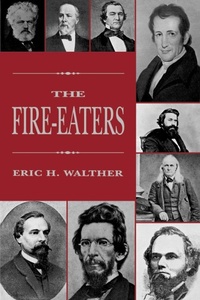
In the early 1850s, northerners and southerners alike used the term fire-eater to describe anyone whose views were clearly outside the political mainstream. Eventually, though, the word came to be most closely identified with those southerners who were staunch and unyielding advocates of secession. In this broadly researched and illuminating study, Eric H. Walther examines the lives of nine of the most prominent fire-eaters: Nathaniel Beverly Tucker, William Lowndes Yancey, John Anthony Quitman, Robert Barnwell Rhett, Laurence M. Keitt, Louis T. Wigfall, James D.B. De Bow, Edmund Ruffin, and William Porcher Miles.
Walther paints skillful portraits of his subjects, analysing their backgrounds, personalities, and contributions to the movement for disunion. Although they shared the common goal of southern independence, Walther shows that in many respects the fire-eaters differed markedly from one another. It was their very diversity, he maintains, that enabled them to appeal to such a wide spectrum of southern opinion and thereby rally support for secession.
In his exploration of the role of the fire-eaters in the secession movement, Walther touches upon a number of perennial themes in southern history, including the appeal of proslavery thought and southern expansionism, the place of education and industrialization in antebellum southern society, the significance of oratory in southern culture, and the nature of southern nationalism. He also describes the fire-eaters' activities on behalf of the Confederacy and traces the course of their lives after the war.
The Fire-Eaters makes a valuable contribution to our understanding of the secession movement and the context in which it developed. There is no other study available that treats these men as a group and that delineates their manifold differences as well as their similarities. Walther shows that secessionism was not a monolithic ideology but rather a movement that emerged from many sources, spoke in many voices, and responded to a number of regional problems, needs, and aspirations.
Walther paints skillful portraits of his subjects, analysing their backgrounds, personalities, and contributions to the movement for disunion. Although they shared the common goal of southern independence, Walther shows that in many respects the fire-eaters differed markedly from one another. It was their very diversity, he maintains, that enabled them to appeal to such a wide spectrum of southern opinion and thereby rally support for secession.
In his exploration of the role of the fire-eaters in the secession movement, Walther touches upon a number of perennial themes in southern history, including the appeal of proslavery thought and southern expansionism, the place of education and industrialization in antebellum southern society, the significance of oratory in southern culture, and the nature of southern nationalism. He also describes the fire-eaters' activities on behalf of the Confederacy and traces the course of their lives after the war.
The Fire-Eaters makes a valuable contribution to our understanding of the secession movement and the context in which it developed. There is no other study available that treats these men as a group and that delineates their manifold differences as well as their similarities. Walther shows that secessionism was not a monolithic ideology but rather a movement that emerged from many sources, spoke in many voices, and responded to a number of regional problems, needs, and aspirations.
More details
Language
English
Place of publication
Baton Rouge
United States
Target group
College/higher education
Dimensions
Height: 229 mm
Width: 152 mm
Thickness: 21 mm
Weight
572 gr
ISBN-13
978-0-8071-1775-0 (9780807117750)
Copyright in bibliographic data and cover images is held by Nielsen Book Services Limited or by the publishers or by their respective licensors: all rights reserved.
Schweitzer Classification
Person
Eric H. Walther is a visiting lecturer in the Department of History at the University of Houston.