

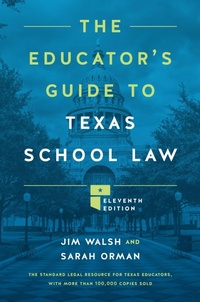
The Educator's Guide to Texas School Law
11th Edition
Will be published approx. on 1. September 2026
Book
Paperback/Softback
440 pages
978-1-4773-3432-4 (ISBN)
Description
A new edition of the most authoritative guide to Texas school law.
Over the past five years, the US Supreme Court, the White House, and the Texas legislature have collectively been responsible for seismic changes in the landscape of education in the Lone Star State. The eleventh edition of The Educator's Guide to Texas School Law is your up-to-date resource for understanding what the law is and what it means for effective school operations.
Intended for educators, school board members, attorneys, and taxpayers, the eleventh edition offers a comprehensive review of the evolving legal structure of schooling in Texas. Jim Walsh and Sarah Orman highlight pressing issues that educators encounter daily: What are teachers' and students' free speech rights? What about due process and religious exercise? Exactly how are teachers hired, and under what circumstances can they be fired? The Educators' Guide also explains the role of the school board and important dimensions of school district governance, including procurement and compliance with the Open Meetings Act. This latest edition focuses intensively on recent areas of reform, including parents' rights, special-needs law, and education savings accounts. More essential than ever, the Educator's Guide provides clarity in uncertain times.
Over the past five years, the US Supreme Court, the White House, and the Texas legislature have collectively been responsible for seismic changes in the landscape of education in the Lone Star State. The eleventh edition of The Educator's Guide to Texas School Law is your up-to-date resource for understanding what the law is and what it means for effective school operations.
Intended for educators, school board members, attorneys, and taxpayers, the eleventh edition offers a comprehensive review of the evolving legal structure of schooling in Texas. Jim Walsh and Sarah Orman highlight pressing issues that educators encounter daily: What are teachers' and students' free speech rights? What about due process and religious exercise? Exactly how are teachers hired, and under what circumstances can they be fired? The Educators' Guide also explains the role of the school board and important dimensions of school district governance, including procurement and compliance with the Open Meetings Act. This latest edition focuses intensively on recent areas of reform, including parents' rights, special-needs law, and education savings accounts. More essential than ever, the Educator's Guide provides clarity in uncertain times.
More details
Edition
Eleventh Edition
Language
English
Place of publication
Austin, TX
United States
Target group
Professional and scholarly
College/higher education
Edition type
New edition
Dimensions
Height: 235 mm
Width: 156 mm
Weight
454 gr
ISBN-13
978-1-4773-3432-4 (9781477334324)
Copyright in bibliographic data and cover images is held by Nielsen Book Services Limited or by the publishers or by their respective licensors: all rights reserved.
Schweitzer Classification
Other editions
Previous edition
Book
09/2022
University of Texas Press
€35.00
Shipment within 15-20 days
Persons
Jim Walsh is a cofounder of Walsh Gallegos Kyle Robinson & De Los Santos, P.C., author of the Law Dawg Ed Daily, and a recipient of the Kelly Frels Lifetime Achievement Award.
Sarah Orman has served as an attorney since 2006. She has represented public school districts in California and Texas and served as legal editor for the Texas Association of School Boards.
Sarah Orman has served as an attorney since 2006. She has represented public school districts in California and Texas and served as legal editor for the Texas Association of School Boards.
Content
Preface
1. Structure and Governance
Sources of Law
Constitutional Foundations
The Texas Education Code (TEC)
Administrative Law
The State Board of Education (SBOE)
The Texas Education Agency (TEA)
Judicial Law
School Finance
Education Savings Accounts
Charter Schools
Districts of Innovation (DOIs)
The Role of the Local School Board
The Superintendent
The Principal
District- and Campus-Level Decision-Making
State Laws That Pertain to School Districts as Public Entities
The Texas Open Meetings Act (TOMA)
Meetings and Quorums
Notice
Public Comment
Emergency Meetings or Additions to Agenda
Closed Sessions
Recordings and Certified Agendas
Meetings by Telephone and Videoconference Call
Internet Broadcast
Violations
Criminal Provisions
The Texas Public Information Act (TPIA)
Items That Must Be Disclosed
Items Exempt from Disclosure
Personal Information
Employee Information
Candidates for Superintendency
Criminal History Information, Witness Statements, and Investigative Reports
Inter- or Intraagency Memoranda
Student Records
Other Items
Production of Records
Penalties
Procurement
Summary
2. Accountability and the Instructional Program
The Instructional Program
Kindergarten and Prekindergarten Programs
The Required Curriculum
Sex Education
Social Studies
Virtual Instruction
Student Assessment
Overview
Required Assessments and Modifications for Special Populations
Assessment Intervention
Assessment and Graduation
Noninstructional Use of Assessments
Grading and Class Rank
Grade Promotion and Retention
School District Accountability
The Every Student Succeeds Act (ESSA)
Instructional Resources
Internet Safety
Copyright Law
Summary
3. Student Issues
Enrollment and Attendance
Eligibility
Desegregation
Transfers
Compulsory School Attendance
Absences
Extracurricular Activities and the University Interscholastic League (UIL)
State Oversight
Extracurricular Participation
Health and Safety Requirements
Title IX
Student Rights of Expression
Student Expression on Campus or at School-Sponsored Activities
Student Protests
School-Sponsored Speech
Class Assignments
Lewd Speech
Speech Advocating Drug Use
Threats
Non-School-Sponsored Student Publications and Materials
Student Expression Off Campus and Not at School-Related Activity
Student Dress and Grooming
The First Amendment
Uniform Policies
Gender and Racial Issues
Sexual Orientation and Gender Identity
Student Privacy
Transgender Students
Equal Access Act
Summary
4. Students with Special Needs
Four Quadrants
Special Education: Background and History
The Individuals with Disabilities Education Act (IDEA)
Child Find
Evaluation
Eligibility
Admission, Review, and Dismissal (ARD) Committee
Individualized Education Program (IEP)
General Curriculum
Least Restrictive Environment (LRE)
Procedural Safeguards
Attorneys' Fees
Free Appropriate Public Education (FAPE)
Related Services
Extended School Year (ESY) Services
Unilateral Placements
Private-School Children
Section 504 of the Rehabilitation Act of 1973
Dyslexia
Extracurricular Activities
At Risk
Emergent Bilingual Students
Pregnant and Parenting Students
Gifted and Talented
Summary
5. Parental Rights
Private School and Home Schooling
Choosing Private School
Home Schooling
Teaching Controversial Subjects at School
Parental Rights in State Law
TEC Chapter 26
Human Sexuality Instruction and the School Health Advisory Council (SHAC)
Lauren's Law
Fees
Child Custody Issues
Child Abuse Reporting
Student Records
Parent Rights under the Family Educational Rights and Privacy Act (FERPA)
Education Records
Directory Information
School Officials
Other Officials
Organizations Conducting Studies
Sex Offender Information
Health or Safety Emergency
Subpoena
Recordkeeping
Violations
FERPA and State Law
Law and the School Counselor
Parent Complaints
Removal of Objectionable Library and Study Materials
Summary
6. Employment
Constitutional Issues
How Much Process Is Due?
Types of Employment Arrangements
At-Will Employment
Non-Chapter 21 Contracts
Probationary Contracts
Term Contracts
Continuing Contracts
Resignations
Retired Teachers
Selection of Staff
Certification and the Role of the State Board for Educator Certification (SBEC)
Educator Misconduct
Nondiscrimination Laws
Religious Accommodations
Protected Activity
The Hiring Process
Restrictions on Employment
Ending the Relationship
At-Will Employees
Non-Chapter 21 Contracts
Probationary Contracts
Term Contracts
Reduction in Force (RIF)
Continuing Contracts
The Independent Hearing System
Good Cause
A Few Final Thoughts on Good Cause
Summary
7. Personnel Issues
Educator Rights of Expression
Academic Freedom
Electronic Communication
Texas Whistleblower Act
Reassignment
Same Professional Capacity
Counselors
Compensation Issues
Dual Assignment Contracts
Outside Work
Duties and Schedule
Teacher Appraisal
Employment Benefits
Planning and Preparation Period
Duty-Free Lunch
Personal Leave
Health Insurance
Assault Leave
Teacher Retirement
Temporary Disability Leave
Family and Medical Leave Act (FMLA)
Military Leave
Miscellaneous Leave Policies
Wage and Hour Requirements
Workers' Compensation and Unemployment Compensation
Grievances and the Role of Employee Organizations
Employee Grievances: A Brief History
Hearing Employee Grievances
The Role of Employee Organizations
Collective Bargaining on the National Scene
The Law in Texas
Summary
8. Religion
Legal Framework
No Government Establishment of Religion
Free Exercise of Religion
Constitutional Provisions
Federal and State Statutes
Contemporary Issues
The Pledge of Allegiance
The Ten Commandments
Prayer
School-Sponsored or Employee-Led Prayer
Prayer at School Board Meetings
Silent Meditation or Prayer During the School Day
Invocations, Benedictions, and Religious Speeches at Graduations
Baccalaureate Ceremonies
Student-Led Prayer at School and Extracurricular Events
Teaching Creation Science
Secular Humanism and Pagan Religion
Religion in Classrooms, Choir Programs, and Holiday Observances
Teaching about Religion
Student Papers and Presentations on Religious Topics
Choir Programs and Holiday Observances
Clergy in the Schools
Distribution of Religious Literature
Wearing Religious Symbols
Student Religious Groups Meeting on Campus
Religious Exemptions
Texas Religious Freedom Restoration Act (TRFRA) and Other Statutes
Assistance to Sectarian Private Schools
Summary
9. Safety and Discipline
Constitutional Concerns: Due Process
Other Due Process Concerns
Constitutional Concerns: Right of Privacy
Justified at the Inception, Reasonable in Scope
Use of Magnetometers and Metal Detectors
Locker and Desk Searches
Search of Cell Phones and Electronic Communications
Use of Sniffer Dogs to Conduct Searches
Student Drug Testing
Chapter 37: An Overview
Student Code of Conduct
Campus Behavior Coordinators (CBCs)
Bullying
Teacher-Initiated Removal
Suspension
Removal to a Disciplinary Alternative Education Program (DAEP)
Mandatory Placements
Discretionary Placements
Procedures
Life in a DAEP
Expulsion
Grounds
Virtual Expulsion
Procedures
Emergency Actions
Interactions with Law Enforcement
Other Disciplinary Practices
Corporal Punishment
Suspension from Extracurricular Activities
School Safety
Restorative Discipline
Discipline of Students with Disabilities
Ten Days
Change of Placement
Manifestation Determinations
Stay Put
Functional Behavior Assessments (FBAs) and Behavior Intervention Plans (BIPs)
Expulsion
State Law
Summary
10. Liability
Identifying Areas of Legal Liability
State Torts
School District Immunity
Changes in 2025
Governmental Immunity and Contract Cases
Qualified Immunity for Public School Professional Employees
The Special Case of Corporal Punishment and Physical Force
A Word About Charter Schools
Federal Civil Rights Liability
Governmental Liability
Individual Liability
Personal Injuries and the Constitution
State-Created Danger
Liability Under Federal Statutory Law
Title IX and Sexual Harassment
Disability Discrimination
Summary
Glossary of Legal Terminology
Index of Cases
Index of Topics
1. Structure and Governance
Sources of Law
Constitutional Foundations
The Texas Education Code (TEC)
Administrative Law
The State Board of Education (SBOE)
The Texas Education Agency (TEA)
Judicial Law
School Finance
Education Savings Accounts
Charter Schools
Districts of Innovation (DOIs)
The Role of the Local School Board
The Superintendent
The Principal
District- and Campus-Level Decision-Making
State Laws That Pertain to School Districts as Public Entities
The Texas Open Meetings Act (TOMA)
Meetings and Quorums
Notice
Public Comment
Emergency Meetings or Additions to Agenda
Closed Sessions
Recordings and Certified Agendas
Meetings by Telephone and Videoconference Call
Internet Broadcast
Violations
Criminal Provisions
The Texas Public Information Act (TPIA)
Items That Must Be Disclosed
Items Exempt from Disclosure
Personal Information
Employee Information
Candidates for Superintendency
Criminal History Information, Witness Statements, and Investigative Reports
Inter- or Intraagency Memoranda
Student Records
Other Items
Production of Records
Penalties
Procurement
Summary
2. Accountability and the Instructional Program
The Instructional Program
Kindergarten and Prekindergarten Programs
The Required Curriculum
Sex Education
Social Studies
Virtual Instruction
Student Assessment
Overview
Required Assessments and Modifications for Special Populations
Assessment Intervention
Assessment and Graduation
Noninstructional Use of Assessments
Grading and Class Rank
Grade Promotion and Retention
School District Accountability
The Every Student Succeeds Act (ESSA)
Instructional Resources
Internet Safety
Copyright Law
Summary
3. Student Issues
Enrollment and Attendance
Eligibility
Desegregation
Transfers
Compulsory School Attendance
Absences
Extracurricular Activities and the University Interscholastic League (UIL)
State Oversight
Extracurricular Participation
Health and Safety Requirements
Title IX
Student Rights of Expression
Student Expression on Campus or at School-Sponsored Activities
Student Protests
School-Sponsored Speech
Class Assignments
Lewd Speech
Speech Advocating Drug Use
Threats
Non-School-Sponsored Student Publications and Materials
Student Expression Off Campus and Not at School-Related Activity
Student Dress and Grooming
The First Amendment
Uniform Policies
Gender and Racial Issues
Sexual Orientation and Gender Identity
Student Privacy
Transgender Students
Equal Access Act
Summary
4. Students with Special Needs
Four Quadrants
Special Education: Background and History
The Individuals with Disabilities Education Act (IDEA)
Child Find
Evaluation
Eligibility
Admission, Review, and Dismissal (ARD) Committee
Individualized Education Program (IEP)
General Curriculum
Least Restrictive Environment (LRE)
Procedural Safeguards
Attorneys' Fees
Free Appropriate Public Education (FAPE)
Related Services
Extended School Year (ESY) Services
Unilateral Placements
Private-School Children
Section 504 of the Rehabilitation Act of 1973
Dyslexia
Extracurricular Activities
At Risk
Emergent Bilingual Students
Pregnant and Parenting Students
Gifted and Talented
Summary
5. Parental Rights
Private School and Home Schooling
Choosing Private School
Home Schooling
Teaching Controversial Subjects at School
Parental Rights in State Law
TEC Chapter 26
Human Sexuality Instruction and the School Health Advisory Council (SHAC)
Lauren's Law
Fees
Child Custody Issues
Child Abuse Reporting
Student Records
Parent Rights under the Family Educational Rights and Privacy Act (FERPA)
Education Records
Directory Information
School Officials
Other Officials
Organizations Conducting Studies
Sex Offender Information
Health or Safety Emergency
Subpoena
Recordkeeping
Violations
FERPA and State Law
Law and the School Counselor
Parent Complaints
Removal of Objectionable Library and Study Materials
Summary
6. Employment
Constitutional Issues
How Much Process Is Due?
Types of Employment Arrangements
At-Will Employment
Non-Chapter 21 Contracts
Probationary Contracts
Term Contracts
Continuing Contracts
Resignations
Retired Teachers
Selection of Staff
Certification and the Role of the State Board for Educator Certification (SBEC)
Educator Misconduct
Nondiscrimination Laws
Religious Accommodations
Protected Activity
The Hiring Process
Restrictions on Employment
Ending the Relationship
At-Will Employees
Non-Chapter 21 Contracts
Probationary Contracts
Term Contracts
Reduction in Force (RIF)
Continuing Contracts
The Independent Hearing System
Good Cause
A Few Final Thoughts on Good Cause
Summary
7. Personnel Issues
Educator Rights of Expression
Academic Freedom
Electronic Communication
Texas Whistleblower Act
Reassignment
Same Professional Capacity
Counselors
Compensation Issues
Dual Assignment Contracts
Outside Work
Duties and Schedule
Teacher Appraisal
Employment Benefits
Planning and Preparation Period
Duty-Free Lunch
Personal Leave
Health Insurance
Assault Leave
Teacher Retirement
Temporary Disability Leave
Family and Medical Leave Act (FMLA)
Military Leave
Miscellaneous Leave Policies
Wage and Hour Requirements
Workers' Compensation and Unemployment Compensation
Grievances and the Role of Employee Organizations
Employee Grievances: A Brief History
Hearing Employee Grievances
The Role of Employee Organizations
Collective Bargaining on the National Scene
The Law in Texas
Summary
8. Religion
Legal Framework
No Government Establishment of Religion
Free Exercise of Religion
Constitutional Provisions
Federal and State Statutes
Contemporary Issues
The Pledge of Allegiance
The Ten Commandments
Prayer
School-Sponsored or Employee-Led Prayer
Prayer at School Board Meetings
Silent Meditation or Prayer During the School Day
Invocations, Benedictions, and Religious Speeches at Graduations
Baccalaureate Ceremonies
Student-Led Prayer at School and Extracurricular Events
Teaching Creation Science
Secular Humanism and Pagan Religion
Religion in Classrooms, Choir Programs, and Holiday Observances
Teaching about Religion
Student Papers and Presentations on Religious Topics
Choir Programs and Holiday Observances
Clergy in the Schools
Distribution of Religious Literature
Wearing Religious Symbols
Student Religious Groups Meeting on Campus
Religious Exemptions
Texas Religious Freedom Restoration Act (TRFRA) and Other Statutes
Assistance to Sectarian Private Schools
Summary
9. Safety and Discipline
Constitutional Concerns: Due Process
Other Due Process Concerns
Constitutional Concerns: Right of Privacy
Justified at the Inception, Reasonable in Scope
Use of Magnetometers and Metal Detectors
Locker and Desk Searches
Search of Cell Phones and Electronic Communications
Use of Sniffer Dogs to Conduct Searches
Student Drug Testing
Chapter 37: An Overview
Student Code of Conduct
Campus Behavior Coordinators (CBCs)
Bullying
Teacher-Initiated Removal
Suspension
Removal to a Disciplinary Alternative Education Program (DAEP)
Mandatory Placements
Discretionary Placements
Procedures
Life in a DAEP
Expulsion
Grounds
Virtual Expulsion
Procedures
Emergency Actions
Interactions with Law Enforcement
Other Disciplinary Practices
Corporal Punishment
Suspension from Extracurricular Activities
School Safety
Restorative Discipline
Discipline of Students with Disabilities
Ten Days
Change of Placement
Manifestation Determinations
Stay Put
Functional Behavior Assessments (FBAs) and Behavior Intervention Plans (BIPs)
Expulsion
State Law
Summary
10. Liability
Identifying Areas of Legal Liability
State Torts
School District Immunity
Changes in 2025
Governmental Immunity and Contract Cases
Qualified Immunity for Public School Professional Employees
The Special Case of Corporal Punishment and Physical Force
A Word About Charter Schools
Federal Civil Rights Liability
Governmental Liability
Individual Liability
Personal Injuries and the Constitution
State-Created Danger
Liability Under Federal Statutory Law
Title IX and Sexual Harassment
Disability Discrimination
Summary
Glossary of Legal Terminology
Index of Cases
Index of Topics