

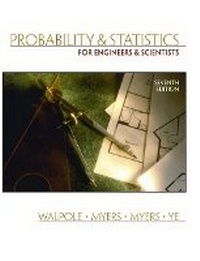
Probability and Statistics for Engineers and Scientists
International Edition
7th Edition
Published on 21. November 2001
Book
Paperback/Softback
730 pages
978-0-13-098469-2 (ISBN)
Description
For junior/senior undergraduates studying engineering, science or computer science.
This classic text provides a rigorous introduction to basic probability theory and statistical inference that is motivated by interesting, relevant applications. Assumes a background in calculus; offers a unique balance of theory and methodology.
This classic text provides a rigorous introduction to basic probability theory and statistical inference that is motivated by interesting, relevant applications. Assumes a background in calculus; offers a unique balance of theory and methodology.
More details
Edition
7th edition
Language
English
Place of publication
United States
Publishing group
Pearson Education (US)
Target group
Professional and scholarly
Dimensions
Height: 236 mm
Width: 189 mm
Thickness: 27 mm
Weight
1124 gr
ISBN-13
978-0-13-098469-2 (9780130984692)
Copyright in bibliographic data and cover images is held by Nielsen Book Services Limited or by the publishers or by their respective licensors: all rights reserved.
Schweitzer Classification
Other editions
New editions
Ronald E. Walpole | Raymond H. Myers | Sharon L. Myers
Probability & Statistics for Engineers & Scientists
International Edition
Book
04/2006
8th Edition
Pearson
€68.08
Article exhausted; check for reprint
Previous edition

Ronald E. Walpole | Raymond H. Myers | Sharon L. Myers
Probability and Statistics for Engineers and Scientists
Book
01/1998
6th Edition
Pearson
€45.79
Article exhausted; check for reprint
Content
Preface.
1. Introduction to Statistics and Data Analysis.
Overview: Statistical Inference, Samples, Populations, and Experimental Design. The Role of Probability. Sampling Procedures; Collection of Data. Measures of Location: The Sample Mean. Measures of Variability. Discrete and Continuous Data. Statistical Modeling, Scientific Inspection, and Graphical Diagnostics. Graphical Methods and Data Description.
2. Probability.
Sample Space. Events. Counting Sample Points. Probability of an Event. Additive Rules. Conditional Probability. Multiplicative Rules. Bayes' Rule.
3. Random Variables and Probability Distributions.
Concept of a Random Variable. Discrete Probability Distributions. Continuous Probability Distributions. Joint Probability Distributions.
4. Mathematical Expectation.
Mean of a Random Variable. Variance and Covariance. Means and Variances of Linear Combinations of Random Variables. Chebyshev's Theorem.
5. Some Discrete Probability Distributions.
Discrete Uniform Distribution. Binomial and Multinomial Distributions. Hypergeometric Distribution. Negative Binomial and Geometric Distributions. Poisson Distribution and the Poisson Process.
6. Some Continuous Probability Distributions.
Continuous Uniform Distribution. Normal Distribution. Areas Under the Normal Curve. Applications of the Normal Distribution. Normal Approximation to the Binomial. Gamma and Exponential Distributions. Applications of the Exponential and Gamma Distributions. Chi-Squared Distribution. Lognormal Distribution. Weibull Distribution.
7. Functions of Random Variables (Optional).
Transformations of Variables. Moments and Moment-Generating Functions.
8. Fundamental Sampling Distributions and Data Descriptions.
Random Sampling. Some Important Statistics. Data Displays and Graphical Methods. Sampling Distributions. Sampling Distribution of Means. Sampling Distribution of S2. t-Distribution. F-Distribution.
9. One- and Two-Sample Estimation Problems.
Statistical Inference. Classical Methods of Estimation. Single Sample: Estimating the Mean. Standard Error of a Point Estimate. Prediction Interval. Tolerance Limits. Two Samples: Estimating the Difference Between Two Means. Paired Observations. Single Sample: Estimating a Proportion. Two Samples: Estimating the Difference Between Two Proportions. Single Sample: Estimating the Variance. Two Samples: Estimating the Ratio of Two Variances. Bayesian Methods of Estimation (Optional). Maximum Likelihood Estimation (Optional).
10. One- and Two-Sample Tests of Hypotheses.
Statistical Hypotheses: General Concepts. Testing a Statistical Hypothesis. One- and Two-Tailed Tests/ The Use of P-Values for Decision Making. Single Sample: Tests Concerning a Single Mean (Variance Known). Relationship to Confidence Interval Estimation. Single Sample: Tests on a Single Mean (Variance Unknown). Two Samples: Tests on Two Means. Choice of Sample Size for Testing Means. Graphical Methods for Comparing Means. One Sample: Test on a Single Proportion. Two Samples: Tests on Two Proportions. One- and Two-Sample Tests Concerning Variances. Goodness-of-Fit Test. Test for Independence (Categorical Data). Test for Homogeneity. Testing for Several Proportions. Two-Sample Case Study.
11. Simple Linear Regression and Correlation.
Introduction to Linear Regression. Simple Linear Regression. Least Squares and The Fitted Model. Properties of the Least Squares Estimators. Inferences Concerning the Regression Coefficients. Prediction. Choice of a Regression Model. Analysis-of-Variance Approach. Test for Linearity of Regression: Data with Repeated Observations. Data Plots and Transformations. Simple Linear Regression Case Study. Correlation.
12. Multiple Linear Regression and Certain Nonlinear Regression Models.
Estimating the Coefficients. Linear Regression Model Using Matrices (Optional). Properties of the Least Squares Estimators. Inferences in Multiple Linear Regression. Choice of a Fitted Model Through Hypothesis Testing. Special Case of Orthogonality (Optional). Categorical or Indicator Variables. Sequential Methods for Model Selection. Study of Residuals and Violation of Assumptions. Cross Validation, Cp, and Other Criteria for Model Selection. Special Nonlinear Models for Nonideal Conditions.
13. One Factor Experiments: General.
Analysis-of-Variance Technique. The Strategy of Experimental Design. One-Way Analysis of Variance: Completely Randomized Design. Tests for the Equality of Several Variances. Single-Degree-of-Freedom Comparisons. Multiple Comparisons. Comparing Treatments with a Control. Comparing a Set of Treatments in Blocks. Randomized Complete Block Designs. Graphical Methods and Further Diagnostics. Latin Squares (Optional). Random Effects Models. Power of Analysis-of-Variance Tests. Case Study.
14. Factorial Experiments (Two or More Factors).
Interaction and the Two-Factor Experiment. Two-Factor Analysis of Variance. Graphical Analysis in the Two-Factor Problem. Three-Factor Experiments. Model II and III Factorial Experiments. Choice of Sample Size.
15. 2k Factorial Experiments and Fractions. 15.
Analysis of Variance and the Calculation of Effects. Nonreplicated 2k Factorial Experiment. Injection Molding Case Study. Factorial Experiments in Incomplete Blocks. Partial Confounding. Factorial Experiments in a Regression Setting. The Orthogonal Design. Fractional Factorial Experiments. Analysis of Fractional Factorial Experiments. Higher Fractions and Screening Designs. Construction of Resolution III and IV Designs with 8,16, and 32 Design Points. Other Two-Level Resolution III Designs; The Plackett-Burman Designs. Taguchi's Robust Parameter Design.
16. Nonparametric Statistics.
Nonparametric Tests. Sign Test. Signed-Rank Test. Rank-Sum Test. Kruskal-Wallis Test. Tolerance Limits. Rank Correlation Coefficient.
17. Statistical Quality Control.
Nature of the Control Limits. Purposes of the Control Chart. Control Charts for Variables. Control Charts for Attributes. Cusum Control Charts.
Bibliography.
Appendix: Statistical Tables and Proofs of Some Theoretical Results.
1. Introduction to Statistics and Data Analysis.
Overview: Statistical Inference, Samples, Populations, and Experimental Design. The Role of Probability. Sampling Procedures; Collection of Data. Measures of Location: The Sample Mean. Measures of Variability. Discrete and Continuous Data. Statistical Modeling, Scientific Inspection, and Graphical Diagnostics. Graphical Methods and Data Description.
2. Probability.
Sample Space. Events. Counting Sample Points. Probability of an Event. Additive Rules. Conditional Probability. Multiplicative Rules. Bayes' Rule.
3. Random Variables and Probability Distributions.
Concept of a Random Variable. Discrete Probability Distributions. Continuous Probability Distributions. Joint Probability Distributions.
4. Mathematical Expectation.
Mean of a Random Variable. Variance and Covariance. Means and Variances of Linear Combinations of Random Variables. Chebyshev's Theorem.
5. Some Discrete Probability Distributions.
Discrete Uniform Distribution. Binomial and Multinomial Distributions. Hypergeometric Distribution. Negative Binomial and Geometric Distributions. Poisson Distribution and the Poisson Process.
6. Some Continuous Probability Distributions.
Continuous Uniform Distribution. Normal Distribution. Areas Under the Normal Curve. Applications of the Normal Distribution. Normal Approximation to the Binomial. Gamma and Exponential Distributions. Applications of the Exponential and Gamma Distributions. Chi-Squared Distribution. Lognormal Distribution. Weibull Distribution.
7. Functions of Random Variables (Optional).
Transformations of Variables. Moments and Moment-Generating Functions.
8. Fundamental Sampling Distributions and Data Descriptions.
Random Sampling. Some Important Statistics. Data Displays and Graphical Methods. Sampling Distributions. Sampling Distribution of Means. Sampling Distribution of S2. t-Distribution. F-Distribution.
9. One- and Two-Sample Estimation Problems.
Statistical Inference. Classical Methods of Estimation. Single Sample: Estimating the Mean. Standard Error of a Point Estimate. Prediction Interval. Tolerance Limits. Two Samples: Estimating the Difference Between Two Means. Paired Observations. Single Sample: Estimating a Proportion. Two Samples: Estimating the Difference Between Two Proportions. Single Sample: Estimating the Variance. Two Samples: Estimating the Ratio of Two Variances. Bayesian Methods of Estimation (Optional). Maximum Likelihood Estimation (Optional).
10. One- and Two-Sample Tests of Hypotheses.
Statistical Hypotheses: General Concepts. Testing a Statistical Hypothesis. One- and Two-Tailed Tests/ The Use of P-Values for Decision Making. Single Sample: Tests Concerning a Single Mean (Variance Known). Relationship to Confidence Interval Estimation. Single Sample: Tests on a Single Mean (Variance Unknown). Two Samples: Tests on Two Means. Choice of Sample Size for Testing Means. Graphical Methods for Comparing Means. One Sample: Test on a Single Proportion. Two Samples: Tests on Two Proportions. One- and Two-Sample Tests Concerning Variances. Goodness-of-Fit Test. Test for Independence (Categorical Data). Test for Homogeneity. Testing for Several Proportions. Two-Sample Case Study.
11. Simple Linear Regression and Correlation.
Introduction to Linear Regression. Simple Linear Regression. Least Squares and The Fitted Model. Properties of the Least Squares Estimators. Inferences Concerning the Regression Coefficients. Prediction. Choice of a Regression Model. Analysis-of-Variance Approach. Test for Linearity of Regression: Data with Repeated Observations. Data Plots and Transformations. Simple Linear Regression Case Study. Correlation.
12. Multiple Linear Regression and Certain Nonlinear Regression Models.
Estimating the Coefficients. Linear Regression Model Using Matrices (Optional). Properties of the Least Squares Estimators. Inferences in Multiple Linear Regression. Choice of a Fitted Model Through Hypothesis Testing. Special Case of Orthogonality (Optional). Categorical or Indicator Variables. Sequential Methods for Model Selection. Study of Residuals and Violation of Assumptions. Cross Validation, Cp, and Other Criteria for Model Selection. Special Nonlinear Models for Nonideal Conditions.
13. One Factor Experiments: General.
Analysis-of-Variance Technique. The Strategy of Experimental Design. One-Way Analysis of Variance: Completely Randomized Design. Tests for the Equality of Several Variances. Single-Degree-of-Freedom Comparisons. Multiple Comparisons. Comparing Treatments with a Control. Comparing a Set of Treatments in Blocks. Randomized Complete Block Designs. Graphical Methods and Further Diagnostics. Latin Squares (Optional). Random Effects Models. Power of Analysis-of-Variance Tests. Case Study.
14. Factorial Experiments (Two or More Factors).
Interaction and the Two-Factor Experiment. Two-Factor Analysis of Variance. Graphical Analysis in the Two-Factor Problem. Three-Factor Experiments. Model II and III Factorial Experiments. Choice of Sample Size.
15. 2k Factorial Experiments and Fractions. 15.
Analysis of Variance and the Calculation of Effects. Nonreplicated 2k Factorial Experiment. Injection Molding Case Study. Factorial Experiments in Incomplete Blocks. Partial Confounding. Factorial Experiments in a Regression Setting. The Orthogonal Design. Fractional Factorial Experiments. Analysis of Fractional Factorial Experiments. Higher Fractions and Screening Designs. Construction of Resolution III and IV Designs with 8,16, and 32 Design Points. Other Two-Level Resolution III Designs; The Plackett-Burman Designs. Taguchi's Robust Parameter Design.
16. Nonparametric Statistics.
Nonparametric Tests. Sign Test. Signed-Rank Test. Rank-Sum Test. Kruskal-Wallis Test. Tolerance Limits. Rank Correlation Coefficient.
17. Statistical Quality Control.
Nature of the Control Limits. Purposes of the Control Chart. Control Charts for Variables. Control Charts for Attributes. Cusum Control Charts.
Bibliography.
Appendix: Statistical Tables and Proofs of Some Theoretical Results.