

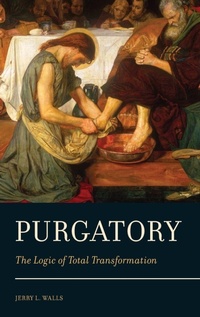
Purgatory
The Logic of Total Transformation
Published on 15. December 2011
Book
Hardback
232 pages
978-0-19-973229-6 (ISBN)
Description
This is a sequel to Walls's Heaven: the Logic of Eternal Joy (2002) and his earlier book Hell: The Logic of Eternal Damnation (1992). With Purgatory, Walls completes his examination of the Christian theology of the afterlife. He sketches the theological rationale for the doctrine of purgatory and traces its development in Roman Catholic theology. He examines Protestant objections to the doctrine - in particular the claims that it is not scriptural - and the Protestant Reformed and Wesleyan alternatives.
As an intermediate state between death and resurrection, purgatory has traditionally assumed body-soul dualism, a concept called into question by much recent theology. Walls considers the impact of a monistic view of the human person on the doctrine of purgatory. In Catholic theology, purgatory has been understood as applying to persons who are already in a state of grace or salvation. In popular thought, however, it is sometimes understood as a "second chance" for the unconverted. Walls examines the doctrine in the light of "inclusive" theories of salvation that allow for repentance and conversion after death. He concludes with an examination of C.S. Lewis's writings on purgatory, and suggests that Lewis can be a model for evangelicals and other Protestants to engage the doctrine of purgatory in a way that is true to their theology.
As an intermediate state between death and resurrection, purgatory has traditionally assumed body-soul dualism, a concept called into question by much recent theology. Walls considers the impact of a monistic view of the human person on the doctrine of purgatory. In Catholic theology, purgatory has been understood as applying to persons who are already in a state of grace or salvation. In popular thought, however, it is sometimes understood as a "second chance" for the unconverted. Walls examines the doctrine in the light of "inclusive" theories of salvation that allow for repentance and conversion after death. He concludes with an examination of C.S. Lewis's writings on purgatory, and suggests that Lewis can be a model for evangelicals and other Protestants to engage the doctrine of purgatory in a way that is true to their theology.
Reviews / Votes
Only Jerry Walls or C.S. Lewis could have written this splendid book on the history and philosophical theology of purgatory. It is clear, systematic, engaging, and illuminating. * Charles Taliaferro, Professor of Philosophy, St. Olaf College *More details
Language
English
Place of publication
New York
United States
Target group
College/higher education
Dimensions
Height: 240 mm
Width: 161 mm
Thickness: 18 mm
Weight
549 gr
ISBN-13
978-0-19-973229-6 (9780199732296)
Copyright in bibliographic data and cover images is held by Nielsen Book Services Limited or by the publishers or by their respective licensors: all rights reserved.
Schweitzer Classification
Other editions
Person
Visiting scholar at the Center for Philosophy of Religion at Notre Dame; previously professor of Philosophy of Religion at Asbury Seminary.
Content
Introduction ; Chapter 1: A Short History of Purgatory ; Chapter 2: Protestant Objections and Alternatives to Purgatory ; Chapter 3: Models of Purgatory ; Chapter 4: Personal Identity, Time, and Purgatory ; Chapter 5: Purgatory and Theories of a <"Second Chance>" ; Chapter 6: C.S. Lewis and the Prospect of Mere Purgatory ; Conclusion: Looking Forward by Looking Back