

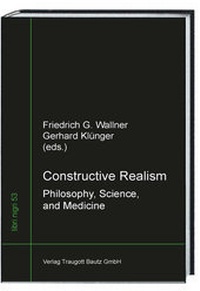
Constructive Realism
Philosophy, Science, and Medicine
Published on 23. March 2016
Book
Hardback
228 pages
978-3-88309-829-6 (ISBN)
Description
At the end of the eighties of the last century, Friedrich G. Wallner in cooperation with colleagues from various disciplines developed a new Philosophy of Science: Constructive Realism. Initially, Constructive Realism was a reaction to the crisis of Philosophy of Science caused by the influential Popper/Kuhn-debate. Within the nineties, it evolved from a pure Philosophy of Science into the realm of Intercultural Philosophy. After the turn of the millennium, it proved in numerous detailed studies to be both an effective and successful tool for fundamental research on Traditional Chinese Medicine.
In this tome, you will find important scholars of Constructive Realism discussing aspects of their work. It features essays on Philosophy, Natural Science and Medicine
In this tome, you will find important scholars of Constructive Realism discussing aspects of their work. It features essays on Philosophy, Natural Science and Medicine
More details
Persons
Content
Friedrich Wallner (Vienna, Austria)
Constructivism without a Constructor
How Constructive Realism Overcomes the Traditional Problems
of Philosophy of Science
9
Vincent Shen (Toronto, Canada)
Urban Life-world Manifesting the Dao
As Inspired by Constructive Realism, Phenomenology
and Chinese Philosophy
27
Hugo Renato Ochoa Disselkoen (Valparaíso, Chile)
Konstruktiver Realismus
47
Nicole Holzenthal (Oviedo, Spain)
Culturally different Presuppositions of Ethics and Moral doctrines
Islam and the West
57
Gerhard Klünger (Vienna, Austria)
Epistemology and Freedom of Thinking
77
Leonardo Chiatti (Rome, Italy)
Niels Bohr and 20th Century Biology: A Strangification Case?
95
Fengli Lan (San Diego, USA) and Friedrich G. Wallner (Vienna, Austria)
How to Translate Classical Chinese Medical Texts
Enlightenments of Translating Buddhist Scriptures into Chinese
113
Ephraim Ferreira Medeiros (São Paulo, Brazil)
and Fengli Lan (San Diego, USA)
The Nine Types of Acupuncture Needles
Metaphors and Constructive Realism
141
Gertrude Kubiena (Vienna, Austria)
Strangification - an Indispensable Instrument for Practicing TCM
171
Andrea - Mercedes Riegel (Heidelberg, Germany)
Qijing bamai - The Eight Extraordinary Vessels
A concept of Chinese Medicine based on the Yiing
177
Barbara Huppmann (Vienna, Austria)
No freedom without relationship.
A Psycho - Text Puzzle (PTP), with fictional theological literature
and a therapeutic text from Carl Rogers.
199
On the Authors
215
Constructivism without a Constructor
How Constructive Realism Overcomes the Traditional Problems
of Philosophy of Science
9
Vincent Shen (Toronto, Canada)
Urban Life-world Manifesting the Dao
As Inspired by Constructive Realism, Phenomenology
and Chinese Philosophy
27
Hugo Renato Ochoa Disselkoen (Valparaíso, Chile)
Konstruktiver Realismus
47
Nicole Holzenthal (Oviedo, Spain)
Culturally different Presuppositions of Ethics and Moral doctrines
Islam and the West
57
Gerhard Klünger (Vienna, Austria)
Epistemology and Freedom of Thinking
77
Leonardo Chiatti (Rome, Italy)
Niels Bohr and 20th Century Biology: A Strangification Case?
95
Fengli Lan (San Diego, USA) and Friedrich G. Wallner (Vienna, Austria)
How to Translate Classical Chinese Medical Texts
Enlightenments of Translating Buddhist Scriptures into Chinese
113
Ephraim Ferreira Medeiros (São Paulo, Brazil)
and Fengli Lan (San Diego, USA)
The Nine Types of Acupuncture Needles
Metaphors and Constructive Realism
141
Gertrude Kubiena (Vienna, Austria)
Strangification - an Indispensable Instrument for Practicing TCM
171
Andrea - Mercedes Riegel (Heidelberg, Germany)
Qijing bamai - The Eight Extraordinary Vessels
A concept of Chinese Medicine based on the Yiing
177
Barbara Huppmann (Vienna, Austria)
No freedom without relationship.
A Psycho - Text Puzzle (PTP), with fictional theological literature
and a therapeutic text from Carl Rogers.
199
On the Authors
215