

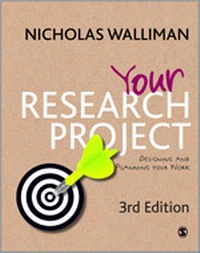
Your Research Project
Designing and Planning Your Work
3rd Edition
Published on 16. May 2011
Book
Hardback
400 pages
978-1-84920-461-3 (ISBN)
Description
In the third edition of this bestselling book, you'll find everything you need to embark upon your research project and write your proposal with confidence. Written with the needs of undergraduate and postgraduate students as well as practitioners in mind, Your Research Project will guide you through the process of formulating a research question, choosing your research methods, planning your research, and writing your proposal.
Fully updated and revised, the new edition features:
o A comprehensive introduction to the purpose and nature of research
o Expanded coverage of writing a research plan or proposal
o An overview of qualitative and quantitative methods of data collection and analysis, as well as more on mixed methods research designs
o New sections on digital media and online research methods
o Exercises and examples to provide students from across the social sciences with the practical tools needed to succeed in their project.
Nicholas Walliman is Senior Lecturer in the School of the Built Environment at Oxford Brookes University.
Fully updated and revised, the new edition features:
o A comprehensive introduction to the purpose and nature of research
o Expanded coverage of writing a research plan or proposal
o An overview of qualitative and quantitative methods of data collection and analysis, as well as more on mixed methods research designs
o New sections on digital media and online research methods
o Exercises and examples to provide students from across the social sciences with the practical tools needed to succeed in their project.
Nicholas Walliman is Senior Lecturer in the School of the Built Environment at Oxford Brookes University.
Reviews / Votes
I can heartily recommend the third edition of this popular text. It has been up-dated and enhanced to recognise the needs of both undergraduate and postgraduate students who are new to the research process, and deserves to be on every reading listGraham Stew
Principal Lecturer in Health, University of Brighton
This book is a must have for anyone embarking on a research project. It guides the reader through each step of the research project, providing clear summary boxes and exercises, making it particularly relevant for students and lecturers alike
Kalwant Bhopal
Head of the Social Justice and Inclusive Education Research Centre, University of Southampton
'Having run a PhD programme (comprising over 40 students) for six years and supervised 16 research students, nine to completion, I feel qualified to testify to the value of this book. Learning has become increasingly structured in the last two decades and new research students are often overwhelmed by the demands of PhD study, which requires conceptual thinking, independence, self-motivation and creativity. In my view, this unique publication offers an excellent and indispensable guide to research for first-timers. I wholeheartedly recommend it
Elizabeth Burton
Professor of Sustainable Building, Design and Wellbeing, University of Warwick
The third edition of Walliman's guide for novice researchers has been thoroughly updated to reflect methodological developments. It retains the unique characteristics which made earlier versions so successful: a theoretically-informed introduction to the research process grounded in an understanding of how individuals learn most effectively
Emma Wincup
University of Leeds
More details
Series
Edition
3rd Revised edition
Language
English
Place of publication
London
United Kingdom
Target group
College/higher education
Edition type
Revised edition
Dimensions
Height: 232 mm
Width: 186 mm
Weight
855 gr
ISBN-13
978-1-84920-461-3 (9781849204613)
Copyright in bibliographic data and cover images is held by Nielsen Book Services Limited or by the publishers or by their respective licensors: all rights reserved.
Schweitzer Classification
Other editions
Previous edition
Book
05/2005
2nd Edition
SAGE Publications Ltd
€112.85
Article exhausted; check for reprint
Person
After twenty years in architectural practice in Scotland, England and Switzerland designing a wide range of buildings, industrial, commercial, residential, and renovating and restoring historic buildings, I returned to academic activities when I embarked on a Ph.D. at Oxford Brookes University.
My university teaching and examining experience has been at all levels, with the preponderance at postgraduate level. I have supervised to successful completion twenty Ph.D. students and two MPhils, 1 KTP, and examined 13 Ph.D. candidates. I have published several popular textbooks and guides on construction aspects and on how to do research for students and practitioners and how to write Ph.D. theses, Masters and Undergraduate dissertations.
As Senior Researcher, Oxford Institute of Sustainable Development - Architectural Engineering Group, my research was based mainly on the technology of building construction - innovative, existing and historic, on vernacular architecture, and issues regarding accessibility in buildings and surroundings. My published papers and reports are read internationally and have been presented at international conferences.
My university teaching and examining experience has been at all levels, with the preponderance at postgraduate level. I have supervised to successful completion twenty Ph.D. students and two MPhils, 1 KTP, and examined 13 Ph.D. candidates. I have published several popular textbooks and guides on construction aspects and on how to do research for students and practitioners and how to write Ph.D. theses, Masters and Undergraduate dissertations.
As Senior Researcher, Oxford Institute of Sustainable Development - Architectural Engineering Group, my research was based mainly on the technology of building construction - innovative, existing and historic, on vernacular architecture, and issues regarding accessibility in buildings and surroundings. My published papers and reports are read internationally and have been presented at international conferences.
Content
Introduction
Research and the Research Problem
Aims
Introduction
What Is Research?
What Is It for: The Objectives of Research
Types of Research
The Research Process
Starting Your Own Research
Planning a Research Project
The Next Steps: Finding Your Research Problem Area
Further Reading
Research Theory and the Nature of Knowledge
Aims
Philosophy and the Debate About the Structure of Science and the Nature of Knowledge
Hypothesis
Approaches to Social Research
Conclusions
The Next Steps: The Theoretical Basis of Your Research Project
Further Reading
Concepts, Language and Argument
Aims
Introduction
Concepts and Theory
Language and Argument
Conclusions
The Next Steps: Which Type of Research for Your Topic?
Further Reading
Information and How to Deal With It
Aims
Introduction
Finding the Literature
Dealing With Information
Doing a Literature Review
Conclusions
The Next Steps: Devising your Own Information System and Writing Your Literature Review
Further Reading
Research Methods
Aims
Introduction
Data Collection and Analysis
Collecting Secondary Data
Analysing Secondary Data
Collecting Primary Data
Combined Data Generation and Analysis
Analysing Data
Conclusions
The Next Steps: Which Research Methods Will You Use?
Further Reading
Honesty and Research Ethics
Aims
Introduction
Honesty In Your Work
Situations That Raise Ethical Issues
Ethics Policies, Permissions and Committees
Conclusions
The Next Steps: Plan Your Code of Ethics
Further Reading
Preparing the Research Proposal and Starting to Write
Aims
Introduction
The Recipe for a Successful Research Proposal
Types of Research Proposal
The Main Ingredients and Sequence
Finalizing Your Proposal
How To Get Started With Writing
Conclusions
The Next Steps: Your Research Proposal
Further Reading
Answers to Exercises
Key Words Glossary
References
Index
Research and the Research Problem
Aims
Introduction
What Is Research?
What Is It for: The Objectives of Research
Types of Research
The Research Process
Starting Your Own Research
Planning a Research Project
The Next Steps: Finding Your Research Problem Area
Further Reading
Research Theory and the Nature of Knowledge
Aims
Philosophy and the Debate About the Structure of Science and the Nature of Knowledge
Hypothesis
Approaches to Social Research
Conclusions
The Next Steps: The Theoretical Basis of Your Research Project
Further Reading
Concepts, Language and Argument
Aims
Introduction
Concepts and Theory
Language and Argument
Conclusions
The Next Steps: Which Type of Research for Your Topic?
Further Reading
Information and How to Deal With It
Aims
Introduction
Finding the Literature
Dealing With Information
Doing a Literature Review
Conclusions
The Next Steps: Devising your Own Information System and Writing Your Literature Review
Further Reading
Research Methods
Aims
Introduction
Data Collection and Analysis
Collecting Secondary Data
Analysing Secondary Data
Collecting Primary Data
Combined Data Generation and Analysis
Analysing Data
Conclusions
The Next Steps: Which Research Methods Will You Use?
Further Reading
Honesty and Research Ethics
Aims
Introduction
Honesty In Your Work
Situations That Raise Ethical Issues
Ethics Policies, Permissions and Committees
Conclusions
The Next Steps: Plan Your Code of Ethics
Further Reading
Preparing the Research Proposal and Starting to Write
Aims
Introduction
The Recipe for a Successful Research Proposal
Types of Research Proposal
The Main Ingredients and Sequence
Finalizing Your Proposal
How To Get Started With Writing
Conclusions
The Next Steps: Your Research Proposal
Further Reading
Answers to Exercises
Key Words Glossary
References
Index